Every parent wants their child to grow up with a strong and meaningful understanding of Islam. But when it comes to teaching foundational concepts like the 5 pillars of Islam for kids, simple explanations often work better than long lessons or complicated definitions.
Children naturally learn through stories, familiar examples, repetition, and hands-on activities. When Islamic teachings are connected to things they already understand, important concepts become easier to remember and, more importantly, easier to relate to everyday life.
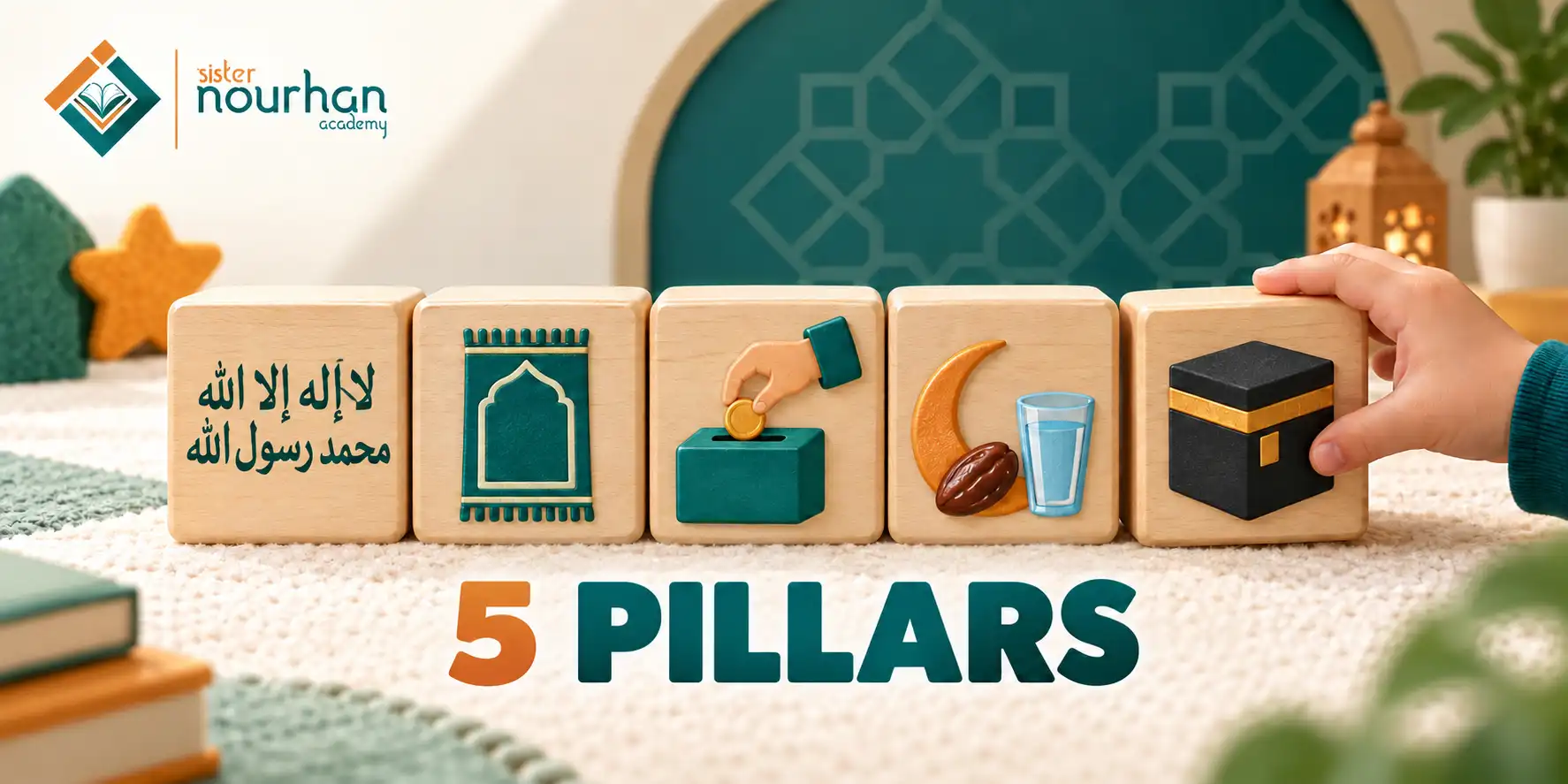
The Five Pillars of Islam are the foundation of a Muslim’s practice: Shahada (faith), Salah (prayer), Zakat (charity), Sawm (fasting), and Hajj (pilgrimage).
Each pillar introduces children to an important value, from believing in Allah and building a habit of prayer to caring for others, practicing self-control, and understanding the unity of Muslims around the world.
In this guide, we’ll explain each of the five pillars in simple, child-friendly language, using relatable examples and practical activities that parents can try at home.
1. Shahada — Teaching Kids the Foundation of Islamic Faith
Shahada is the first pillar, and it's the foundation everything else is built on. It means believing and saying: "There is no god but Allah, and Muhammad is His messenger." It's a short sentence, but it carries the entire weight of what it means to be Muslim.
For kids, it helps to compare Shahada to a promise. When you promise a friend you'll always tell them the truth, you try your best to keep that promise every day.
Shahada works the same way — it's a promise a Muslim makes to always remember Allah and follow His guidance in everything they do, from how they treat their family to how they treat a stranger.
Why Understanding the Shahada Is Important for Muslim Kids
Shahada helps children understand why Muslims worship Allah. Salah, Zakat, Sawm, and Hajj all begin with this fundamental belief.
Rather than simply memorizing the words, children should gradually learn what they mean and how belief in Allah influences everyday choices, such as being truthful, showing kindness, respecting parents, and helping others.
A fun way to bring this to life at home is to practice saying the Shahada together in Arabic and English, and talk about what it means in your own words:
"Ashhadu alla ilaha illallah, wa ashhadu anna Muhammadur rasulullah."
You might even write it down together and put it somewhere your child will see it daily — on their bedroom door or their school folder — as a gentle, visual reminder of their promise to Allah.
2. Salah — Teaching Kids the Five Daily Prayers
Salah is the second pillar of Islam and means prayer. Muslims pray five times each day to worship Allah and maintain a regular connection with Him: Fajr, Dhuhr, Asr, Maghrib, and Isha.
The first prayer takes place before sunrise, while the final prayer is performed at night. This means a Muslim's entire day is marked by regular moments of remembering and worshipping Allah.
What Should Kids Know About Salah?
Children do not need to learn everything about Salah at once. Parents can begin with a few simple facts that explain what prayer is and how Muslims perform it:
Muslims pray to worship Allah, ask Him for help, and thank Him for His blessings.
Muslims around the world pray facing the Kaaba in Mecca, giving them one shared direction in prayer.
Before Salah, Muslims prepare by performing Wudu.
Salah can be performed in many clean places, including at home, at the mosque, at school, or outdoors.
Muslims learn how to perform Salah by following the example of Prophet Muhammad ﷺ.
How Salah Helps Kids Remember Allah Throughout the Day
Salah gives children regular opportunities to stop what they are doing and remember Allah. With five prayers spread throughout the day, children gradually learn that worship is not limited to the mosque or special occasions—it is part of everyday Muslim life.
Parents can explain Salah as a special time to worship Allah, thank Him for what they have, ask Him for help, and strengthen their relationship with Him.
A Simple Prayer Chart Activity to Help Kids Build the Salah Habit
A practical way to introduce children to regular prayer is to create a daily Salah chart with spaces for Fajr, Dhuhr, Asr, Maghrib, and Isha.
Children can add a sticker, stamp, or check mark as they learn and complete each prayer with their parents.
This creates a simple visual routine and helps them become familiar with the five daily prayer times without making the learning process feel overwhelming.
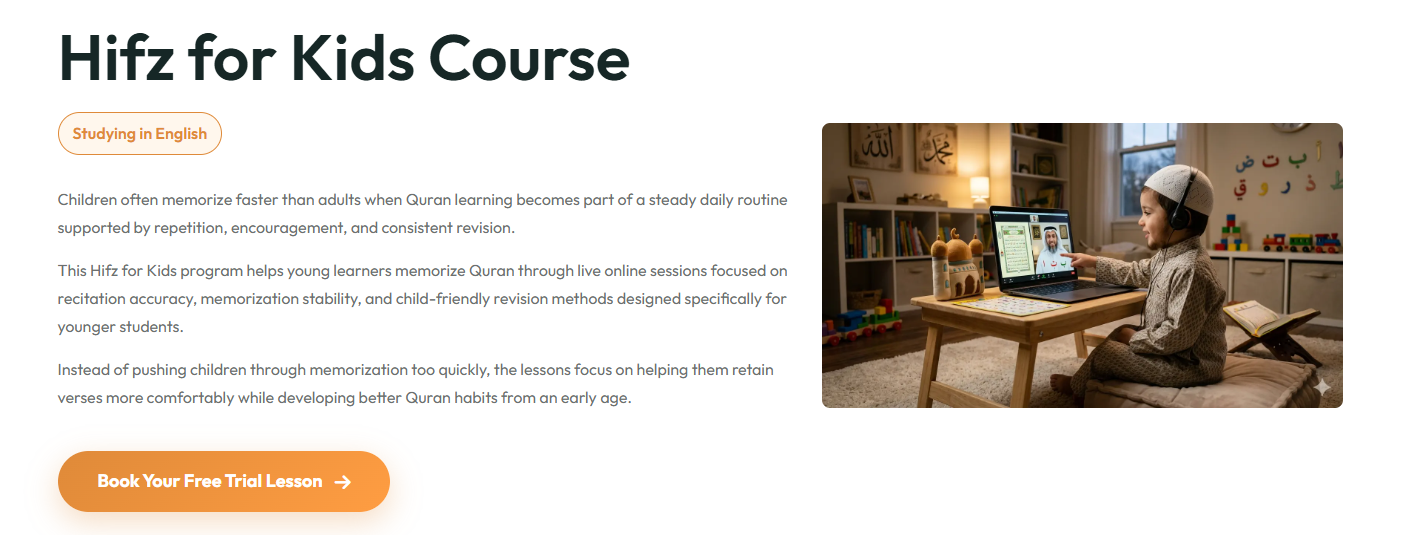
For families who want to go deeper into the Quranic side of their child's Islamic education, our Hifz for Kids program provides a structured next step through Quran memorization and child-focused instruction.
Enrich Your Islamic Knowledge
Deepen your understanding of Fiqh, Aqeedah, and Hadith with dedicated female scholars at Sister Nourhan Academy.
Start Your Free Trial Now3. Zakat — Teaching Kids the Importance of Giving to Those in Need
Zakat is the third pillar, and it means giving charity. Muslims are part of one big family, called the ummah, and part of belonging to that family is making sure no one gets left behind.
Anyone who has enough money to comfortably support their own family is required to give a portion of it — usually a small percentage of their savings — to help Muslims who don't have enough food, water, clothing, or a home.
A few simple facts to share with your child:
Zakat is given once a year, not all the time.
Only people with extra money beyond their needs are required to give it.
Zakat doesn't just buy food — it can also help build schools, hospitals, and mosques.
For younger children, you can explain Zakat by comparing it to sharing toys Imagine that you have many toys while another child has none. Sharing some of what you have means both of you can enjoy playing.
Zakat introduces a similar lesson on a much bigger scale: when Allah has given us enough, we should remember and support people who have less.
A Simple Zakat Activity to Teach Kids About Giving
Create a small “Giving Jar” at home Encourage your child to put aside a small amount from their allowance or Eid money. Once the jar has collected some money, choose a charitable cause together as a family.
This simple activity can help children experience the joy of giving and turn the idea of generosity from an abstract lesson into something practical and memorable.
4. Sawm — Teaching Kids About Fasting During Ramadan
Sawm is the fourth pillar of Islam, and it means fasting during the month of Ramadan. From dawn until sunset, adult Muslims who are able to fast abstain from food and drink, along with other things that break the fast.
Ramadan is much more than simply going without food and water. Fasting is an act of worship that helps Muslims grow closer to Allah, practice self-discipline, and become more mindful of His blessings.
Why Sawm Teaches Kids Patience, Gratitude, and Self-Control
Fasting teaches several important lessons:
Patience: Muslims learn to remain patient even when they feel hungry or thirsty.
Self-control: Fasting encourages control over desires, words, and actions.
Gratitude: Everyday blessings such as food and water become easier to appreciate.
Compassion: Experiencing hunger can encourage greater concern for people facing hardship.
Spiritual growth: Ramadan provides a special opportunity for worship, reflection, good deeds, and improving one's character.
How to Explain Ramadan Fasting to Young Children
For a younger child, you can compare fasting to completing a challenging activity that requires patience and determination.
When something becomes difficult, you don't immediately give up. You stay focused and keep trying until you reach your goal. In a similar way, fasting teaches Muslims patience, discipline, and perseverance while remembering that they are doing it for Allah.
Children who have not yet reached puberty are not required to fast. However, with parental guidance and when appropriate for the child, they can gradually learn about Ramadan and fasting without being expected to complete a full fast.
Simple Ramadan Activities to Help Kids Understand Sawm
Parents can help make Ramadan meaningful through age-appropriate activities, such as:
Creating a Ramadan calendar and marking each day.
Helping prepare or serve part of the iftar meal.
Decorating the home together for Ramadan.
Keeping a short good-deeds journal and recording one good deed each evening.
Learning short duas or Quran verses throughout the month.
Encouraging acts of generosity, such as preparing a gift or food for someone else.
These activities help children understand that Ramadan is not only about fasting. It is also a month of worship, gratitude, generosity, patience, and becoming closer to Allah.
5. Hajj — Teaching Kids About the Pilgrimage to Mecca
Hajj is the fifth pillar of Islam. It is a pilgrimage to Mecca that every Muslim who is physically and financially able must perform once in their lifetime.
During Hajj, Muslims from around the world worship Allah together, showing unity and equality.
What Happens During Hajj? Key Rituals Kids Can Understand
Pilgrims perform several important acts, including:
Walking around the Kaaba.
Walking between Safa and Marwah.
Drinking Zamzam water.
Standing at Arafat.
Throwing pebbles at the Jamarat.
Hajj reminds Muslims that everyone is equal before Allah, regardless of wealth, nationality, or background.
Parents can show children pictures or take a virtual tour of the Kaaba, helping them imagine what it would be like to visit Mecca and perform Hajj one day.
Most children can memorize five words in a list. The harder, more valuable goal is helping them understand why each pillar matters and how it shows up in daily life.
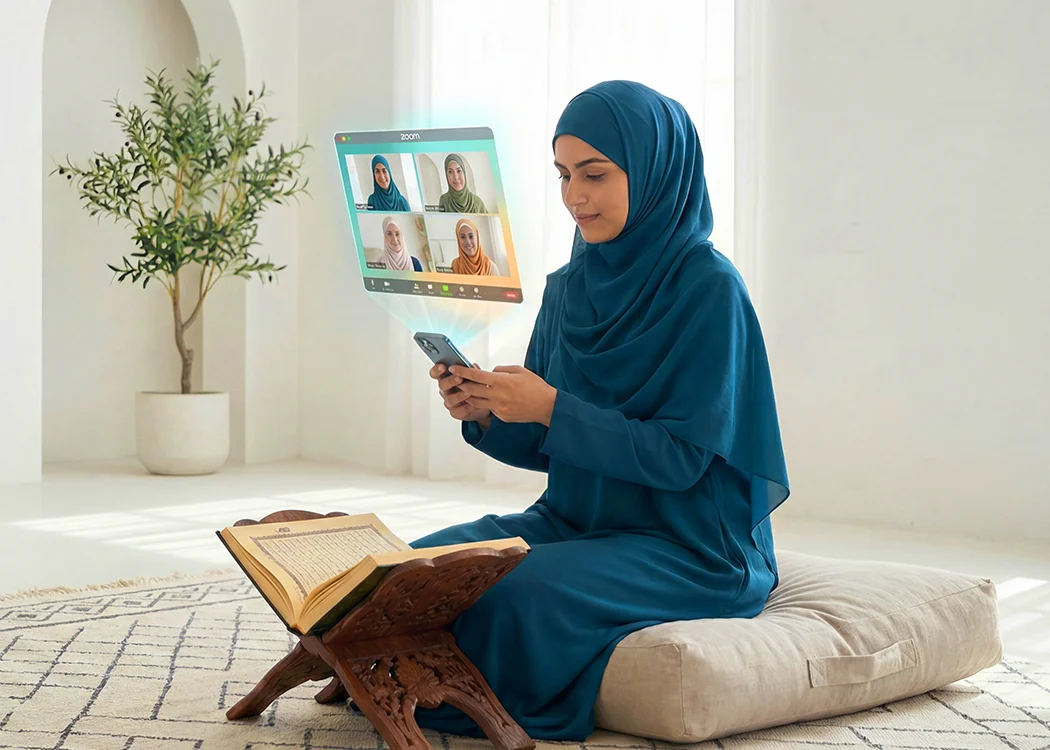
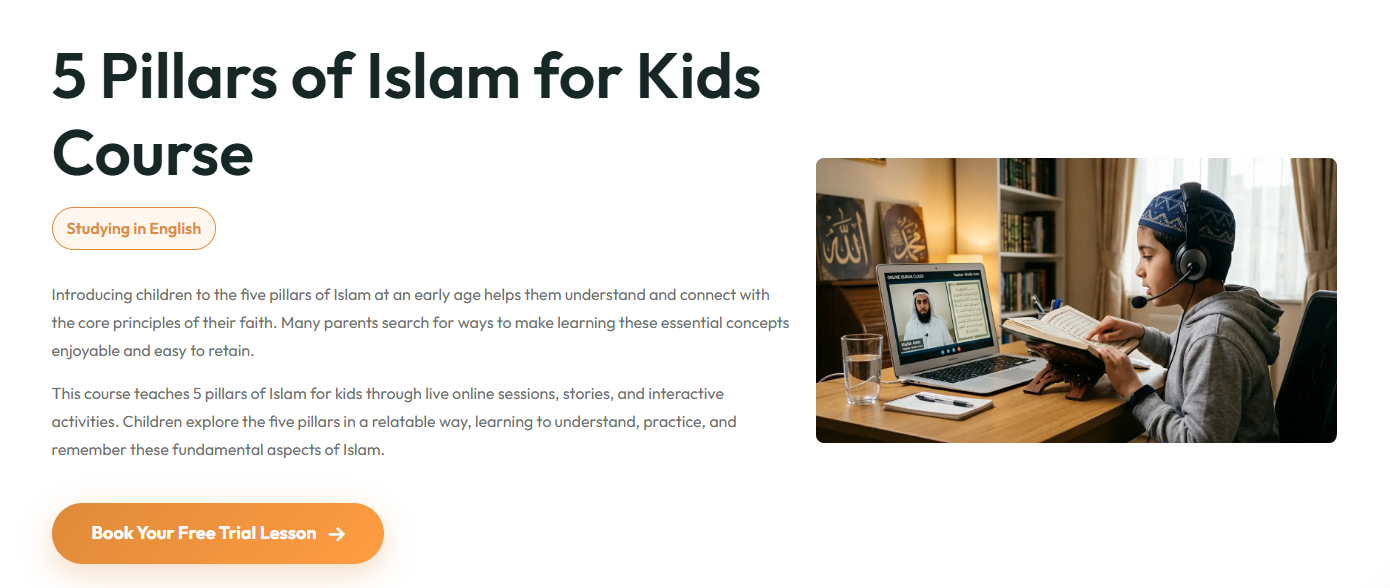
That's the gap our 5 Pillars of Islam for Kids course is built to close — through live online sessions, storytelling, and interactive activities that walk children through Shahada, Salah, Zakat, Sawm, and Hajj in a way that's age-appropriate and genuinely memorable, not just recited.
Why Are the 5 Pillars of Islam Important?
The five pillars work together, not separately, to bring the full meaning of Islam — peace and submission to Allah — into everyday life.
Shahada anchors everything else: belief in one God and in Prophet Muhammad ﷺ as His final messenger is the center that the rest of the pillars revolve around. Salah gives five separate moments each day to pause and remember Allah and our purpose in this life.
Sawm, through the month of Ramadan, teaches Muslims to gain control over their basic needs so they can nurture better conduct and a stronger connection to Allah.
Zakat ensures that wealth doesn't stay in one place — it keeps circulating to the people who need it most. And Hajj strips away worldly differences entirely, reminding every person that they are equal before Allah.
When a child understands the pillars as a connected system rather than five separate facts to memorize, the lessons tend to stay with them far longer — and start showing up naturally in how they behave, not just in what they can recite.
Common Questions Parents Ask
Parents often have questions about when and how to introduce the Five Pillars of Islam to their children.
Keeping the lessons simple, engaging, and age-appropriate can make these important concepts much easier to understand and remember.
What is the easiest way to help a child remember the five pillars?
Use stories, songs, pictures, and simple comparisons. Connecting each pillar to an everyday idea makes it easier to remember.
At what age should children learn about the five pillars?
There is no fixed age. Many parents begin with simple concepts around ages four or five, then add more detail as the child grows.
Should all five pillars be taught at once?
Not necessarily. Teaching one pillar at a time can make each concept easier for children to understand and remember.
See our teaching methods
Experience the quality of our instruction firsthand by watching a live lesson snippet below.
Enrich Your Islamic Knowledge
Deepen your understanding of Fiqh, Aqeedah, and Hadith with dedicated female scholars at Sister Nourhan Academy.
Start Your Free Trial NowLearn the Five Pillars with Sister Nourhan Academy
At Sister Nourhan Academy, children learn the Five Pillars of Islam through engaging, age-appropriate lessons that go beyond memorization. Through stories, interactive activities, and guided discussions, they discover the meaning of Shahada, Salah, Zakat, Sawm, and Hajj and how these pillars connect to everyday Muslim life.
Our 5 Pillars of Islam for Kids course provides live online learning with experienced teachers who make Islamic education enjoyable and easy to understand. Families who want to continue their child’s Quranic journey can also explore our Hifz for Kids program, which combines Quran memorization with patient, child-focused guidance.
Book a free trial class today and give your child a joyful start to understanding and living Islam.
Discover our Islamic Studies Courses

Conclusion
Teaching the Five Pillars of Islam to kids is about more than helping them memorize five names. When children understand Shahada, Salah, Zakat, Sawm, and Hajj through simple explanations and everyday examples, they begin to see how Islam shapes their faith, character, and daily life.
Start with small, age-appropriate lessons and give your child time to ask questions and practice what they learn. With patience and consistency, the Five Pillars can become meaningful foundations they carry with them as they grow.
FAQs About the Five Pillars of Islam for Kids
What are the Five Pillars of Islam for kids?
The Five Pillars are Shahada, Salah, Zakat, Sawm, and Hajj. They are the five main foundations of Islamic practice.
What is the first pillar of Islam?
Shahada is the first pillar. It is the declaration of belief in Allah and His Messenger, Prophet Muhammad ﷺ.
How can I explain Salah to my child?
Explain Salah as a special time to worship and remember Allah. Using a prayer chart can also help children become familiar with the five daily prayers.
Do children have to fast during Ramadan?
Children who have not reached puberty are not required to fast. They can still learn about Sawm and participate in age-appropriate Ramadan activities.
How can children learn about Zakat?
Parents can explain Zakat through familiar ideas such as sharing and helping people in need. A simple Giving Jar can make the lesson more practical.
How can I make learning the Five Pillars fun?
Use stories, activities, pictures, songs, and real-life examples instead of relying only on memorization. This helps children understand what each pillar means and why it matters.