
The Quran does not contain a verse that says, in those exact words, “women must go to school” or “women have a right to formal education.”
Instead, it repeatedly praises knowledge, commands learning and reflection, tells believers to ask when they do not know, and explicitly includes women alongside men in religious responsibility and reward.
This distinction matters. Claims that the Quran discourages women from becoming educated are difficult to reconcile with a scripture that begins its revelation with a command to read, distinguishes those who know from those who do not, raises people of knowledge in rank, and records women as believing participants in the Muslim community.
The clearest way to understand the Quran and women’s education is therefore to examine the verses themselves.
The following nine passages show what the Quran says about knowledge, learning, intellectual responsibility, and the position of women within that framework.
1. The Quran Establishes Reading and Learning as Foundations of Faith
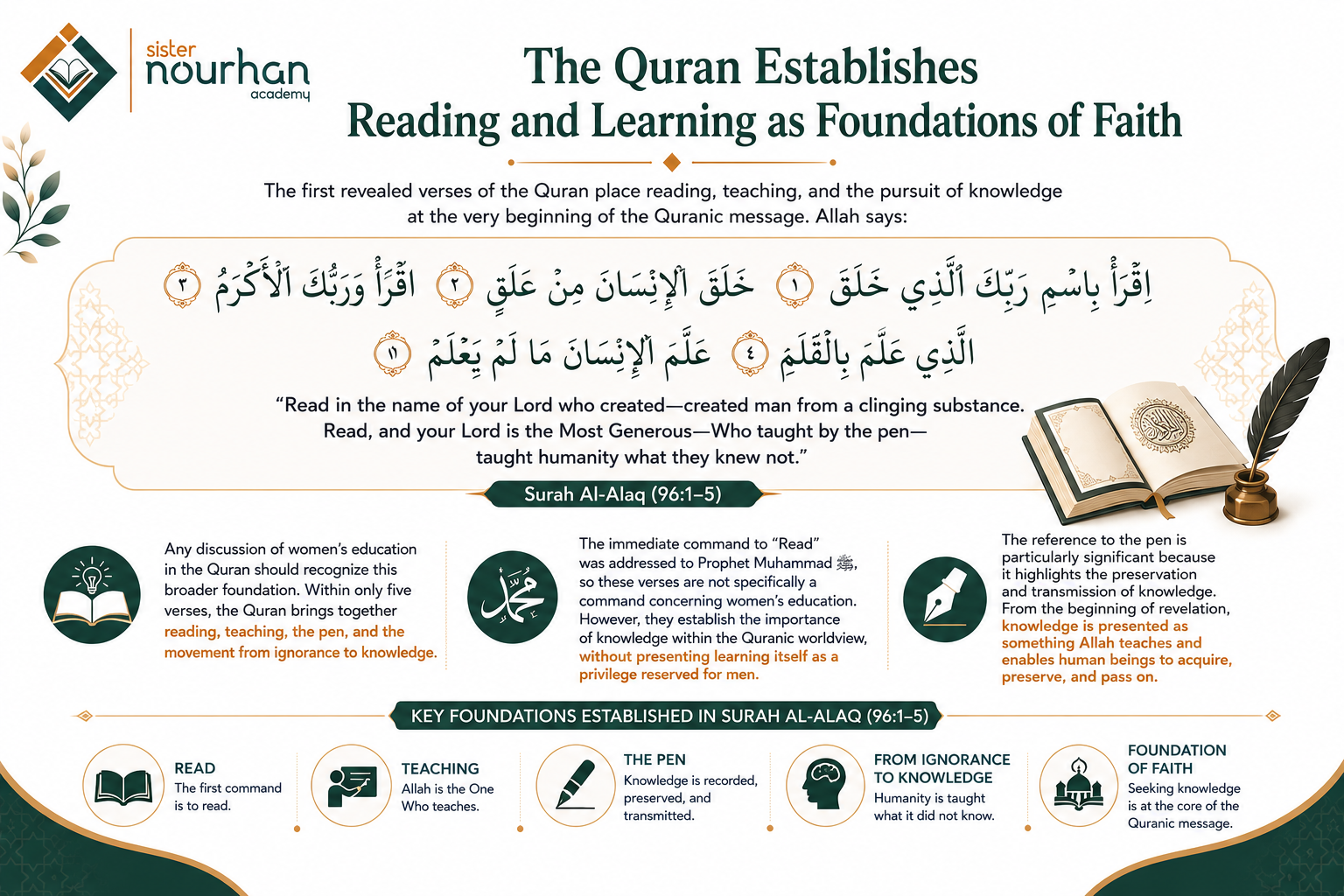
The first revealed verses of the Quran place reading, teaching, and the pursuit of knowledge at the very beginning of the Quranic message.
Allah says:
اقْرَأْ بِاسْمِ رَبِّكَ الَّذِي خَلَقَ خَلَقَ الْإِنسَانَ مِنْ عَلَقٍ اقْرَأْ وَرَبُّكَ الْأَكْرَمُ الَّذِي عَلَّمَ بِالْقَلَمِ عَلَّمَ الْإِنسَانَ مَا لَمْ يَعْلَمْ
“Read in the name of your Lord who created—created man from a clinging substance. Read, and your Lord is the Most Generous—Who taught by the pen—taught humanity what they knew not.” Surah Al-Alaq (96:1–5)
Any discussion of women’s education in the Quran should recognize this broader foundation. Within only five verses, the Quran brings together reading, teaching, the pen, and the movement from ignorance to knowledge.
The immediate command to “Read” was addressed to Prophet Muhammad ﷺ, so these verses are not specifically a command concerning women’s education. However, they establish the importance of knowledge within the Quranic worldview, without presenting learning itself as a privilege reserved for men.
The reference to the pen is particularly significant because it highlights the preservation and transmission of knowledge. From the beginning of revelation, knowledge is presented as something Allah teaches and enables human beings to acquire, preserve, and pass on.
For Muslim women seeking specifically to deepen their relationship with the Quran, learning can move beyond basic reading into memorization and disciplined study. Sister Nourhan Academy's Hifz for Females program, for example, provides a structured path for women who want to memorize the Quran.
2. The Quran Gives Knowledge a Higher Status Than Ignorance
The Quran clearly distinguishes between those who possess knowledge and those who do not, presenting knowledge as a quality of greater value and understanding.
Allah says:
قُلْ هَلْ يَسْتَوِي الَّذِينَ يَعْلَمُونَ وَالَّذِينَ لَا يَعْلَمُونَ ۗ إِنَّمَا يَتَذَكَّرُ أُولُو الْأَلْبَابِ
“Say, ‘Are those who know equal to those who do not know?’ Only people of understanding will take heed.” Surah Az-Zumar (39:9)
The question is rhetorical: knowledge and ignorance are not presented as equal. Significantly, the distinction is between those who know and those who do not know, rather than between men and women.
This provides an important principle when considering what the Quran says about female education. The verse is not specifically about women attending schools or other educational institutions, but its recognition of the value of knowledge is not presented as a male-only principle.
A Muslim woman who learns the Quran, studies her religion, develops her understanding, and pursues beneficial knowledge therefore participates in the Quran’s broader encouragement and appreciation of learning.
3. The Quran Encourages a Lifelong Pursuit of Knowledge
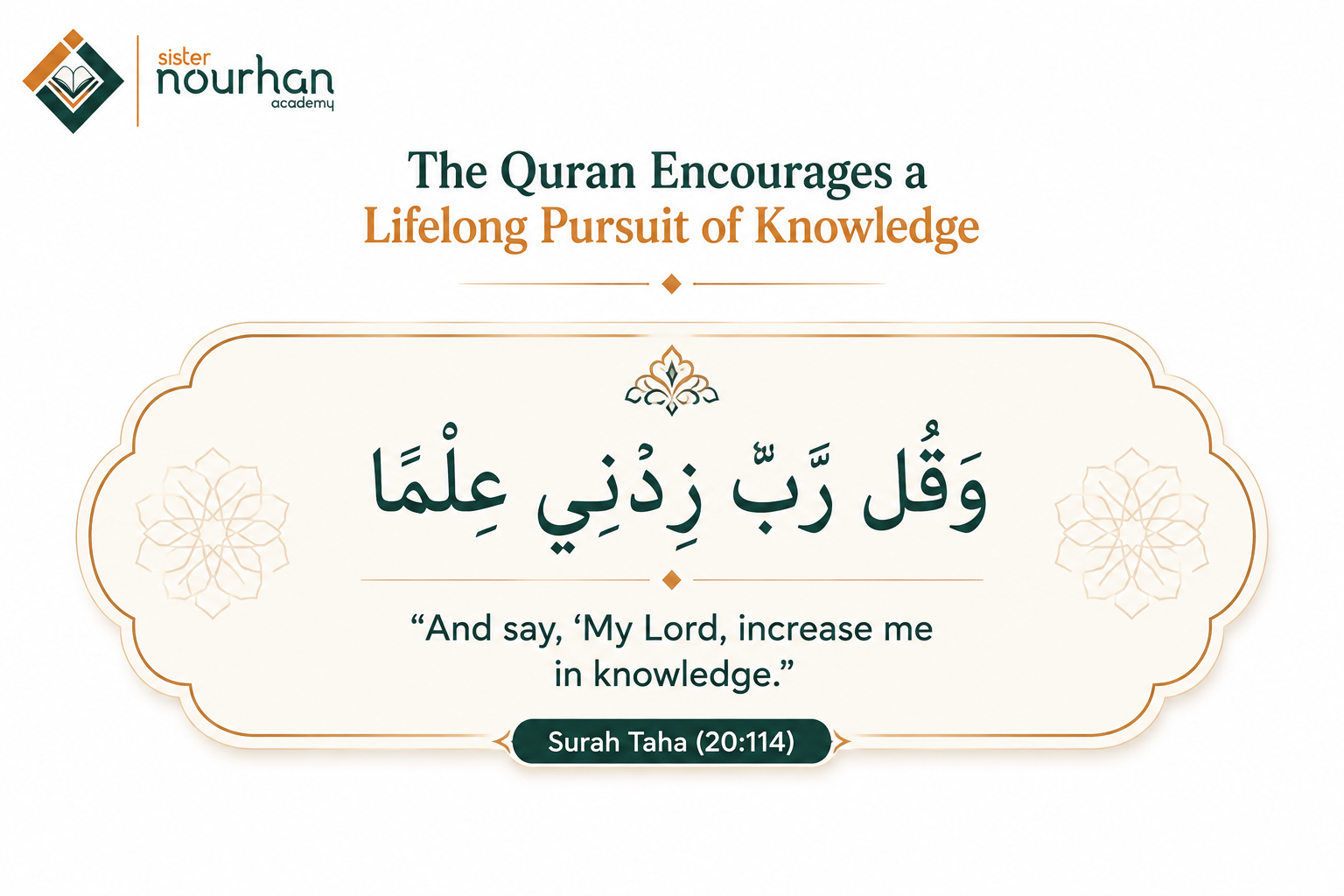
The Quran presents increasing in knowledge as something valuable to seek rather than treating learning as a process with a fixed endpoint.
Allah instructs the Prophet Muhammad ﷺ:
وَقُل رَّبِّ زِدْنِي عِلْمًا
“And say, ‘My Lord, increase me in knowledge.’” Surah Taha (20:114)
The wording is significant. The Prophet ﷺ is instructed to ask Allah for an increase in knowledge, reflecting the value the Quran places on continued learning and deeper understanding.
Although the command is addressed directly to the Prophet ﷺ, it provides an important Quranic perspective when discussing women’s education in Islam. The verse does not suggest that the pursuit of beneficial knowledge should end at a particular age, after marriage, or once a person has acquired basic religious knowledge.
For Muslim women, رَبِّ زِدْنِي عِلْمًا — “My Lord, increase me in knowledge” reflects a valuable approach to both religious and beneficial learning: continually seeking greater understanding, strengthening one’s knowledge, and growing intellectually and spiritually throughout life.
4. The Quran Teaches That Allah Raises Believers With Knowledge to Higher Ranks
The Quran connects knowledge with honor and elevation, stating that Allah raises believers and those who have been given knowledge in degrees. Allah says:
يَرْفَعِ اللَّهُ الَّذِينَ آمَنُوا مِنكُمْ وَالَّذِينَ أُوتُوا الْعِلْمَ دَرَجَاتٍ
“Allah will raise those who have believed among you and those who were given knowledge by degrees.” Surah Al-Mujadila (58:11)
This verse goes beyond simply recognizing the usefulness of knowledge. It connects faith and knowledge with elevation in rank, showing the honored position that knowledge holds within the Quranic worldview.
The verse does not restrict this value to men. When considering what the Quran says about women’s education, this is important because the Quranic emphasis is not merely on whether a woman may learn, but on the broader principle that knowledge itself is honorable and worthy of pursuit.
A Muslim woman who learns to recite the Quran correctly, deepens her understanding of its teachings, studies Islamic knowledge, or develops other beneficial knowledge is therefore pursuing something that the Quran treats with respect and associates with higher rank.
Shots from Our Classes
Take a moment to view the video below to see how our teachers provide clear, supportive corrections during a session.
Enrich Your Islamic Knowledge
Deepen your understanding of Fiqh, Aqeedah, and Hadith with dedicated female scholars at Sister Nourhan Academy.
Start Your Free Trial Now5. The Quran Tells Believers to Seek Knowledge From Those Who Know
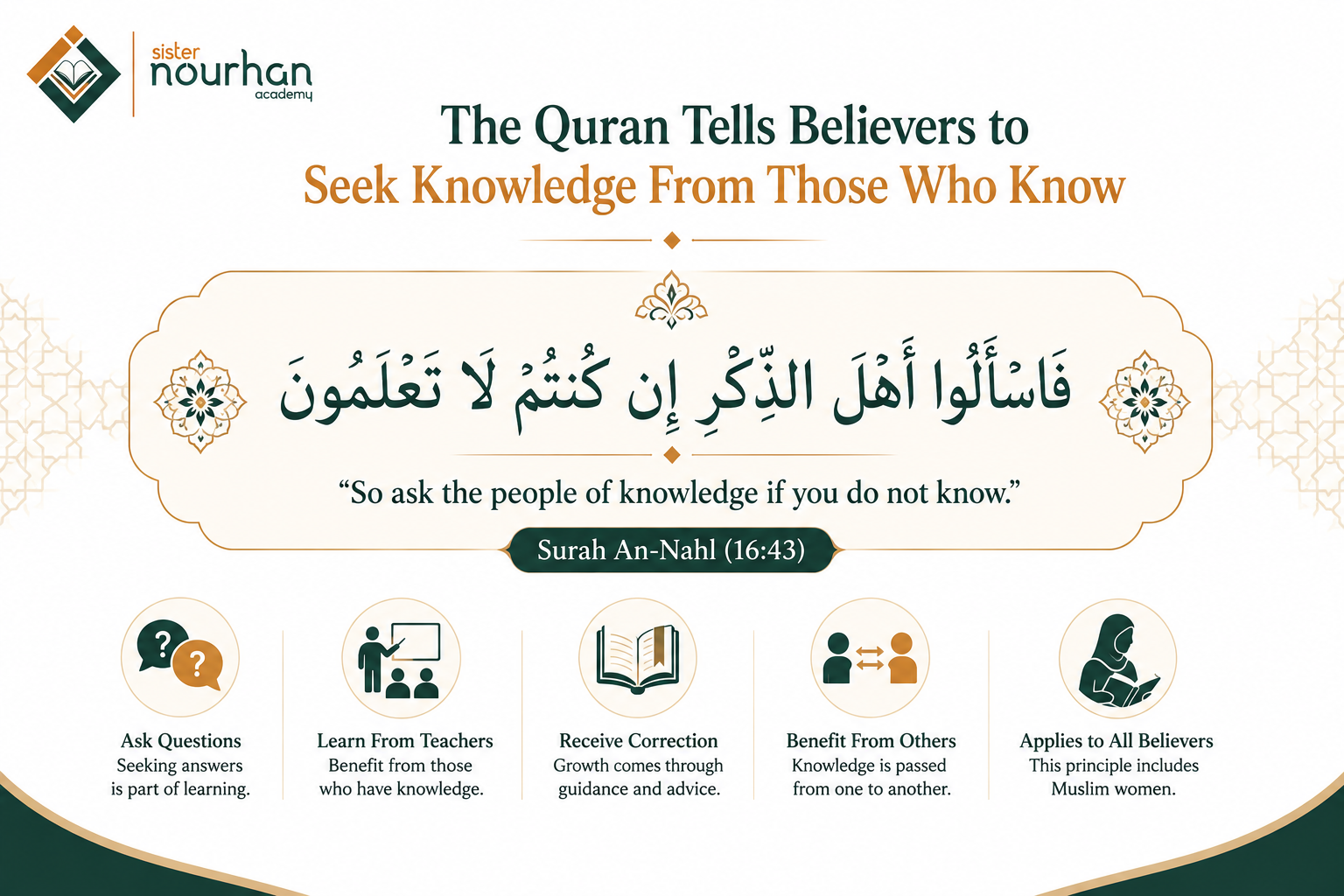
The Quran teaches that when people lack knowledge, they should seek answers from those who possess reliable knowledge rather than remain in ignorance.
Allah says:
فَاسْأَلُوا أَهْلَ الذِّكْرِ إِن كُنتُمْ لَا تَعْلَمُونَ
“So ask the people of knowledge if you do not know.” Surah An-Nahl (16:43)
The verse appears in a specific context concerning the messengers sent before Prophet Muhammad ﷺ, but it also reflects an important principle of Islamic learning: when a person does not know, they should turn to those who have knowledge and expertise.
This principle naturally involves asking questions, learning from teachers, receiving correction, and benefiting from knowledge passed from one person to another. It applies to Muslim women as part of the broader process of seeking beneficial knowledge.
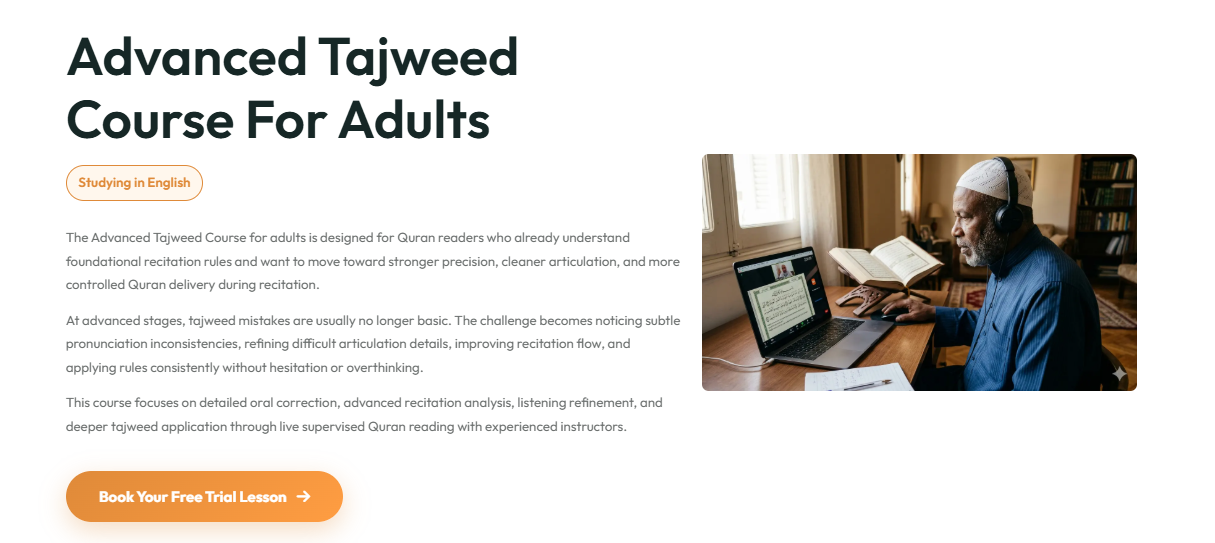
This is particularly important when learning the Quran. Reading about Tajweed independently can build understanding, but pronunciation and recitation errors can be difficult to recognize without a qualified teacher listening, identifying mistakes, and providing direct correction.
Women who have already studied basic Tajweed and want to develop greater precision can continue that process through structured instruction such as Sister Nourhan Academy's Advanced Tajweed for Adults.
6. The Quran Teaches Believers Not to Follow Claims Without Knowledge
The Quran warns believers against following, speaking about, or acting upon matters without reliable knowledge. Allah says:
وَلَا تَقْفُ مَا لَيْسَ لَكَ بِهِ عِلْمٌ ۚ إِنَّ السَّمْعَ وَالْبَصَرَ وَالْفُؤَادَ كُلُّ أُولَٰئِكَ كَانَ عَنْهُ مَسْئُولًا
“Do not follow what you have no sure knowledge of. Indeed, all will be called to account for their hearing, sight, and intellect.” Surah Al-Isra (17:36)
This verse adds another important dimension to Quranic education: intellectual responsibility. A believer should not accept claims, make judgments, or act on information without sufficient knowledge and understanding.
For Muslim women as well as men, gaining knowledge can therefore be essential for making informed decisions about worship, family responsibilities, financial matters, personal rights, and everyday conduct.
Education is valuable not simply because knowledge itself is respected, but because it helps protect people from misinformation, assumptions, and misunderstanding.
This principle is especially relevant today, when religious information can spread quickly online without proper evidence or context.
Learning how to recognize reliable Islamic knowledge and distinguish it from unsupported claims reflects the Quranic instruction: do not follow what you do not know.
Read also: Does Islam allow women to work outside?
7. The Quran Gives Believing Women an Active Role in Upholding What Is Right
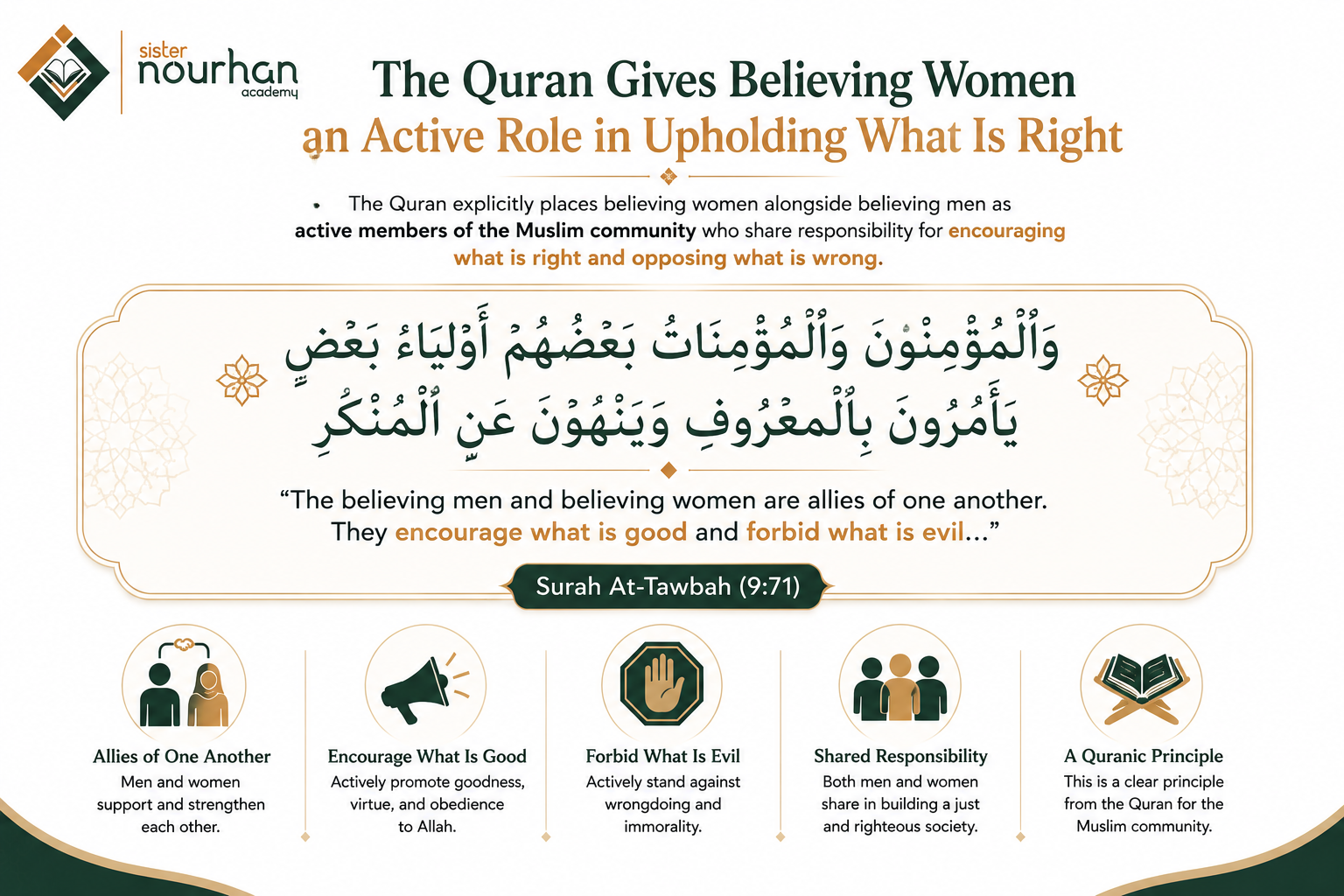
The Quran explicitly places believing women alongside believing men as active members of the Muslim community who share responsibility for encouraging what is right and opposing what is wrong.
Allah says:
وَالْمُؤْمِنُونَ وَالْمُؤْمِنَاتُ بَعْضُهُمْ أَوْلِيَاءُ بَعْضٍ يَأْمُرُونَ بِالْمَعْرُوفِ وَيَنْهَوْنَ عَنِ الْمُنكَرِ
“The believing men and believing women are allies of one another. They encourage what is good and forbid what is evil…” Surah At-Tawbah (9:71)
Unlike several of the earlier verses, this passage explicitly mentions both believing men and believing women. Both are described as participants in promoting what is right and discouraging what is wrong within the Muslim community.
Fulfilling that responsibility requires knowledge. A person cannot reliably recognize what Islam commands or prohibits without first learning and understanding its teachings. This creates an important connection between religious responsibility and religious education.
If believing women are given moral and religious responsibilities within the Muslim community, then acquiring the knowledge necessary to understand and fulfill those responsibilities naturally forms part of that role.
Women’s pursuit of Islamic knowledge is therefore closely connected to the responsibilities the Quran itself assigns to believing women.
Read also: What do the Hadiths say about women wearing perfume when going out?
Does the Quran Discourage Women From Becoming Educated?
No. The Quran does not state that women should remain uneducated or that learning is reserved for men.
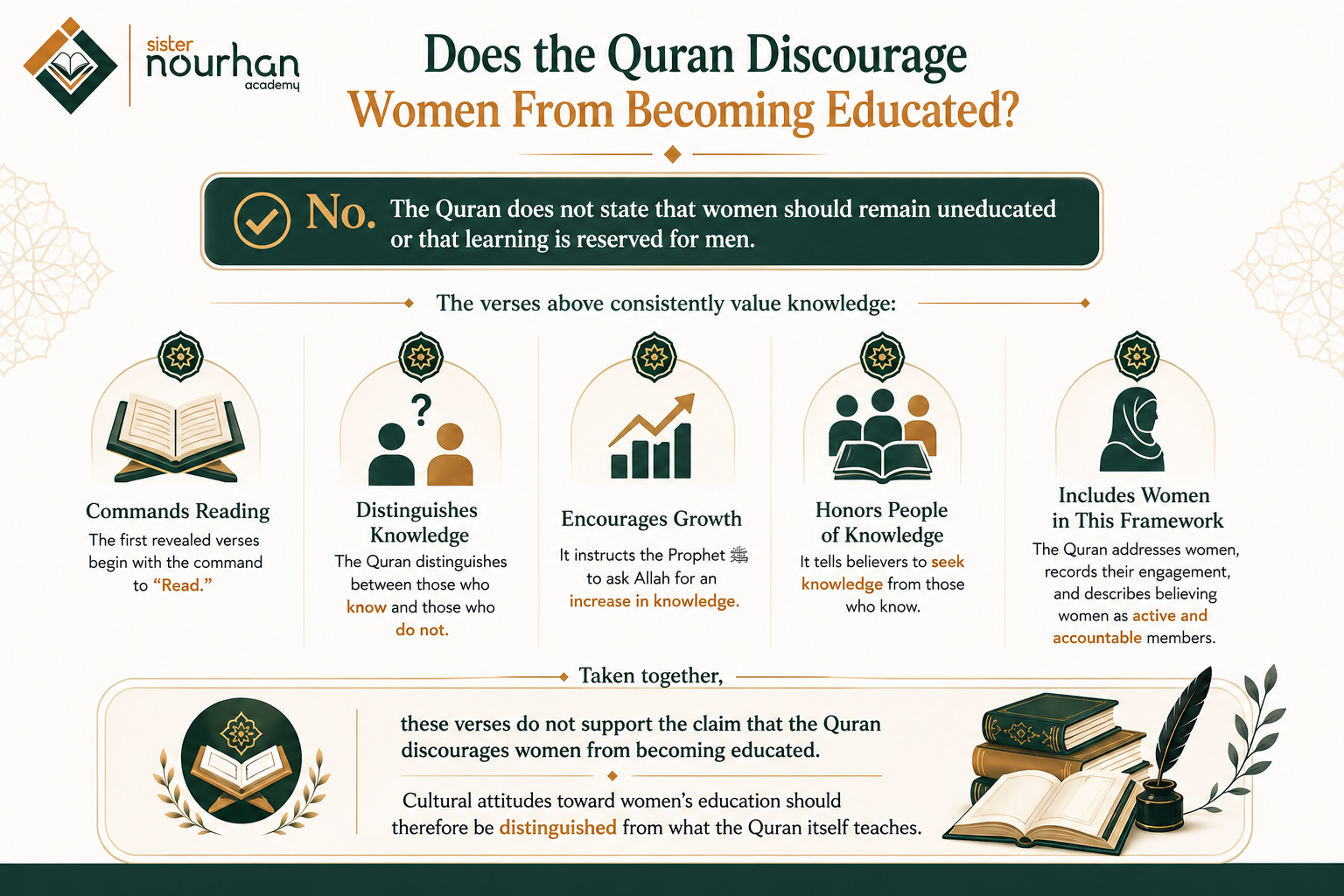
The verses above consistently value knowledge: the Quran commands reading, distinguishes those who know from those who do not, encourages growth in knowledge, and honors people of knowledge.
It also directly includes women within this framework. The Quran addresses women concerning Allah’s verses and wisdom, records a woman engaging the Prophet ﷺ with her concern, and describes believing women as active and accountable members of the Muslim community.
Taken together, these verses do not support the claim that the Quran discourages women from becoming educated. Cultural attitudes toward women’s education should therefore be distinguished from what the Quran itself teaches.
Read also: Is the hijab compulsory for all women in Islam?
Does the Quran Specifically Command Women to Seek Education?
The Quran does not contain a verse that specifically says, “Women must receive an education.” Nor does it discuss modern schools, universities, or degrees.
Instead, the Quran establishes broader principles that value reading, learning, seeking knowledge, and asking those who know. At the same time, it presents women as believers with religious responsibilities, accountability, and reward.
Therefore, the Quranic case for women’s education comes from these principles taken together rather than from a single verse specifically commanding formal education for women.
What Types of Knowledge Should Muslim Women Learn?
The Quran emphasizes the value of knowledge, but understanding what Muslim women should learn also requires considering the knowledge necessary for faith, worship, and everyday life.
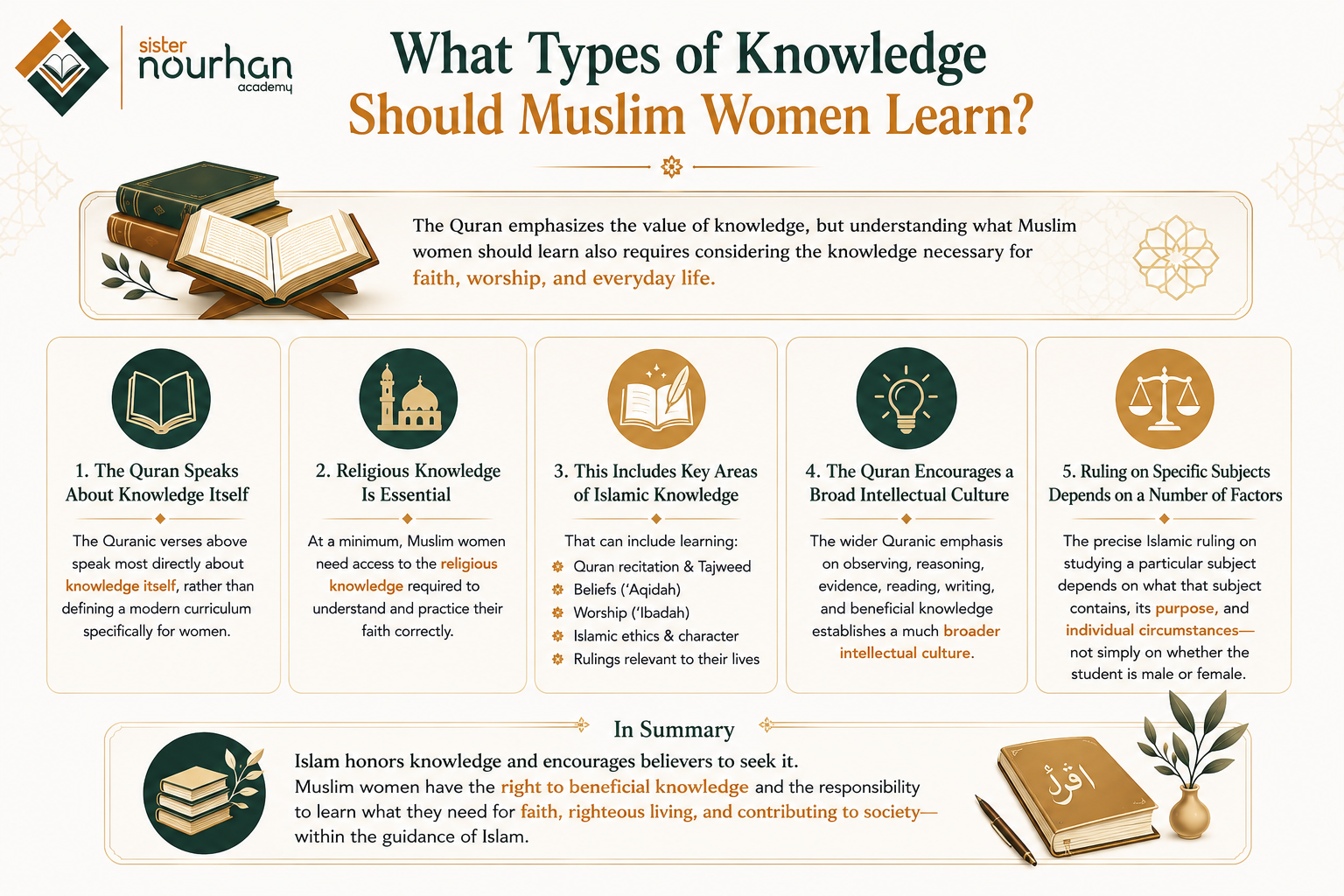
The Quranic verses above speak most directly about knowledge itself, rather than defining a modern curriculum specifically for women.
At a minimum, Muslim women need access to the religious knowledge required to understand and practice their faith correctly. That can include learning Quran recitation, Tajweed, beliefs, worship, Islamic ethics, and rulings relevant to their lives.
The wider Quranic emphasis on observing, reasoning, evidence, reading, writing, and beneficial knowledge also establishes a much broader intellectual culture.
The precise Islamic ruling on studying a particular subject depends on what that subject contains, its purpose, and individual circumstances—not simply on whether the student is male or female.
Do the Quran’s Teachings on Education Apply to Girls Too?
Yes. The Quran’s emphasis on knowledge and learning is not limited to adults or to men. Muslim girls benefit from learning to read the Quran, understanding the foundations of their faith, developing good character, and gaining the knowledge needed to distinguish right from wrong.
Starting early also builds a stronger foundation for Quran learning. Skills such as Arabic-letter recognition, correct pronunciation, memorization, and basic Tajweed can be developed gradually throughout childhood.
Education therefore helps prepare Muslim girls to understand their faith and fulfill their responsibilities with knowledge and confidence.
See our teaching methods
Experience the quality of our instruction firsthand by watching a live lesson snippet below.
Enrich Your Islamic Knowledge
Deepen your understanding of Fiqh, Aqeedah, and Hadith with dedicated female scholars at Sister Nourhan Academy.
Start Your Free Trial NowContinue Your Quran Learning With Sister Nourhan Academy
Seeking knowledge becomes more meaningful when it leads to a stronger understanding of the Quran and more confident practice of Islam.
Sister Nourhan Academy provides structured online Quran learning for women and girls who want to improve their recitation, study Tajweed, memorize the Quran, and deepen their Islamic knowledge with qualified guidance.
Whether you are beginning your Quran journey or building on what you already know, explore the available programs at Sister Nourhan Academy and book your classes to continue learning in a structured and supportive environment.
Discover our Islamic Studies Courses

Conclusion
The Quran does not present education as something reserved for men. Instead, it consistently values reading, knowledge, understanding, and learning while recognizing women as responsible believers with religious duties and accountability.
Although there is no single verse specifically commanding modern formal education for women, the Quranic principles examined throughout this article show that seeking beneficial knowledge is fully consistent with a Muslim woman’s faith and responsibilities.
For women and girls, learning the Quran and gaining the knowledge needed to practice Islam correctly can therefore be an important part of living an informed and conscious life of faith.
FAQs About the Quran and Women’s Education
The following questions address some of the most common points of confusion about female education, seeking knowledge, and women’s Quran study.
What does the Quran say about women's education?
The Quran repeatedly praises knowledge and learning without restricting these principles to men. It commands reading (96:1–5), distinguishes those who know from those who do not know (39:9), tells the Prophet ﷺ to ask for increased knowledge (20:114), and says Allah raises people of knowledge in rank (58:11).
Women are also explicitly addressed as believing members of the Muslim community in verses such as 9:71.
Does the Quran say women cannot be educated?
No. There is no Quranic verse stating that women cannot study or should remain uneducated. Claims that the Quran prohibits women's education should therefore not be presented as Quranic teachings without evidence.
Does the Quran explicitly mention female education?
The Quran does not discuss “female education” as a separate modern institution or use contemporary concepts such as schools, universities, and degrees. Instead, it establishes broad principles of reading, learning, asking, reasoning, and seeking knowledge while explicitly recognizing women as responsible believers.
Which Quran verse is most relevant to women's education?
Several verses are relevant rather than one verse alone. Surah Al-Alaq 96:1–5 establishes the importance of reading and learning; Az-Zumar 39:9 distinguishes those who know from those who do not; Taha 20:114 asks Allah for increased knowledge; and Al-Mujadila 58:11 states that Allah raises people of knowledge in rank.
What does Islam say about girls' education?
The Quranic principles concerning beneficial knowledge are not restricted to adult men. Girls can learn the Quran, Islamic beliefs, worship, ethics, Arabic, and other beneficial subjects that prepare them for knowledgeable and responsible adulthood.
Can Muslim women study the Quran with a teacher?
Yes. Learning from knowledgeable teachers is consistent with the Quranic principle, “Ask the people of knowledge if you do not know” (16:43). Teacher-guided study is particularly useful for Quran recitation and Tajweed because pronunciation errors often require direct correction.
Why is Quran education important for Muslim women?
Quran education enables Muslim women to read Allah's Book more accurately, understand its guidance, improve their worship, distinguish authentic teachings from unsupported claims, and pass sound knowledge to others.
The Quran consistently treats knowledge as something valuable rather than something from which women should be excluded.