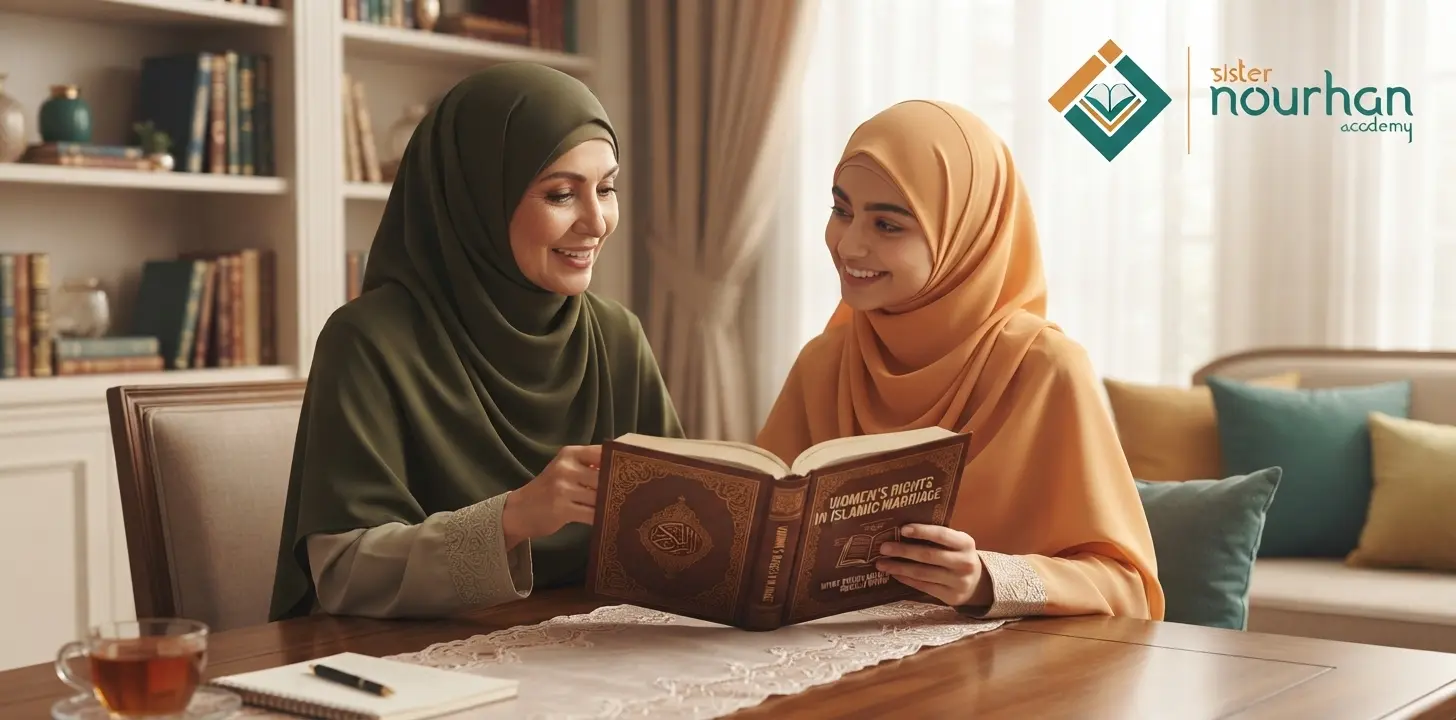
Ask ten Muslim women what their marriage contract actually guarantees them, and you'll often get ten hesitant answers. Not because the answers don't exist — but because nobody ever taught them.
Understanding women's rights in Islamic marriage isn't a luxury topic for scholars. It's the difference between a sister who negotiates her contract with clarity and one who signs it hoping for the best.
At Sister Nourhan Academy, we've spent years teaching sisters exactly this: what the Qur'an and Sunnah actually say, in plain language, from certified female teachers who understand the questions you're too shy to ask elsewhere.
In the next few minutes, you'll walk away knowing what is legally yours, what is spiritually owed to you, and where culture has quietly replaced revelation.
Key Highlights of This Article:
-
The four categories of rights every Muslim wife holds from the moment of her marriage contract.
-
Why mahr is a debt owed to you personally — never to your father or family.
-
How financial maintenance (nafaqah) works, even if the wife earns her own income.
-
The wife's right to refuse, to be protected, and to exit a harmful marriage.
What Are Women's Rights In Islamic Marriage?
Women's rights in Islamic marriage are the specific, enforceable entitlements a wife holds under Islamic law from the moment the contract is signed — financial, physical, emotional, and legal. They are not favours granted by a generous husband; they are obligations Allah placed upon him.
These rights fall into clear categories that scholars have detailed for centuries. Understanding the structure first makes everything else easier to remember.
The Qur'anic Foundation Of Women Rights In Islam Marriage
The Qur'an establishes the principle of reciprocity in marriage directly, without ambiguity.
Allah, the Most High, says:
“وَلَهُنَّ مِثْلُ الَّذِي عَلَيْهِنَّ بِالْمَعْرُوفِ”
"Women have rights similar to those of men equitably." — Surah Al-Baqarah 2:228
This verse reframes marriage as a two-way street of obligation. Whatever a wife owes her husband in cooperation and loyalty, she is owed something equivalent in return.
The Qur'an also frames the entire relationship emotionally, not just legally. Marriage is described as a place of tranquillity, affection, and mercy — meaning a wife's emotional wellbeing is part of the contract's purpose, not an optional extra. You can read the full verse and its context in Surah Ar-Rum 30:21.
Rights That Belong To The Wife Alone
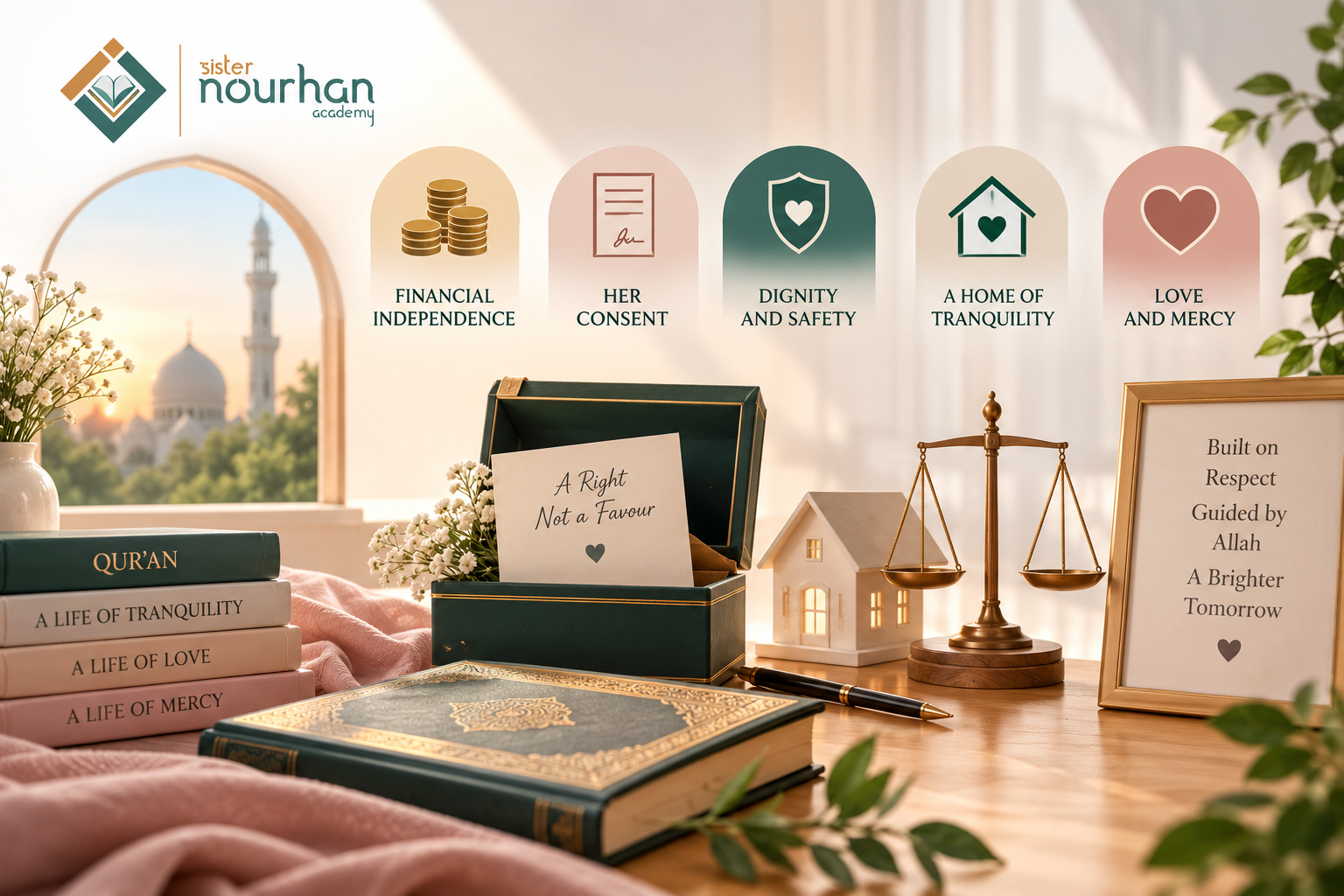
Some rights in marriage are hers exclusively — the husband has no claim over them, and no relative may sign them away.
Her mahr is hers. Her personal wealth, inheritance, salary, and property remain entirely her own after marriage. Islam gave women independent financial personhood over fourteen centuries ago.
Her consent is hers. A marriage contracted without the woman's genuine agreement is defective, and classical scholars across all four schools discuss its invalidation at length.
Her dignity is hers. Protection from physical harm, humiliation, and coercion is not conditional on her behaviour or her obedience in other matters.
Continue your learning journey with: Can I Read the Quran on My Period? What Every Muslim Woman Should Know
Mahr Rights Of Women In Islam
Mahr is the most misunderstood of all women's rights in Islamic marriage — often reduced to a symbolic gesture or handed straight to the bride's family. Both practices contradict the text.
Let's separate what the Qur'an mandates from what culture invented.
What Mahr Is And Why It Belongs Only To The Wife
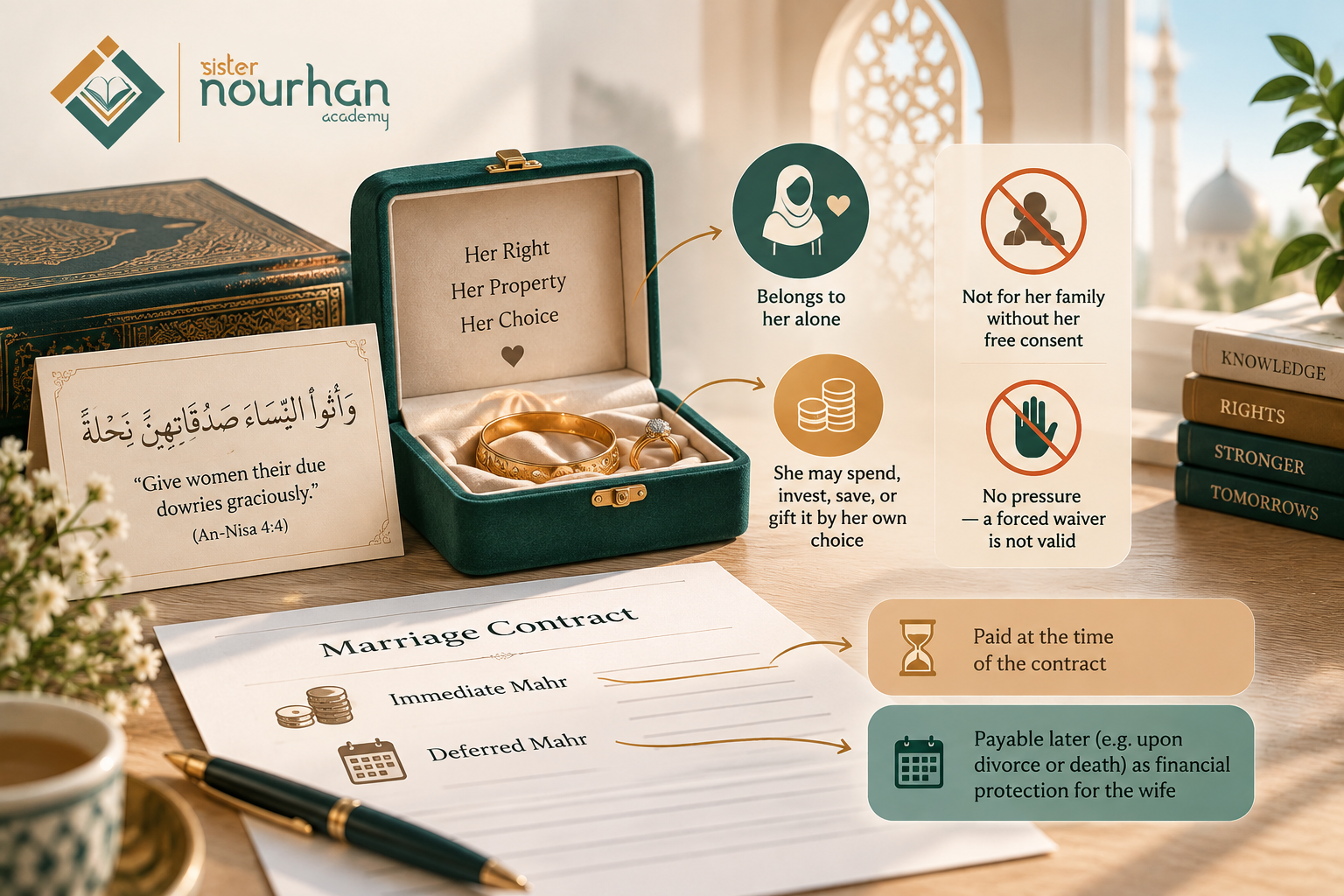
Mahr is an obligatory payment from the husband to the wife herself, and it becomes her exclusive property the moment the contract is concluded.
Allah, the Most High, says:
“وَآتُوا النِّسَاءَ صَدُقَاتِهِنَّ نِحْلَةً”
"Give women ˹you wed˺ their due dowries graciously." — Surah An-Nisa 4:4
Notice the wording: give the women — not their fathers, not their brothers. Any arrangement where the mahr is absorbed by the family without her free consent is a violation of the mahr rights of women in Islam.
She may spend it, invest it, save it, or gift it back — but only by her own genuine choice, never under pressure. Scholars are clear that pressure invalidates such a waiver.
Deferred Mahr And How It Protects A Wife
Mahr can be split into an immediate portion paid at the contract, and a deferred portion payable later or upon divorce or death.
The deferred portion functions as real financial protection. It sits as a documented debt on the husband, giving the wife security if the marriage ends without her choosing it.
This is why writing the mahr clearly into the contract matters enormously. Vague verbal promises are the single most common source of dispute sisters bring to scholars. For contemporary rulings on marriage contracts and dower disputes, you can consult the fatwa resources published by Egypt's Dar al-Ifta.
Expand your knowledge: Do You Have to Wear Hijab When Reading Quran? Clear Rulings for Every Sister
Financial And Emotional Wife Rights In Islam Marriage
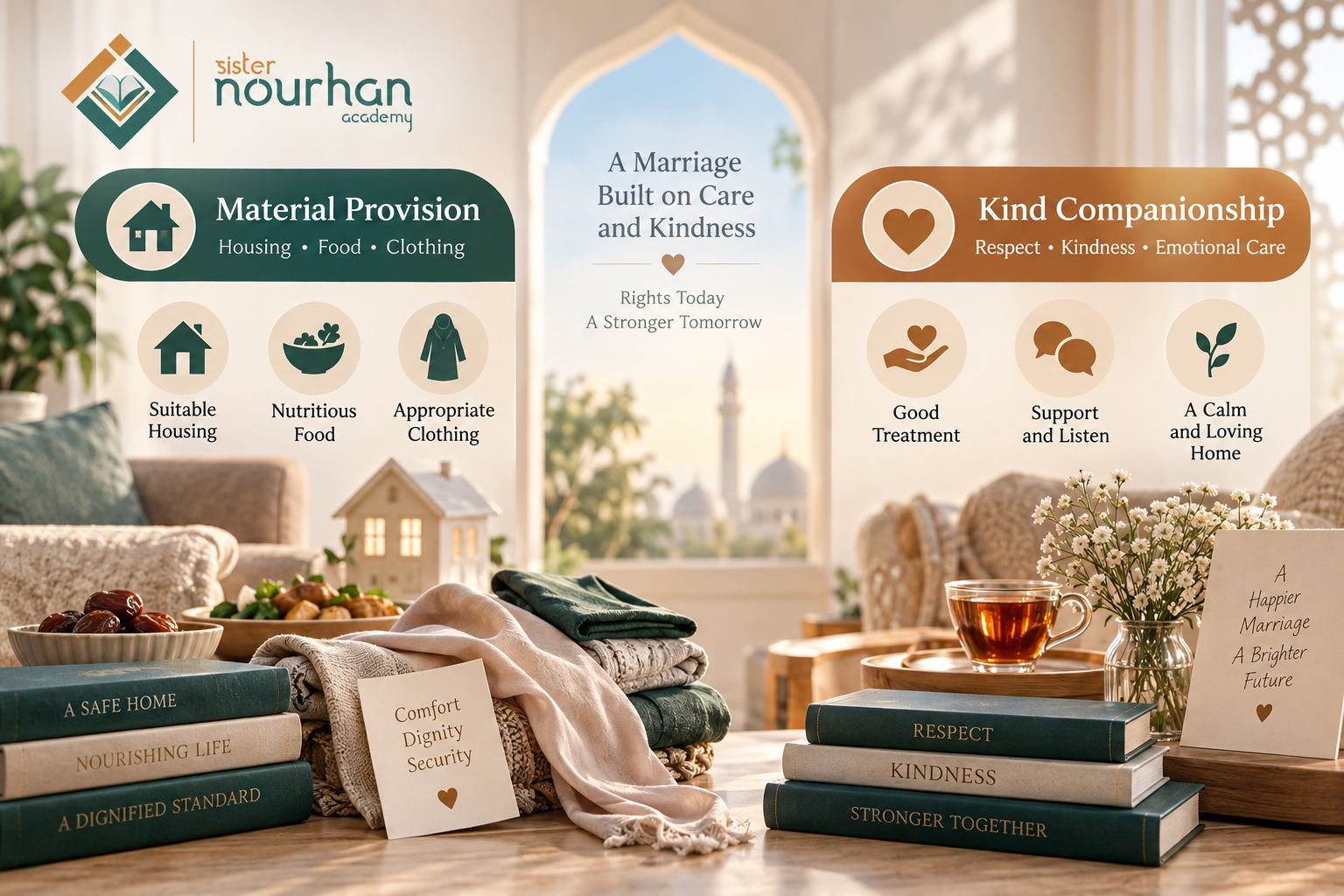
Beyond the contract itself, daily married life carries continuous obligations. These are the wife rights in Islam marriage that apply every single day, not just on the wedding day.
Two categories dominate the classical discussion: material provision and kind treatment.
Nafaqah - Housing, Food, And Clothing
Nafaqah is the husband's obligation to fully cover his wife's housing, food, and clothing at a standard appropriate to his means.
This obligation stands independently of her wealth. A wife who is a doctor, a business owner, or an heiress is still owed complete maintenance — her income does not reduce his duty by a single dirham.
She may choose to contribute to household costs, and many sisters do. But that contribution is charity from her, voluntary and rewarded, never a debt she is required to pay.
Housing also carries a quality standard: private, secure, and suitable — not a corner of a crowded family home if she does not consent to it. Her right to a private residence is well established in classical fiqh, and it's one of the topics we cover in depth in our Fiqh Course at Sister Nourhan Academy.

Read also: Do You Need Wudu to Read the Quran? A Complete Guide
Samples from our live courses
See our teaching methods Experience the quality of our instruction firsthand by watching a live lesson snippet below.
Enrich Your Islamic Knowledge
Deepen your understanding of Fiqh, Aqeedah, and Hadith with dedicated female scholars at Sister Nourhan Academy.
Start Your Free Trial NowKind Companionship And Emotional Care
The Qur'an commands husbands to live with their wives in kindness, making good treatment a legal duty rather than a personal preference.
Allah, the Most High, says:
“وَعَاشِرُوهُنَّ بِالْمَعْرُوفِ”
"Treat them fairly." — Surah An-Nisa 4:19
The Prophet ﷺ set the measure of a man's faith by exactly this standard.
The Prophet ﷺ said:
“خَيْرُكُمْ خَيْرُكُمْ لِأَهْلِهِ وَأَنَا خَيْرُكُمْ لِأَهْلِي”
"The best of you is the best to his wives, and I am the best of you to my wives." — Jami' at-Tirmidhi 3895, graded Sahih
Emotional neglect, contempt, and constant harshness are therefore not "personality differences." They are failures in an obligation the Prophet ﷺ made the measure of a man's character.
Consent, Informed Choice, and the Right to Leave a Marriage
The final group of women's rights in Islamic marriage concerns entry and exit — the two moments where a woman's agency matters most, and where it is most often overridden.
These rulings are precise, and knowing them protects sisters in real, practical situations.
The Right To Accept Or Refuse A Marriage Proposal
No woman may be married against her will — her consent is a condition of a valid contract, not a courtesy.
A previously married woman must express clear verbal agreement. A first-time bride's consent is also required, and scholars discuss the circumstances under which her silence may be read as agreement.
This right also includes the right to know. She is entitled to accurate information about her prospective husband before deciding — his financial state, health, prior marriages, and character.
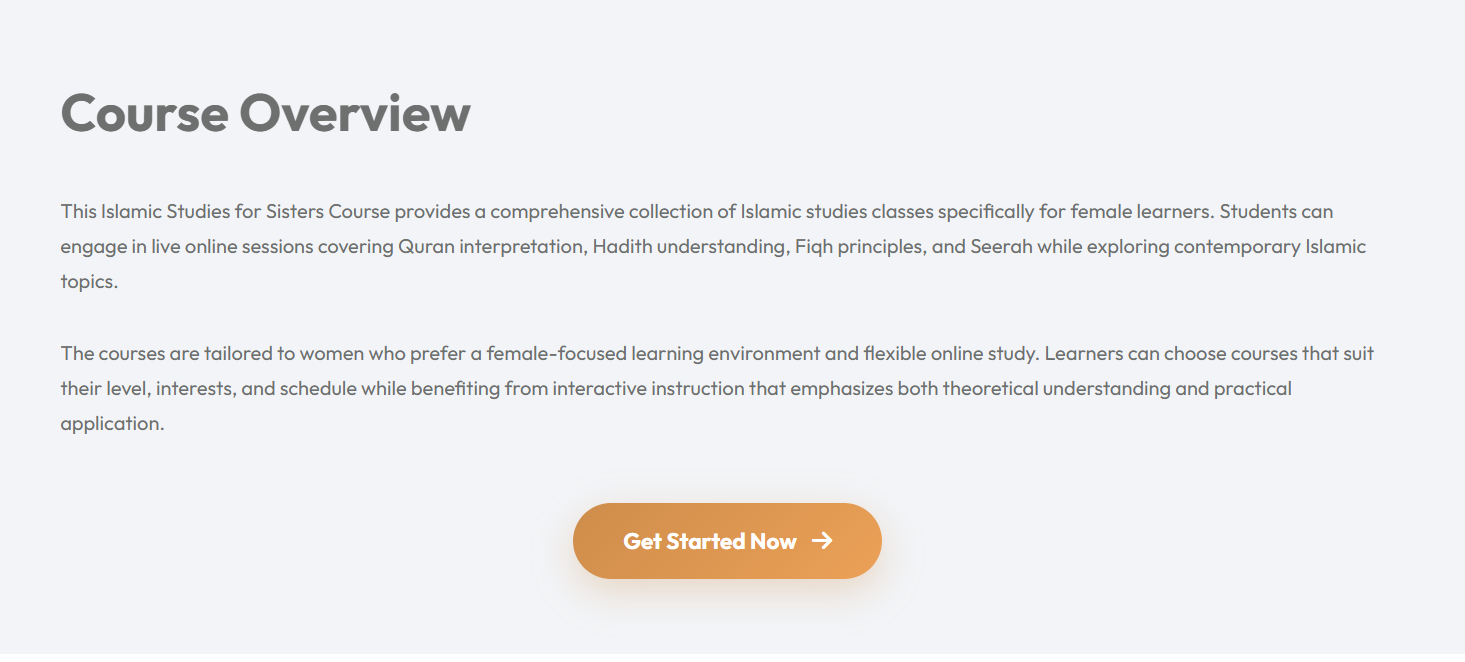
Concealing material facts to obtain consent is deception, and consent obtained that way is legally contested. This is one of the most practical areas of study inside our Islamic Studies for Sisters Course.
Protection From Harm And The Right To Seek Khul'
A wife has an absolute right to safety, and Islam gives her a route out of a marriage that harms her.
The Prophet ﷺ said:
“وَاسْتَوْصُوا بِالنِّسَاءِ خَيْرًا”
"I advise you to take care of the women." — Sahih al-Bukhari 5186
Khul' allows a wife to end a marriage she can no longer bear, typically by returning her mahr. The Prophet ﷺ granted exactly this to a woman who came to him unable to continue, without demanding she justify her feelings.
She may also stipulate conditions in her contract — the right to work, to study, to remain in a certain city, or to initiate divorce herself. Valid stipulations are binding, and understanding them is genuinely life-changing knowledge.
Our Alimah Course for Females takes sisters through this material at scholarly depth. Know your exit as well as your entry. Confidence in marriage starts with knowing the rulings by heart.
Learn Your Rights With Confidence At Sister Nourhan Academy
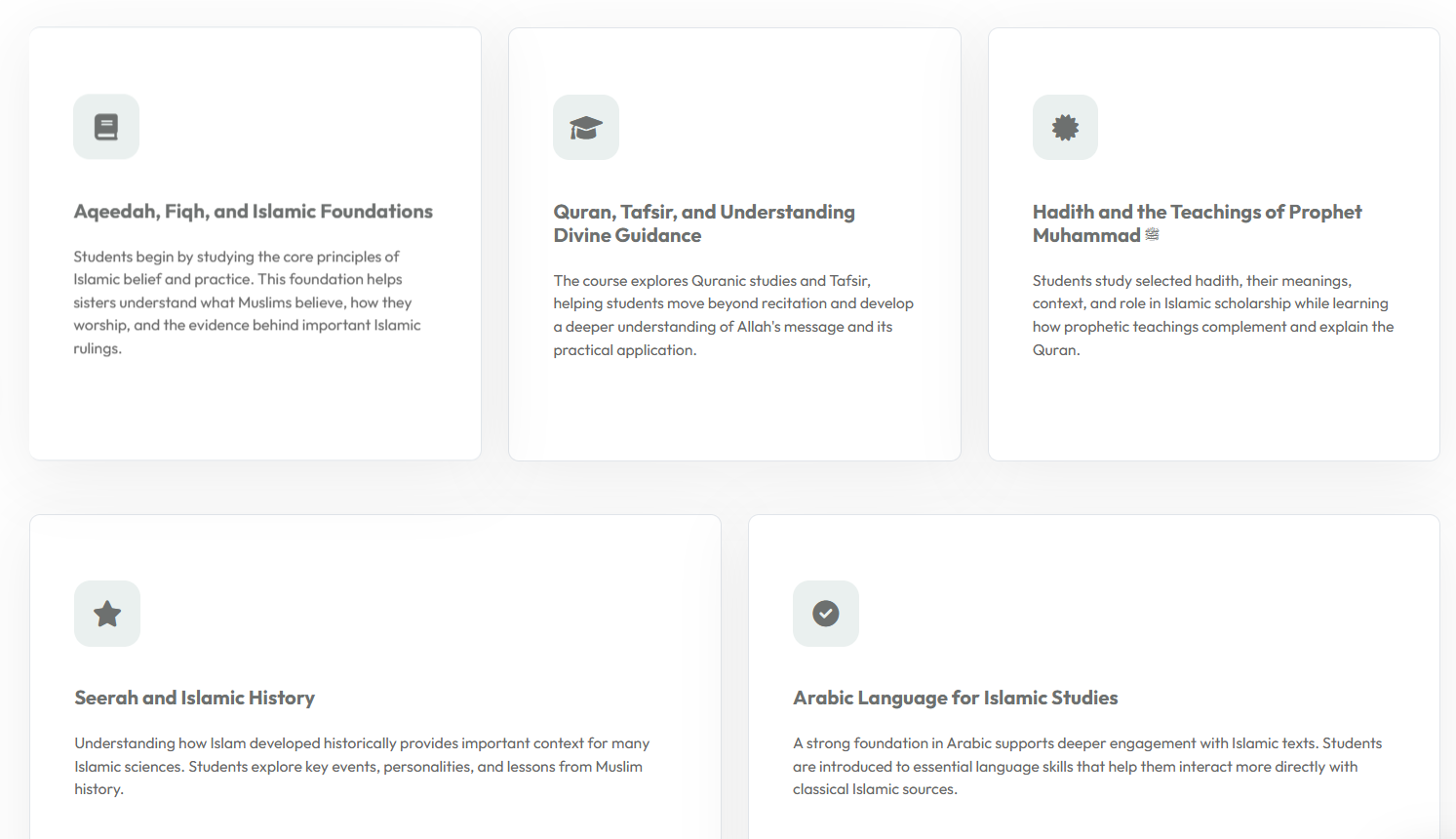
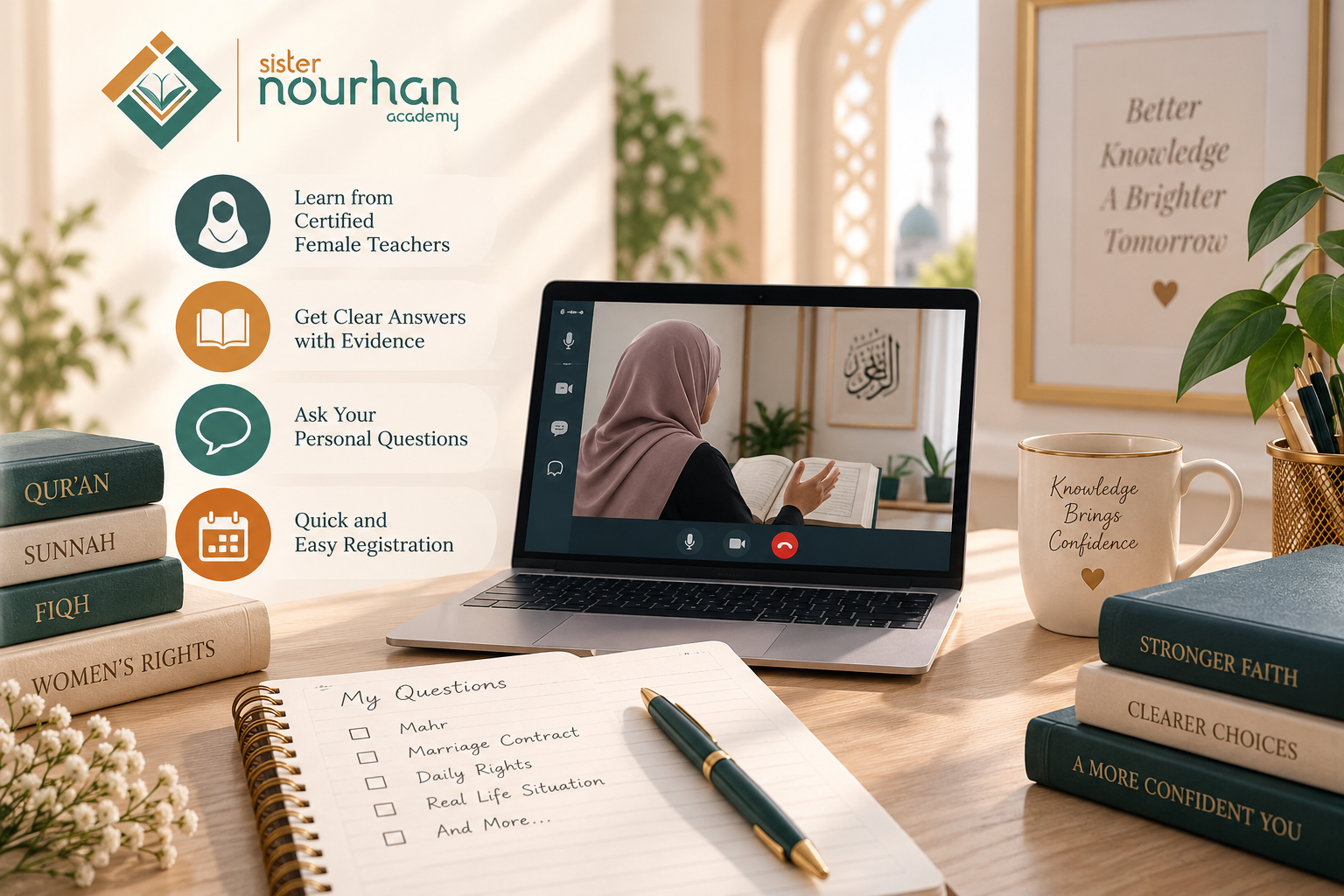
Here's what makes studying this topic with us different: every class is one-on-one with a certified female teacher, in a completely private, women-only space.
That matters more than it sounds. Marriage fiqh involves questions many sisters will never ask in a mixed group chat or a public seminar — about intimacy, about mahr disputes, about a husband who isn't providing. In a private session, there is no audience and no embarrassment.
Our teaching is also fully personalised. If you're preparing for marriage, your teacher focuses on the contract, stipulations, and mahr. If you're already married and navigating a difficult situation, she builds the lessons around your reality — with evidence, not opinion.
And because our scheduling is genuinely flexible across time zones, sisters study with us from the UK, the US, Canada, Australia, and the Gulf, fitting classes around work, children, and life. You choose the hours; your teacher adapts.
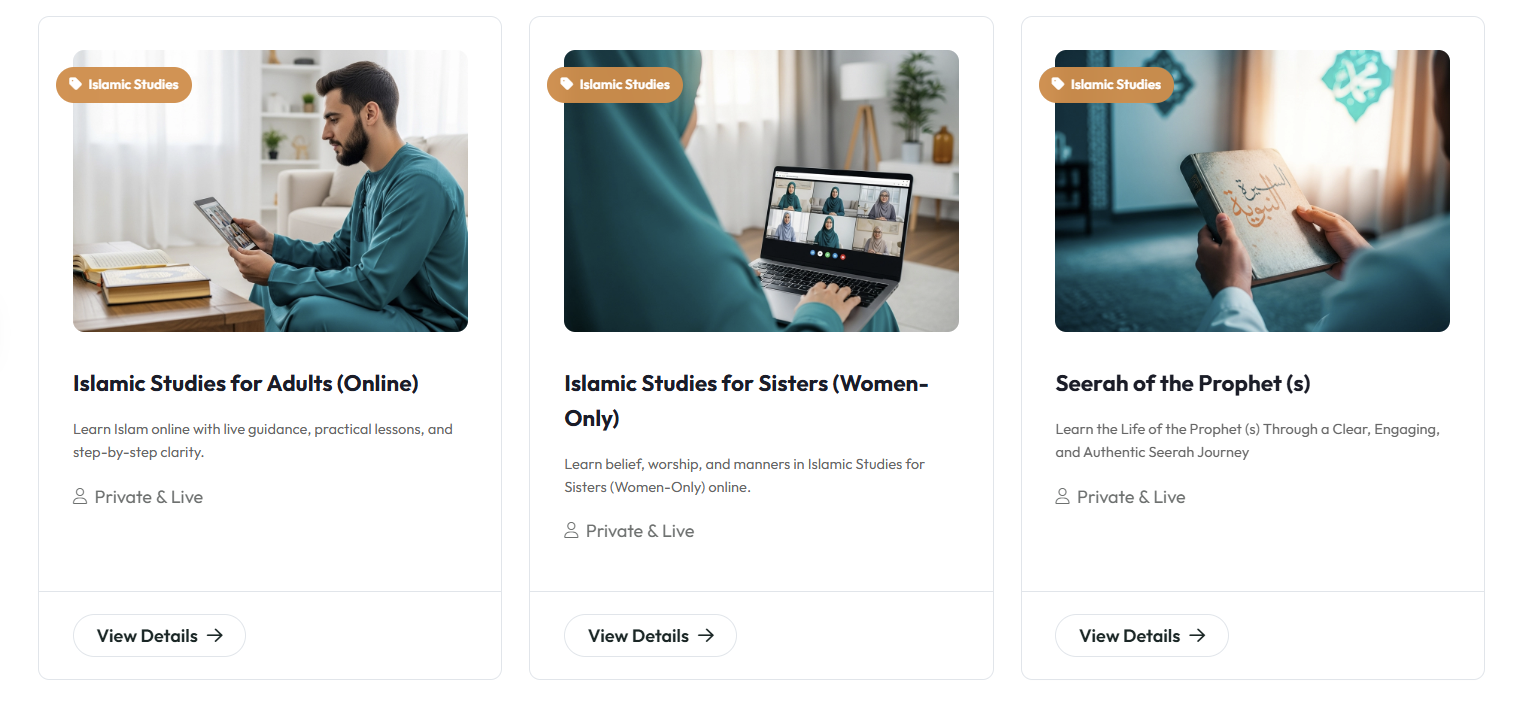
Beyond marriage fiqh, sisters expand into the Quran Tafseer Course for deeper Qur'anic understanding, or into our Tazkiyah / Spiritual Development Course for Females and Sisters to strengthen the inner dimension that carries a marriage through hard seasons. It all connects.
See our teaching methods
Experience the quality of our instruction firsthand by watching a live lesson snippet below.
Enrich Your Islamic Knowledge
Deepen your understanding of Fiqh, Aqeedah, and Hadith with dedicated female scholars at Sister Nourhan Academy.
Start Your Free Trial NowTurn What You Just Read Into Real Knowledge!
Stop guessing what your rights are. Book your free trial lesson with a certified female teacher at Sister Nourhan Academy and get real answers, backed by evidence, in your very first session.
Bring your actual questions — about your mahr, your contract, your situation. Your teacher will walk you through the relevant rulings and show you exactly where they come from in the Qur'an and Sunnah, so you never have to rely on hearsay again.
Registration takes under two minutes, the trial costs nothing, and there is no obligation to continue. Visit Sister Nourhan Academy and choose the time that suits you.
Discover our Islamic Studies Courses
Conclusion
We covered a lot: the Qur'anic principle of reciprocal rights, mahr as the wife's exclusive property, nafaqah that stands regardless of her income, the duty of kind companionship, and the rights of consent, protection, and exit.
The single takeaway is this: women's rights in Islamic marriage were legislated by Allah, and no father, husband, or tradition has the authority to reduce them. Culture can obscure them; it cannot cancel them.
Knowledge is what turns a right on paper into a right you actually hold. Learn it properly, once — and carry it for life.
Frequently Asked Questions
What Is A Woman's Role In A Marriage In Islam?
A wife's role is that of a partner in a shared trust: cooperation, loyalty, and building a home of tranquillity — not servitude or silence. Islam pairs every duty she carries with a right she is owed, which is why studying both sides together at Sister Nourhan Academy gives sisters such clarity.
Can A Wife Say No To Her Husband In Islam?
Yes — she may refuse anything unlawful outright, and she has full permission to disagree, negotiate, and voice her needs in everything else. Obedience in Islam is bounded by the limits Allah set, never unconditional.
What Are The Rights Of A Woman After A Divorce In Islam?
She keeps her full mahr, retains all her personal wealth, and is owed maintenance and housing throughout her waiting period ('iddah). Our certified female teachers walk sisters through these post-divorce entitlements privately, so no right is quietly lost.
Who Is Responsible For A Divorced Woman In Islam?
During her 'iddah her former husband remains responsible for her housing and maintenance; after it, financial responsibility returns to her father or nearest male relative. If she has custody of children, their father continues to fund their upkeep regardless.
What Is The 3 Talaq Rule?
Divorce in Islam is designed as a staged process, and after the third pronouncement the marriage becomes final and the couple cannot simply remarry. Scholars differ on whether three utterances in one sitting count as one or three, which is exactly why a qualified teacher matters more than internet answers.
What Happens If My Husband Says "I Divorce You" In Islam?
A single clear pronouncement usually counts as one revocable divorce, beginning the 'iddah during which he may take her back. Sister Nourhan Academy helps sisters understand precisely what was said, what it legally triggered, and what their options are next.