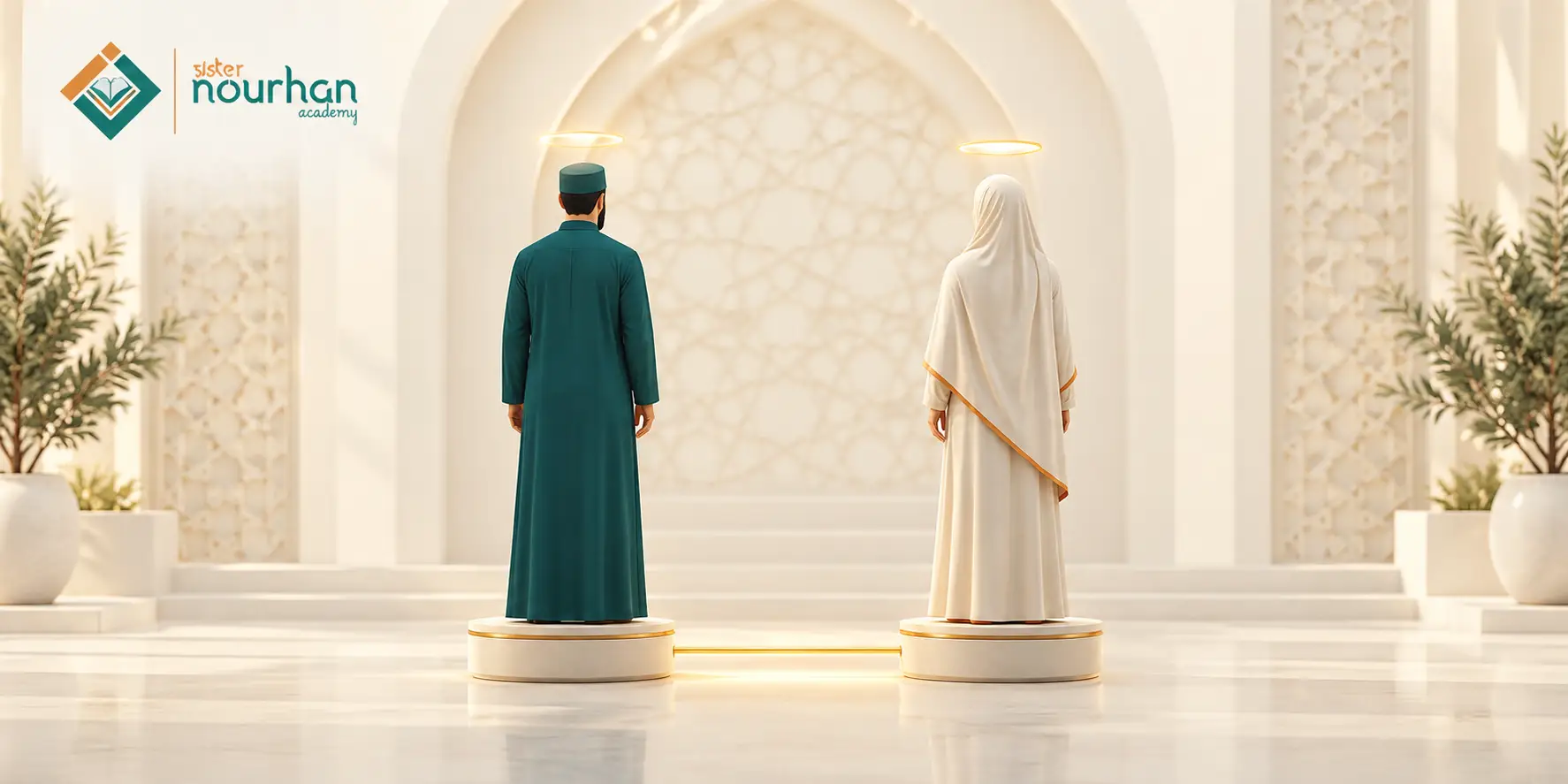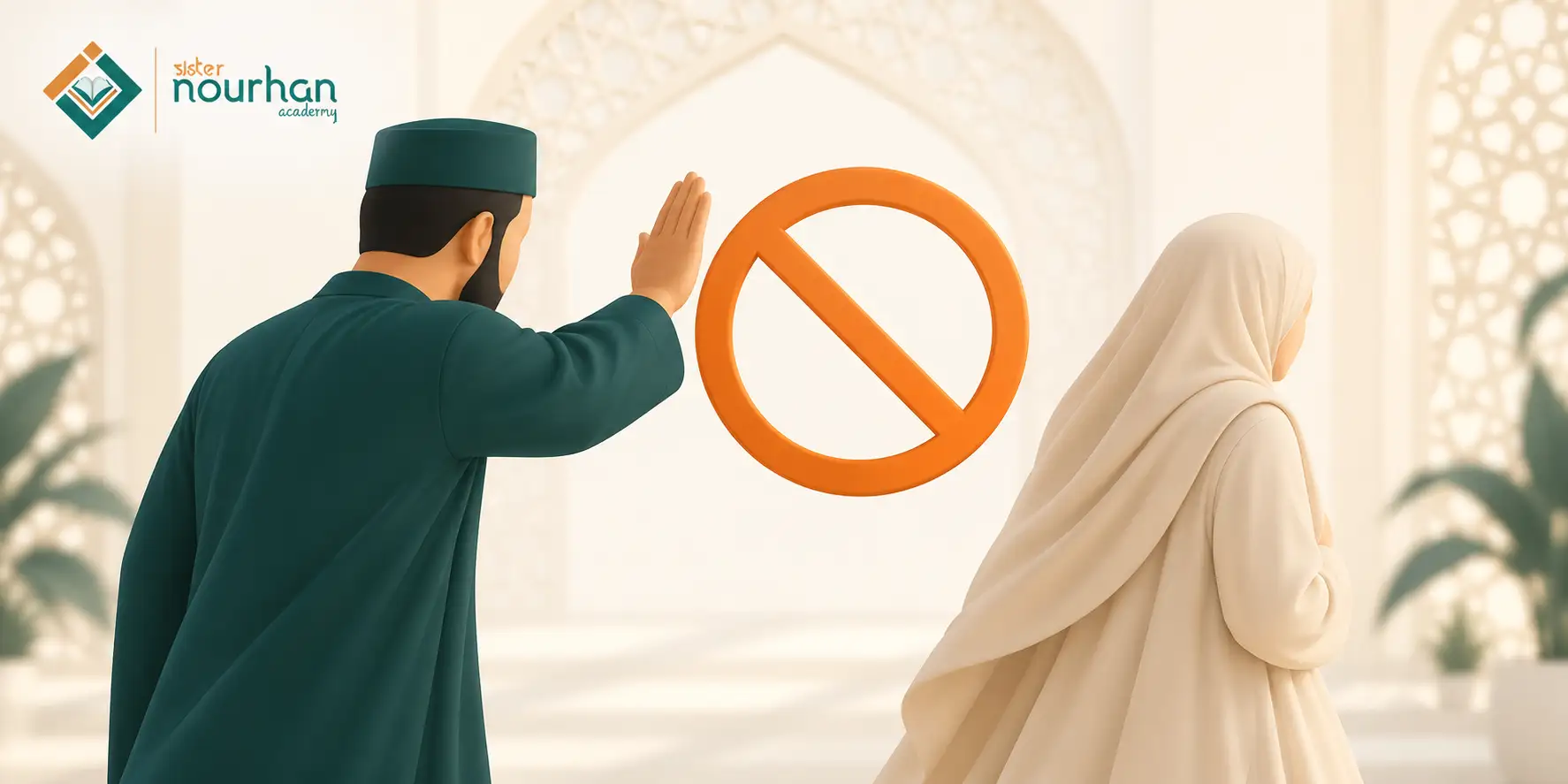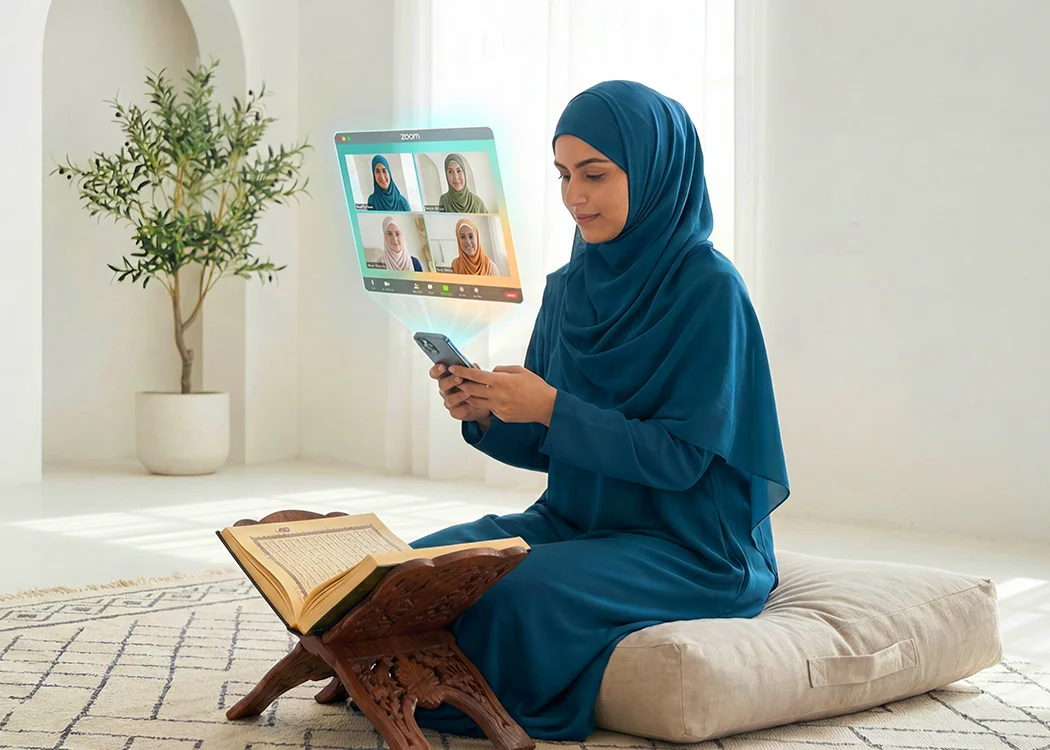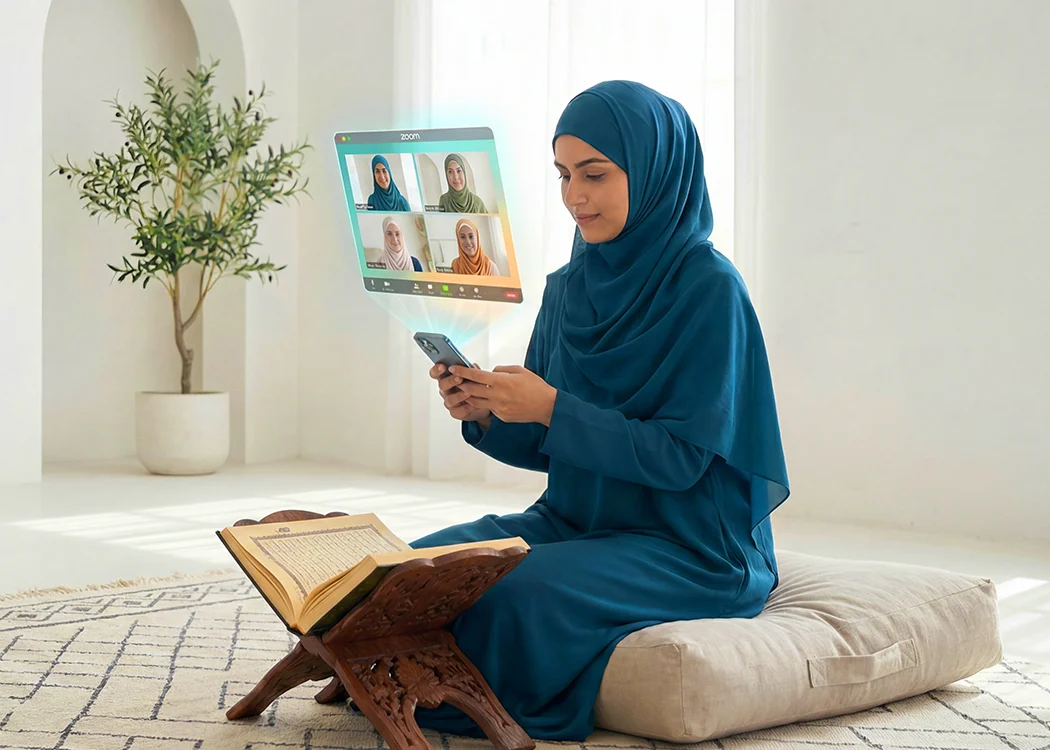
You reach for the mushaf late at night, hair loose, house quiet - and you pause. Do you have to wear hijab when reading Quran, or can you simply begin?
That hesitation stops thousands of sisters from opening the Book at all, which is the real loss. A question meant to increase reverence ends up creating distance instead.
At Sister Nourhan Academy, our female teachers hear this question in the very first lesson, almost every week. So let's answer it properly — clearly, kindly, and with the evidence behind it.
By the end, you will know exactly when covering is required, when it isn't, and which rules people confuse with it.
What You Will Learn in This Article:
The direct scholarly ruling on covering your hair while reciting Quran.
Why prayer and recitation follow two completely different rules.
How wudu, menstruation, and touching the mushaf actually work.
The etiquette that carries far more weight than a headscarf.
How to recite correctly with guided support from qualified female teachers.
Do You Have To Wear Hijab When Reading Quran?
No — a woman is not required to wear hijab when reading Quran outside of prayer, as long as no non-mahram man can see her. Covering the hair is a condition for the validity of salah, not a condition for reciting or reading the Quran.
This is the position held across the major schools of jurisprudence. Recitation is an act of worship that carries recommended etiquette, but its validity does not depend on your clothing.
WHY SCHOLARS SEPARATE PRAYER FROM RECITATION
Jurists classify acts of worship by their conditions. Salah has strict, fixed conditions: purity, timing, direction of the qiblah, and covering the awrah — miss one, and the prayer is invalid.
Quran recitation has no such list. Nothing in the Book or the Sunnah makes head covering a requirement for reading, which is why scholars place it under adab (etiquette) rather than shurūt (conditions).
The practical result is simple. If you recite without a scarf while alone, your recitation is fully valid and fully rewarded.
THE ONE FACTOR THAT ACTUALLY CHANGES THE ANSWER
The deciding factor is not the Quran in your hands — it is who is in the room. Hijab is legislated in relation to people, not in relation to the act of reading.
So the question shifts from "am I reciting?" to "can a non-mahram see me right now?" That single reframe resolves nearly every version of this question. Institutions such as Egypt's Dar al-Ifta publish accessible rulings on this distinction for everyday practice.
The Difference Between Reciting Quran And Praying
Most of the confusion comes from one habit: we usually recite inside prayer, so we mentally attach prayer's rules to recitation itself. Separating the two clears things up immediately.
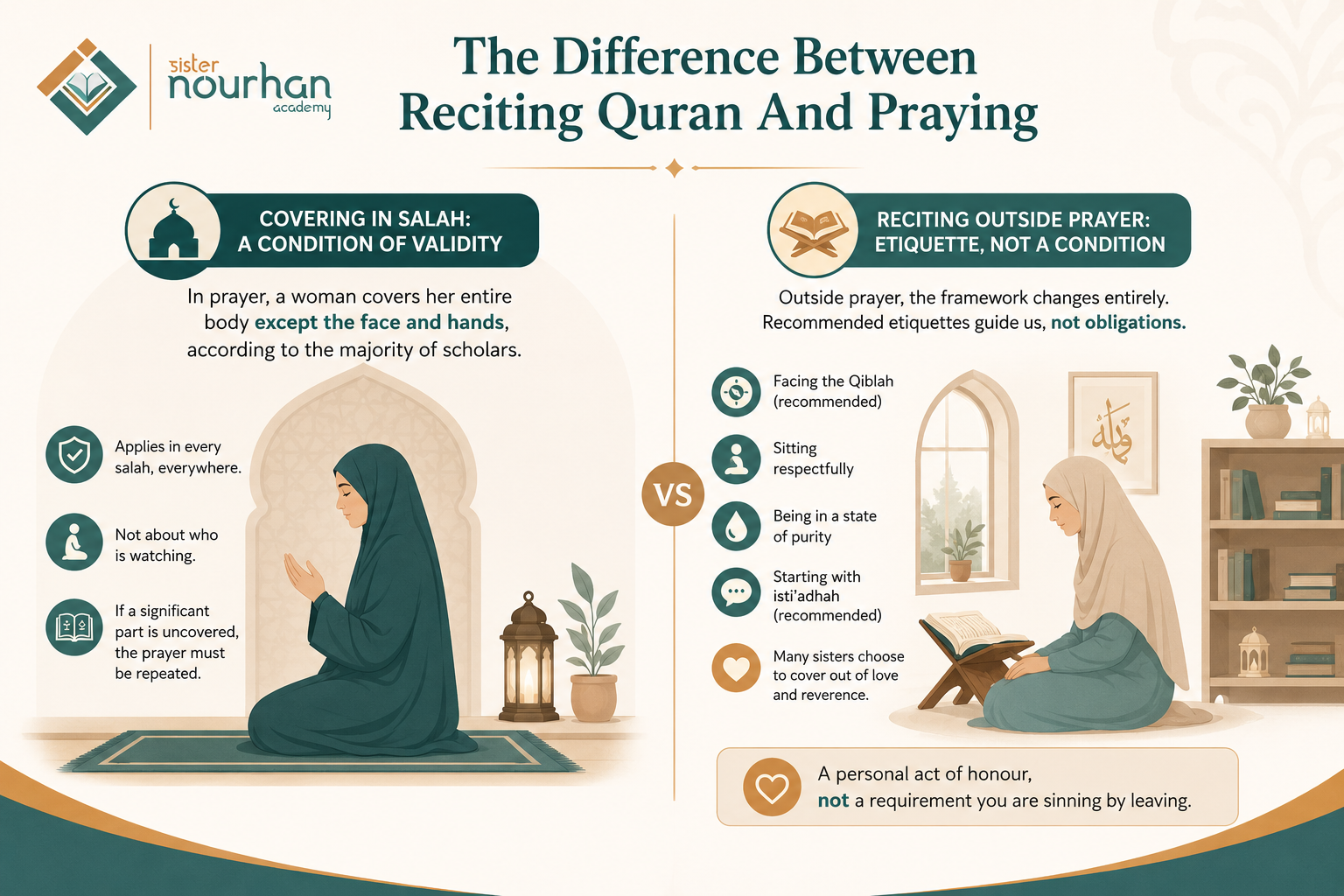
COVERING IN SALAH: A CONDITION OF VALIDITY
In prayer, a woman covers her entire body except the face and hands, according to the majority of scholars. This applies whether she prays alone in a locked room or in a crowded masjid.
Here, covering is not about who is watching — it is about standing before Allah in a prescribed state. If a significant portion is uncovered during salah, the prayer must be repeated.
RECITING OUTSIDE PRAYER: ETIQUETTE, NOT A CONDITION
Outside prayer, the framework changes entirely. Scholars recommend facing the qiblah, sitting respectfully, being in a state of purity, and beginning with isti'adhah — all recommended, none obligatory.
Many sisters still choose to cover out of love and reverence, and that intention is beautiful. Just know the difference: it is a personal act of honour, not a requirement you are sinning by leaving.
Read also: Can I Read the Quran on My Period? What Every Muslim Woman Should Know
Shots from Our Classes
Take a moment to view the video below to see how our teachers provide clear, supportive corrections during a session.
Enrich Your Islamic Knowledge
Deepen your understanding of Fiqh, Aqeedah, and Hadith with dedicated female scholars at Sister Nourhan Academy.
Start Your Free Trial NowCan I Read Quran Without Hijab At Home?
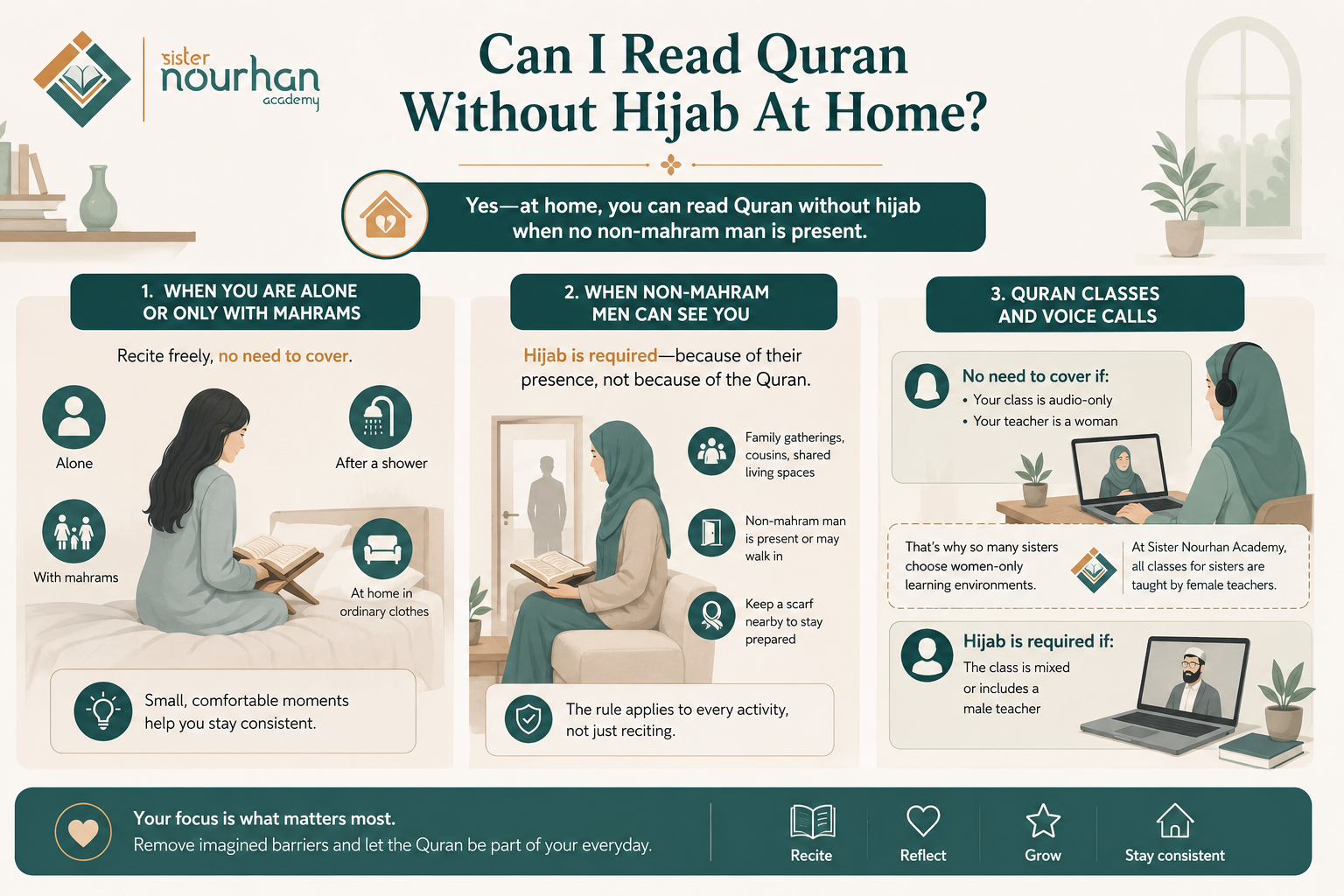
Yes — you can read Quran without hijab at home whenever no non-mahram man is present. Your home is exactly where this permission applies most naturally.
Let's break down the everyday situations sisters actually ask about.
1. WHEN YOU ARE ALONE OR ONLY WITH MAHRAMS
Alone in your room, in bed, or after a shower — recite freely. There is no requirement to cover, and no deficiency in your recitation or your reward.
The same applies around your mahrams: father, husband, brothers, sons, grandfathers, uncles. Ordinary home clothing is sufficient in their presence, whether you are reciting or not.
This matters practically, because the sisters who memorise most consistently are the ones who recite in small, comfortable pockets of the day. Removing an imagined barrier often doubles someone's daily portion.
2. WHEN NON-MAHRAM MEN CAN SEE YOU
Here the ruling flips — but not because of the Quran. If a non-mahram man is present or may walk in, hijab is required regardless of whether you are reciting, cooking, or scrolling your phone.
Think of a family gathering with cousins, a shared living room, or an open front door. The obligation comes from their presence, and it applies equally to every activity.
Keep a scarf near your reading spot for this reason. It removes friction and lets you continue without breaking your flow.
Learn the Quran the way it deserves to be recited. Sister Nourhan Academy pairs you with a qualified female teacher for 1-on-1 Private Quran Lessons Online built around your level and your schedule.

3. QURAN CLASSES AND VOICE CALLS
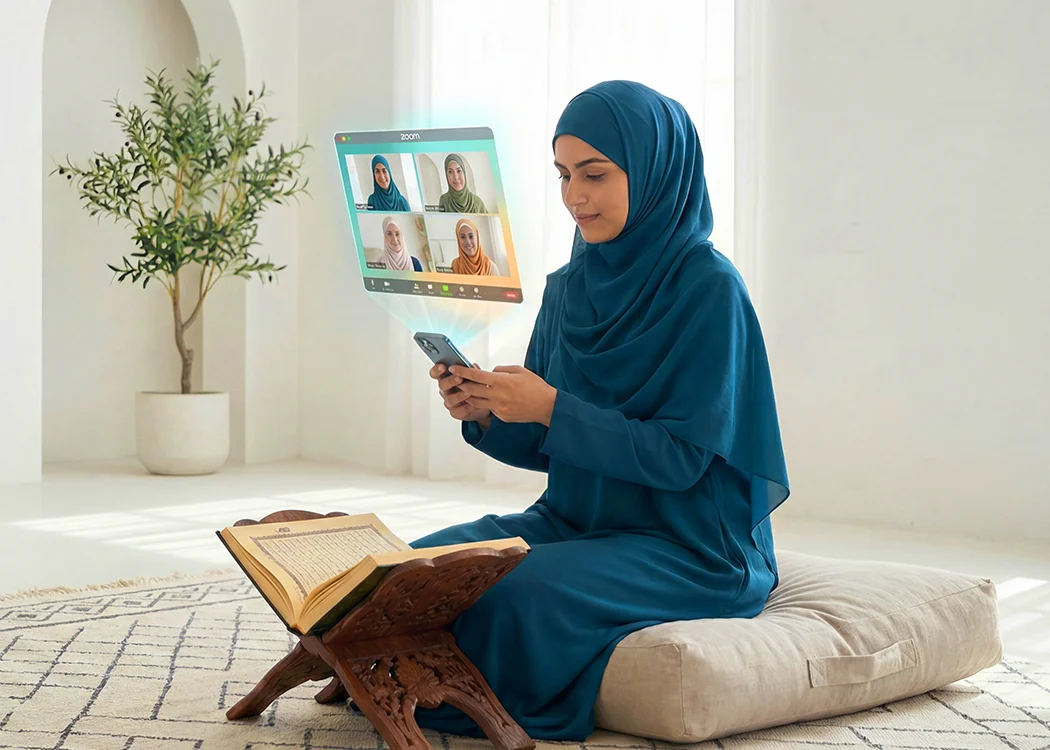
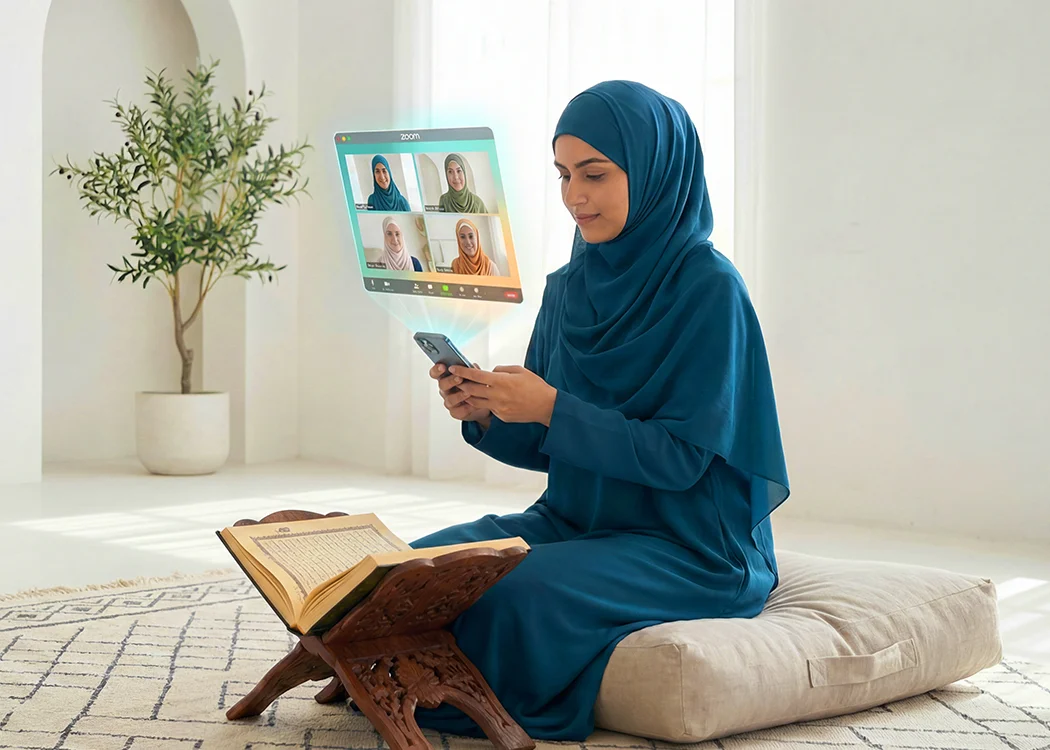
If your class is audio-only, or your teacher is a woman, there is no requirement to cover. This is precisely why so many sisters choose women-only learning environments.
At Sister Nourhan Academy, every class for sisters is taught by a female teacher, so you can study comfortably in your own home. Programs like Quran with Tajweed for Sisters are designed with that comfort built in from the start.
If a class is mixed or includes a male teacher, standard hijab rules apply for video — again, because of the people present, not the recitation.
Check this article: Do You Need Wudu to Read the Quran? A Complete Guide
Purity Rules People Confuse With Hijab
Two other rulings get tangled into this question and cause unnecessary guilt. Sorting them out saves a lot of anxiety.
DO YOU NEED WUDU TO READ QURAN?
You need wudu to touch the physical mushaf, according to the four major schools — but not to recite from memory or read from a screen. That distinction resolves most daily situations.
Reciting Surah al-Mulk before sleep from memory requires nothing. Reading from a phone application is treated by most contemporary scholars as different from handling the mushaf, since the text is not permanently inscribed.
If you prefer caution, keep wudu when reading and use a cover or sleeve to hold the mushaf.
READING DURING MENSTRUATION AND POSTPARTUM BLEEDING
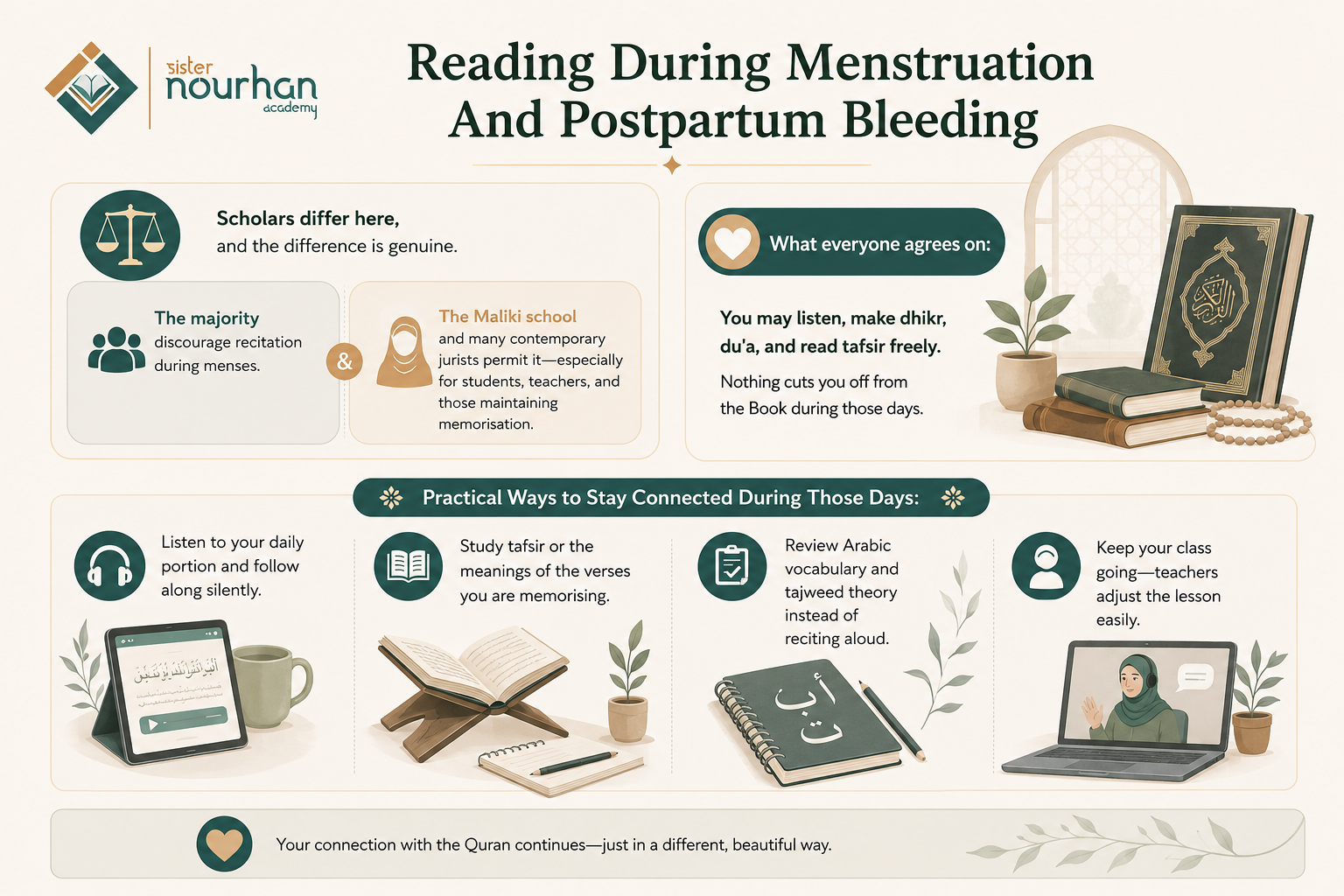
Scholars differ here, and the difference is genuine. The majority discourage recitation during menses, while the Maliki school and many contemporary jurists permit it — especially for students, teachers, and those maintaining memorisation.
What everyone agrees on: you may listen, make dhikr, du'a, and read tafsir freely. Nothing cuts you off from the Book during those days.
Practical Ways to Stay Connected During Those Days:
Listen to your daily portion and follow along silently.
Study tafsir or the meanings of the verses you are memorising.
Review Arabic vocabulary and tajweed theory instead of reciting aloud.
Keep your class going — teachers adjust the lesson easily.
If you want a clear grounding in these rulings rather than scattered opinions, our Islamic Studies courses cover fiqh of purity and worship step by step.
Stop guessing the rules. One structured course with a qualified teacher replaces years of half-answers — book your free trial and ask everything you've been unsure about.
The Etiquette That Matters More Than The Headscarf When Reading Quran
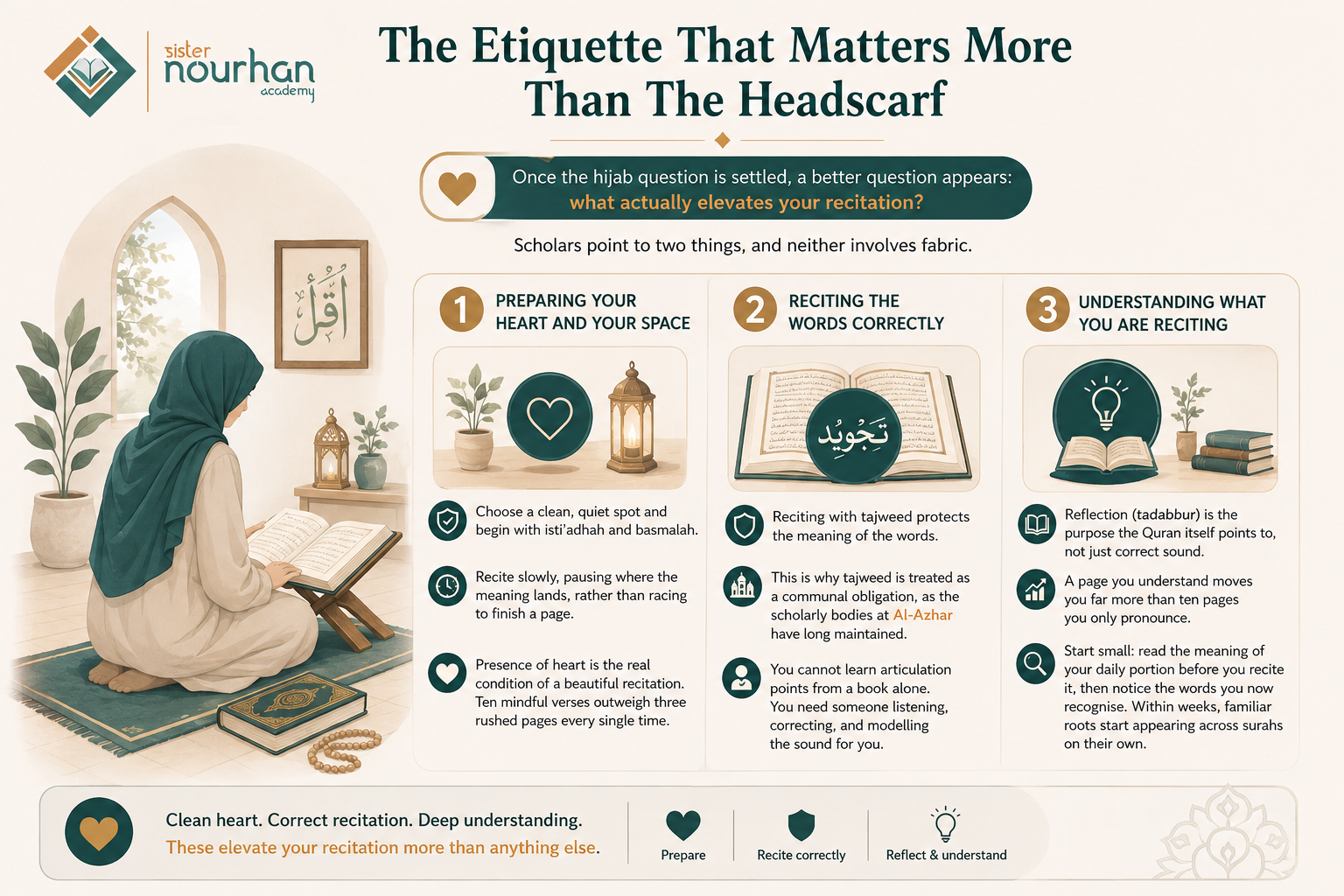
Once the hijab question is settled, a better question appears: what actually elevates your recitation? Scholars point to two things, and neither involves fabric.
1. PREPARING YOUR HEART AND YOUR SPACE
Choose a clean, quiet spot and begin with isti'adhah and basmalah. Recite slowly, pausing where the meaning lands, rather than racing to finish a page.
Presence of heart is the real condition of a beautiful recitation. Ten mindful verses outweigh three rushed pages every single time.
2. RECITING THE WORDS CORRECTLY
Reciting with tajweed protects the meaning of the words — and mispronunciation can genuinely change what a verse says. This is why tajweed is treated as a communal obligation in classical scholarship, as the scholarly bodies at Al-Azhar have long maintained.
You cannot learn articulation points from a book alone. You need someone listening, correcting, and modelling the sound for you.
3. Understanding What You Are Reciting
Reflection (tadabbur) is the purpose the Quran itself points to, not just correct sound. A page you understand moves you far more than ten pages you only pronounce.
Start small: read the meaning of your daily portion before you recite it, then notice the words you now recognise. Within weeks, familiar roots start appearing across surahs on their own.
This is why so many of our students pair their recitation track with Arabic courses — understanding the language turns recitation into a conversation with the verses.
Three Misconceptions Worth Clearing Up
A few beliefs get repeated so often that sisters treat them as rulings, when scholars never stated them at all. Here are the three that come up most in our classes, followed by what the evidence actually says.
"My recitation doesn't count without hijab." It is valid and fully rewarded either way.
"I need wudu for everything Quran-related." Only for touching the physical mushaf.
1. "RECITING WITHOUT A HEADSCARF IS DISRESPECTFUL"
Respect in worship is defined by what the Lawgiver asked for, not by what feels reverent to us. Nowhere in the Quran or the Sunnah is head covering attached to the act of recitation.
Adding conditions that scholars never legislated creates hardship rather than honour. The Prophet ﷺ recited in his wife's lap, and the household narrations show recitation as a natural part of home life.
If covering helps you feel more present, keep doing it — as a personal choice, not a rule you impose on yourself or others.
2. "My Recitation Doesn't Count Without Hijab"
Your recitation is completely valid, and the reward per letter recited is not reduced by what you are wearing. Nothing about your clothing affects whether the recitation is accepted.
This misconception carries a real cost: sisters delay reading until they are "properly dressed," and the delay quietly turns into skipped days. Consistency is what builds a strong relationship with the Quran, and small daily portions beat occasional long sessions.
The practical fix is to keep a mushaf where you sit most, so nothing stands between you and five minutes of recitation.
"I Need Wudu for Everything Quran-Related"
Wudu is required for touching the mushaf according to the four schools, and that is the extent of it. Reciting from memory, listening, reading a translation, or reading from a phone screen do not require it.
Many sisters also assume they must stop reciting entirely during menstruation, which — as covered earlier — is a point of genuine scholarly difference, not a settled prohibition.
If these distinctions feel blurry, that is normal; they belong to the fiqh of purity, which is taught systematically in our Intensive Islamic Course for Females and Sisters rather than picked up piece by piece.
You can also read: How to Learn to Read Quran for Beginners: A 10-Step Guide
How Sister Nourhan Academy Helps You Recite With Confidence
Knowing the ruling is step one. Actually reciting the Quran beautifully, consistently, and with understanding is where most people need real support — and that is exactly what we built the academy for.
Sister Nourhan Academy is an online Quran, Arabic, and Islamic studies academy serving students worldwide, with lessons running from 8:00 AM to 2:00 AM Egypt time. Every lesson is one-to-one, so nobody learns at someone else's pace.
1. FEMALE TEACHERS AND WOMEN-ONLY CLASSES
Our sisters' programs are taught exclusively by qualified female teachers, many Al-Azhar trained. That means no hesitation about hijab, video, or voice — just focused learning in a space designed for you.
You can view teacher profiles and student reviews on our about page before you ever commit to a lesson.

2. A PROGRAM FOR EVERY AGE AND EVERY LEVEL
Whether you are decoding your first Arabic letters or completing your hifz, there is a track built for that exact stage. Our catalogue includes over forty Quran programs alone.
Hifz for Females — structured memorisation with revision plans.
Hifz for Kids — gentle, engaging sessions for young learners.
Arabic Courses — read, write, and speak the language of the Quran.
Understanding what you recite transforms the experience entirely. That is why so many students pair a Quran track with Arabic or Islamic studies.

3. FLEXIBLE SCHEDULING AND A FREE TRIAL FIRST
You choose your days, your times, and your pace — and you can reschedule when life happens. Students in North America, Europe, and the Gulf all find slots that fit their week.
Best of all, your first session is free. You meet your teacher, get your level assessed, and receive a personalized plan before paying anything. More answers on levels, pricing, and scheduling are waiting on our blog and contact page.
See our teaching methods
Experience the quality of our instruction firsthand by watching a live lesson snippet below.
Enrich Your Islamic Knowledge
Deepen your understanding of Fiqh, Aqeedah, and Hadith with dedicated female scholars at Sister Nourhan Academy.
Start Your Free Trial Now
Conclusion
Let's bring it together. So the next time you pause and ask, do you have to wear hijab when reading Quran, the answer is settled: covering the hair is a condition for prayer, not for recitation.
Can I read Quran without hijab at home? Yes — whenever no non-mahram man is present. Wudu is required only for touching the physical mushaf, and during menstruation, listening, dhikr, and tafsir keep you connected while reputable scholarly opinion permits more.
The takeaway: never let an uncertain ruling keep the Quran closed. Reverence is measured by presence of heart and correctness of recitation — not by a scarf.
Start Your First Lesson Today!
Book your free trial lesson with a qualified female teacher at Sister Nourhan Academy. Reserve your session now — choose your time, meet your teacher, and start reciting with confidence this week.
Watch a real session from our academy:
Practical Application of Quranic Madd (prolongation) Rules
That short clip is an ordinary lesson at Sister Nourhan Academy — a teacher listening, correcting, and explaining until the rule clicks. Your first session runs the same way: a level check, a personalised plan, and answers to every question you've been holding back.
Discover our Islamic Studies Courses
No payment, no commitment — just book your free trial, pick a time between 8 AM and 2 AM Egypt time, and start this week.

Frequently Asked Questions
In Which Surah Does Allah Mention Hijab?
The main verses are Surah An-Nur (24:31), which instructs believing women to draw their khimar over the chest, and Surah Al-Ahzab (33:59) on the jilbab. Studying these verses with their tafsir gives far more clarity than isolated quotes. Sister Nourhan Academy's Islamic Studies teachers walk you through both verses with their context and classical commentary, verse by verse.
Is Hijab Mandatory According To The Quran?
Yes — the overwhelming majority of scholars, across all four schools, hold that hijab is obligatory for adult Muslim women based on the verses above and the Sunnah. That obligation relates to being seen by non-mahrams, which is exactly why it does not apply to private recitation at home.
Can I Read The Quran Without Covering My Awrah?
Your recitation remains valid, but scholars consider it poor etiquette to recite while undressed, and recommend being modestly clothed out of respect. Reading Quran in ordinary home clothing is perfectly fine — the recommendation is about dignity, not a condition of validity.
Can I Read The Quran On My Phone Without Hijab?
Yes, on both counts: no headscarf is required when no non-mahram is present, and most contemporary scholars do not require wudu for a screen. It is one of the easiest ways to keep a daily portion, and our teachers help you build that habit into a structured plan.
Did The Prophet Muhammad's Wives Wear Hijab?
Yes, the Mothers of the Believers observed hijab, and Surah Al-Ahzab (33:53) addresses an additional level of screening specific to them. Their narrations also show recitation, learning, and teaching as a normal part of daily home life.
Is There A Punishment For Not Wearing Hijab In Islam?
Islamic law prescribes no worldly punishment for it; scholars treat it as an obligation between a person and Allah, approached with encouragement rather than force. If you are still learning, start with knowledge, not guilt — that is the approach every teacher at Sister Nourhan Academy takes with new students.