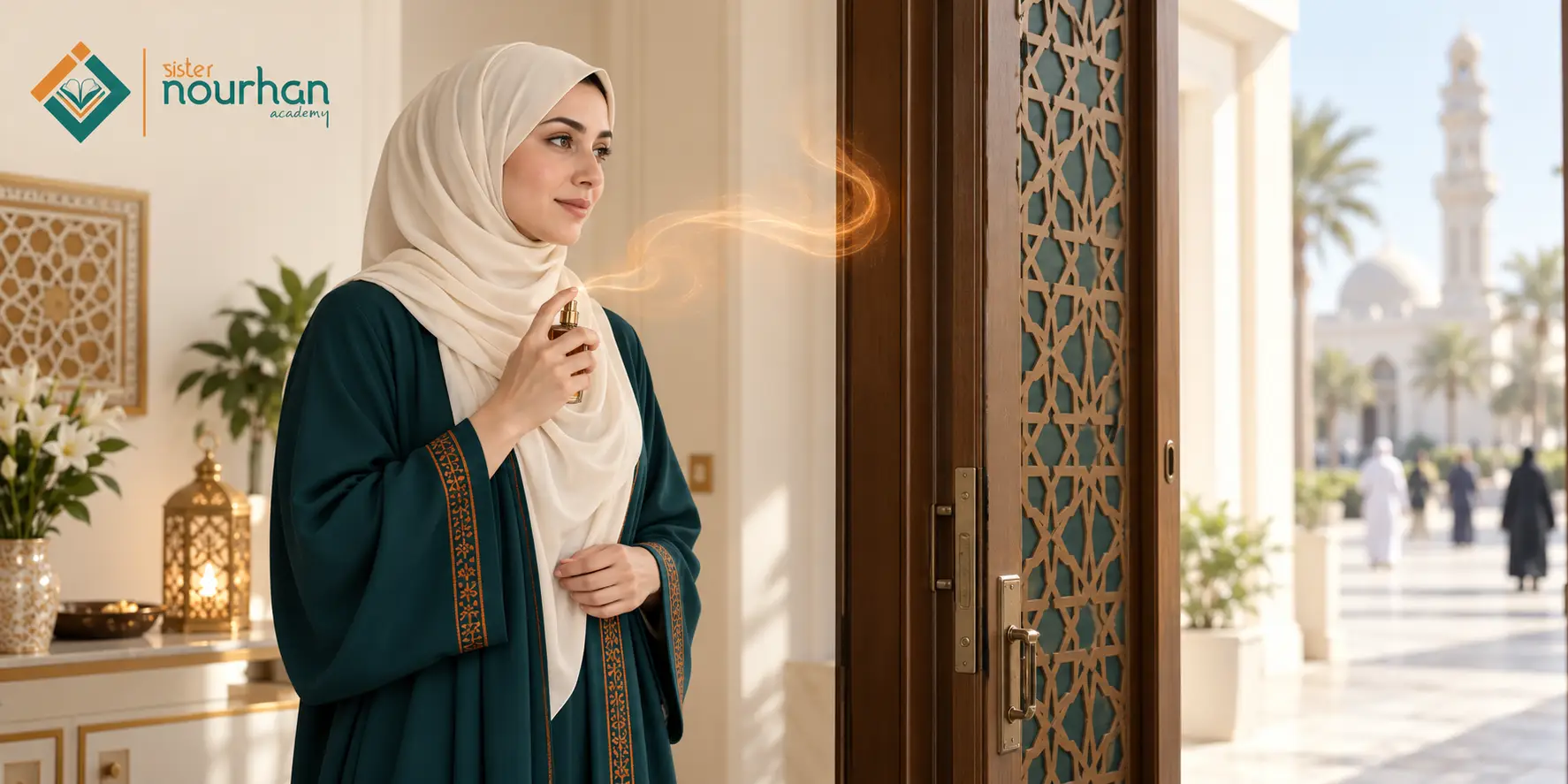
Two authentic narrations sit side by side in the same books of hadith — one telling husbands never to block their wives from the masjid, another saying a woman's home is better for her. For thousands of sisters, that looks like a contradiction, and the confusion quietly turns into guilt.
The hadith about women praying at home vs the mosque is one of the most searched and most misread topics in women's fiqh. Here at Sister Nourhan Academy, our female teachers answer this question almost every week in class.
The truth is simpler and far gentler than the online arguments suggest. Both narrations are authentic, both are practised, and understanding how scholars reconciled them changes how you feel about your own salah.
By the end of this article you will know exactly which narrations exist, how they fit together, and what they mean for your prayer this week.
Key highlights of this article:
The authentic narrations permitting women to pray in the masjid.
The narration recommending the home, and what "better" really means.
How classical scholars reconciled both texts without rejecting either.
The evidence on whether a woman may lead other women in prayer.
Practical etiquette for sisters attending congregational prayer.
Understanding The Hadiths About Women Praying At Home Vs. The Mosque
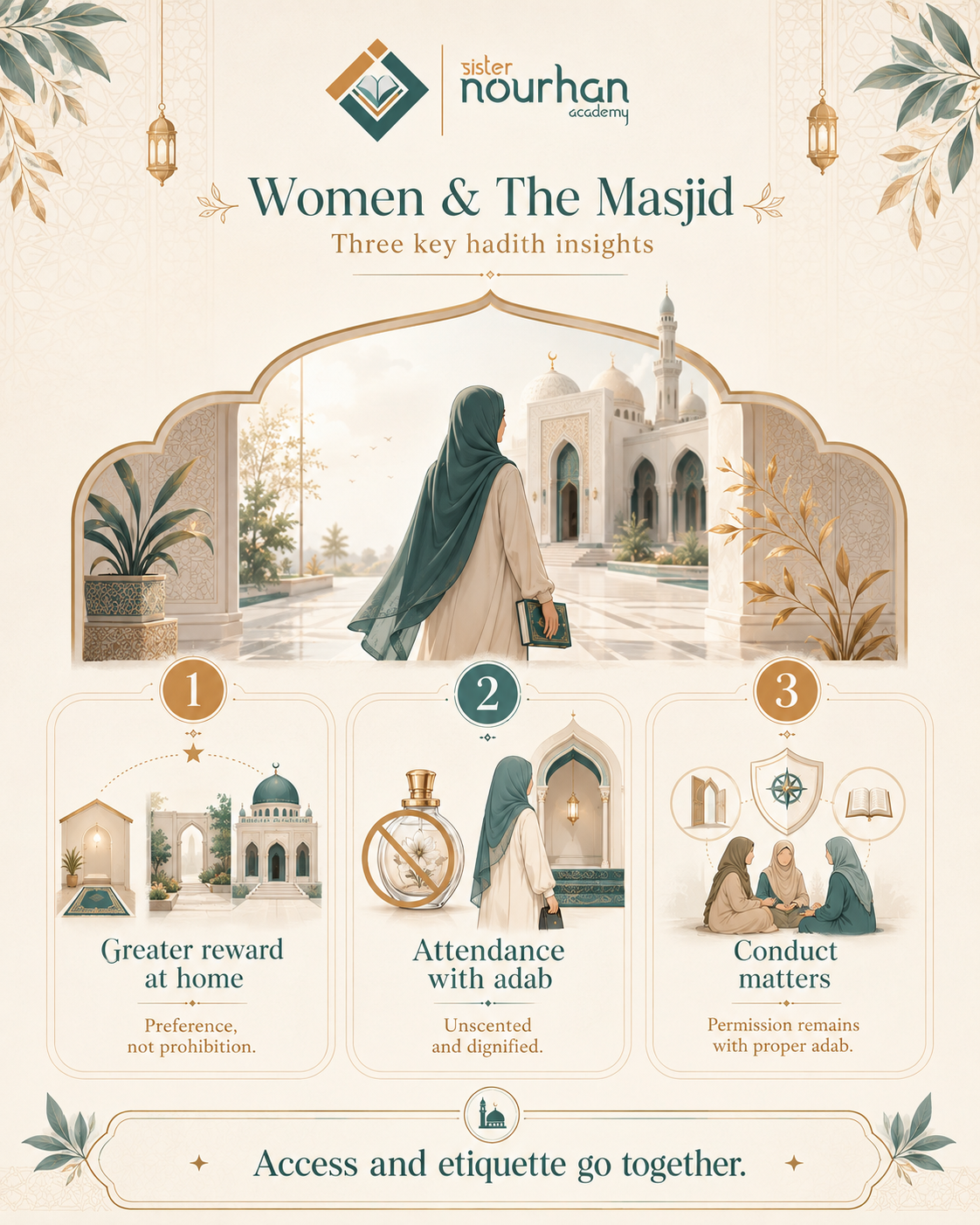
The hadiths about women praying at home and attending the mosque address two related but distinct points: permission and preference.
Some authentic narrations clearly establish that women may attend the mosque, while others indicate that praying at home can be better for them.
Reading these narrations together helps explain the balanced Prophetic guidance without treating permission to attend the mosque and the virtue of praying at home as contradictory.
1. The Hadith Permitting Women to Attend the Mosque
Several authentic hadiths explicitly establish a woman's right to attend the mosque. The Prophet ﷺ instructed Muslim men not to prevent women from going to the houses of Allah when they wished to attend.
Abdullah ibn Umar (رضي الله عنهما) reported that the Messenger of Allah ﷺ said:
«لَا تَمْنَعُوا إِمَاءَ اللَّهِ مَسَاجِدَ اللَّهِ»
“Do not prevent the female servants of Allah from the mosques of Allah.” Sahih Muslim 442a
Another authentic narration specifically addresses the situation in which a woman asks permission to attend the mosque.
Ibn Umar (رضي الله عنهما) reported that the Prophet ﷺ said:
«إِذَا اسْتَأْذَنَتِ امْرَأَةُ أَحَدِكُمْ إِلَى الْمَسْجِدِ فَلَا يَمْنَعْهَا»
“When the wife of one of you asks permission to go to the mosque, he should not prevent her.” Sahih Al-Bukhari 873
These narrations clearly establish that women were permitted to attend the mosque during the Prophet’s ﷺ lifetime. Therefore, the hadiths describing prayer at home as better should not be understood as a general prohibition against women attending the masjid.
2. The Hadith Recommending Prayer at Home for Women
Alongside the permission to attend the mosque, another narration indicates that praying at home can be better for a woman. Importantly, the same hadith first tells men not to prevent women from attending the mosque and then mentions the preference for prayer at home.
Arabic Hadith:
Abdullah ibn Umar (رضي الله عنهما) reported that the Messenger of Allah ﷺ said:
«لَا تَمْنَعُوا نِسَاءَكُمُ الْمَسَاجِدَ، وَبُيُوتُهُنَّ خَيْرٌ لَهُنَّ»
English Translation:
“Do not prevent your women from going to the mosques, although their houses are better for them.”
The structure of this hadith is important. It preserves the woman's permission to attend the mosque while also describing prayer at home as better for her.
For this reason, the two teachings do not have to be treated as contradictory: women may attend the mosque, while prayer at home is described in this narration as better for them. The distinction is between what is permitted and what is presented as preferable, rather than between what is permitted and prohibited.
Confused by narrations that seem to contradict? Our Hadith Course for Sisters teaches you to grade, compare and reconcile narrations yourself — no more guessing.
3. Why Both Hadiths Rulings Exist Together
Both rulings coexist because Islamic law distinguishes permissibility from preference. One text tells you what you may do; the other tells you what carries more reward.
Prayer in congregation remains virtuous for everyone, and the Quran addresses the believing community collectively in verses such as Surah Al-Baqarah 2:43 on Quran.com. Women share in that virtue whenever they attend.
The extra reward at home reflects the private, unseen worship Islam honours highly. Sincerity witnessed by no one carries its own weight.
The Key Hadith About Women Going to Masjid That Sisters Ask About Most
Beyond the two core texts, three narrations come up constantly in women's study circles. Each adds a practical detail rather than a new ruling.
Understanding them prevents the most common misapplications you will meet online.
1. The Hadith of Umm Humayd on the Virtue of Praying at Home
The hadith of Umm Humayd Al-Sa‘idiyyah (رضي الله عنها) provides important guidance on the virtue of a woman praying at home. She told the Prophet ﷺ that she loved praying behind him, and he acknowledged this before explaining that prayer in increasingly private areas of her home was better for her.
Umm Humayd (رضي الله عنها) said to the Messenger of Allah ﷺ:
«يَا رَسُولَ اللَّهِ، إِنِّي أُحِبُّ الصَّلَاةَ مَعَكَ» فَقَالَ: «قَدْ عَلِمْتُ أَنَّكِ تُحِبِّينَ الصَّلَاةَ مَعِي، وَصَلَاتُكِ فِي بَيْتِكِ خَيْرٌ مِنْ صَلَاتِكِ فِي حُجْرَتِكِ، وَصَلَاتُكِ فِي حُجْرَتِكِ خَيْرٌ مِنْ صَلَاتِكِ فِي دَارِكِ، وَصَلَاتُكِ فِي دَارِكِ خَيْرٌ مِنْ صَلَاتِكِ فِي مَسْجِدِ قَوْمِكِ، وَصَلَاتُكِ فِي مَسْجِدِ قَوْمِكِ خَيْرٌ مِنْ صَلَاتِكِ فِي مَسْجِدِي»
“O Messenger of Allah, I love to pray with you.” He said: “I know that you love to pray with me, but your prayer in your private room is better than your prayer in your chamber, your prayer in your chamber is better than your prayer in your house, your prayer in your house is better than your prayer in the mosque of your people, and your prayer in the mosque of your people is better than your prayer in my mosque.”
Musnad Ahmad 27090 – Dorar.net
The narration presents a hierarchy of virtue rather than a prohibition on mosque attendance. The Prophet ﷺ acknowledged Umm Humayd’s desire to pray with him while directing her toward what he described as better for her.
This should also be read alongside the authentic narrations instructing men not to prevent women from attending the mosque. Together, the hadiths distinguish between the permission to attend and the particular virtue associated with praying at home.
2. The Hadith About Women Going to the Mosque Without Perfume
The Prophet ﷺ permitted women to attend the mosque while also teaching specific etiquette for doing so. One of the clearest instructions concerns avoiding noticeable fragrance when attending congregational prayer.
Abu Hurayrah (رضي الله عنه) reported that the Messenger of Allah ﷺ said:
«أَيُّمَا امْرَأَةٍ أَصَابَتْ بَخُورًا فَلَا تَشْهَدْ مَعَنَا الْعِشَاءَ الْآخِرَةَ»
“Any woman who has applied incense should not attend the last ‘Isha prayer with us.”
This hadith establishes an important etiquette related to mosque attendance. The instruction addresses fragrance when attending the mosque rather than establishing a general prohibition on women attending congregational prayer.
Other Prophetic guidance concerning mosque attendance likewise emphasizes appropriate conduct and modesty. These teachings should therefore be understood alongside the authentic hadiths establishing women's permission to attend the masjid.
3. Aisha’s Statement About Women’s Conduct and Mosque Attendance
Aisha (رضي الله عنها) later commented on changes she observed in the conduct of some women after the Prophet’s ﷺ lifetime. Her statement is important because it shows how inappropriate behaviour could affect the practical discussion surrounding women’s mosque attendance.
Aisha (رضي الله عنها) said:
«لَوْ أَدْرَكَ رَسُولُ اللَّهِ ﷺ مَا أَحْدَثَ النِّسَاءُ لَمَنَعَهُنَّ كَمَا مُنِعَتْ نِسَاءُ بَنِي إِسْرَائِيلَ»
“If the Messenger of Allah ﷺ had seen what the women had introduced, he would have prevented them from going to the mosques, just as the women of the Children of Israel were prevented.” Sahih Al-Bukhari 869
This statement comes from Aisha (رضي الله عنها), rather than being a new command spoken by the Prophet ﷺ. She was commenting on changes in behaviour that she witnessed after his lifetime.
It should therefore be considered alongside the Prophet’s ﷺ explicit instruction not to prevent women from attending the mosques. The combined narrations highlight both permission to attend the mosque and the importance of observing proper Islamic etiquette when doing so.
Recommended reading: Do You Have to Wear Hijab When Reading Quran? Clear Rulings for Every Sister
Shots from Our Classes
Take a moment to view the video below to see how our teachers provide clear, supportive corrections during a session.
Enrich Your Islamic Knowledge
Deepen your understanding of Fiqh, Aqeedah, and Hadith with dedicated female scholars at Sister Nourhan Academy.
Start Your Free Trial NowIs Congregational Prayer Obligatory For Women?
No — congregational prayer in the masjid is not obligatory upon women, and this is a point of broad agreement among the four schools. She is rewarded if she attends and not sinful if she does not.
That single ruling resolves most of the anxiety surrounding this topic. The choice is genuinely yours.
Why The Obligation Differs For Men And Women
The obligation differs because Islamic law weighs responsibilities alongside circumstances. Caring duties, physical states such as menstruation and postpartum recovery, and safety of travel all shaped the ruling.
Jurists describe this as a mercy that removes hardship rather than a statement about spiritual rank. Reward is tied to sincerity, not to location.
Official fatwa bodies still address these questions today, and you can review contemporary rulings on women's worship through the English portal of Egypt's Dar Al-Ifta, a governmental Islamic authority.
Read also: What are the fasting rules for women during Ramadan?
What This Means For Jumu'ah
Jumu'ah is not obligatory upon women, though it is valid and rewarded if she attends. A narration in Sunan Abi Dawud lists women among those exempt from the obligation.
If she attends, her Jumu'ah counts and she does not repeat Dhuhr. If she stays home, she simply prays Dhuhr as normal.
Read also: Is there a Hadith that says women should not wear perfume outside?
Where A Woman Stands In A Mixed Congregation
Women stand in the rows behind the men. The Prophet ﷺ said the best rows for men are the front ones and the best rows for women are the last ones (Sahih Muslim 440a).
This arrangement protects focus and modesty for everyone present. It carries no implication about the value of her prayer.
Want the fiqh of salah explained clearly, step by step? The Fiqh Course walks you through purification, prayer and worship rulings with a teacher who answers every question.
Read also: Is taraweeh compulsory for ladies?

Worth checking out: Can I Read the Quran on My Period? What Every Muslim Woman Should Know
Can a Woman Lead a Woman in Prayer - Hadith Evidence and Scholarly Rulings
Yes, a woman may lead other women in prayer according to the majority of scholars. The question of whether a woman can lead a woman in prayer hadith evidence supports is settled by one direct prophetic report, so knowing that report matters more than knowing a single verdict.
The discussion is a genuine juristic difference, so knowing the evidence matters more than knowing one verdict.
Read also: Itikaf for ladies in ramadan
1. The Hadith of Umm Waraqah on Leading Prayer at Home
One of the main narrations discussed by scholars regarding a woman leading others in prayer is the hadith of Umm Waraqah (رضي الله عنها). The Prophet ﷺ used to visit her at home, appointed a mu’adhdhin for her household, and instructed her to lead the people of her household in prayer.
It was narrated from Umm Waraqah bint Abdullah ibn Al-Harith (رضي الله عنها):
«أَنَّ رَسُولَ اللَّهِ ﷺ كَانَ يَزُورُهَا فِي بَيْتِهَا، وَجَعَلَ لَهَا مُؤَذِّنًا يُؤَذِّنُ لَهَا، وَأَمَرَهَا أَنْ تَؤُمَّ أَهْلَ دَارِهَا»
“The Messenger of Allah ﷺ used to visit her at her house. He appointed a mu’adhdhin to call the Adhan for her, and he commanded her to lead the people of her household in prayer.” Sunan Abi Dawud 592
This narration is an important piece of evidence in the scholarly discussion about women leading prayer. Scholars who permit a woman to lead other women commonly cite the report of Umm Waraqah alongside reports concerning female Companions such as Aisha and Umm Salamah (رضي الله عنهما).
The precise scope of “the people of her household” has also been discussed by jurists, which is one reason the schools of Islamic law differ over how broadly the narration should be applied.
Read also: What are the rules of Wudu for women?
2. How The Four Schools Ruled On This
The schools divide into three positions, all built on the same limited evidence. Knowing which position you follow prevents unnecessary argument.
Shafi'i and Hanbali: permitted, including in obligatory prayers
Hanafi: technically valid but discouraged in congregation
Maliki: not permitted as an imam for other women
Differences like these are normal in fiqh and are not a sign of confusion in the religion. They reflect how much weight each imam gave to a single narration.
Read also: Hadith About A Woman Obeying Her Husband
3. Practical Guidance For Sisters Praying Together
If you follow a school that permits it, the etiquette is straightforward and easy to remember. Small details make the congregation feel settled.
She stands in the middle of the front row, not ahead of it
She recites aloud in the audible prayers
No adhan or iqamah is required for a private gathering
Two women alone form a valid congregation
Women's study circles and family gatherings apply this regularly. Learning it properly once removes a lifetime of hesitation.
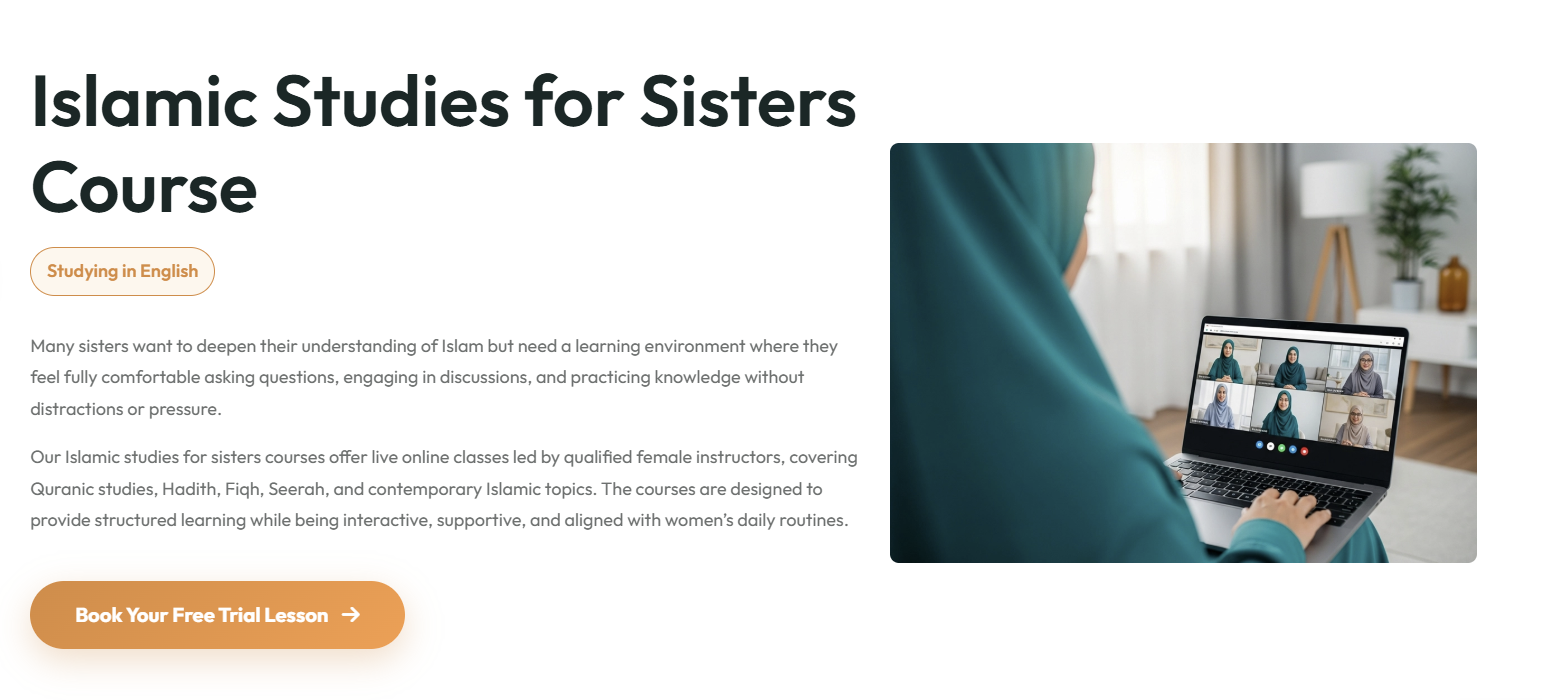
Study with sisters, taught by sisters. Islamic Studies for Sisters Course at Sister Nourhan Academy gives you a private, comfortable classroom for exactly these questions.
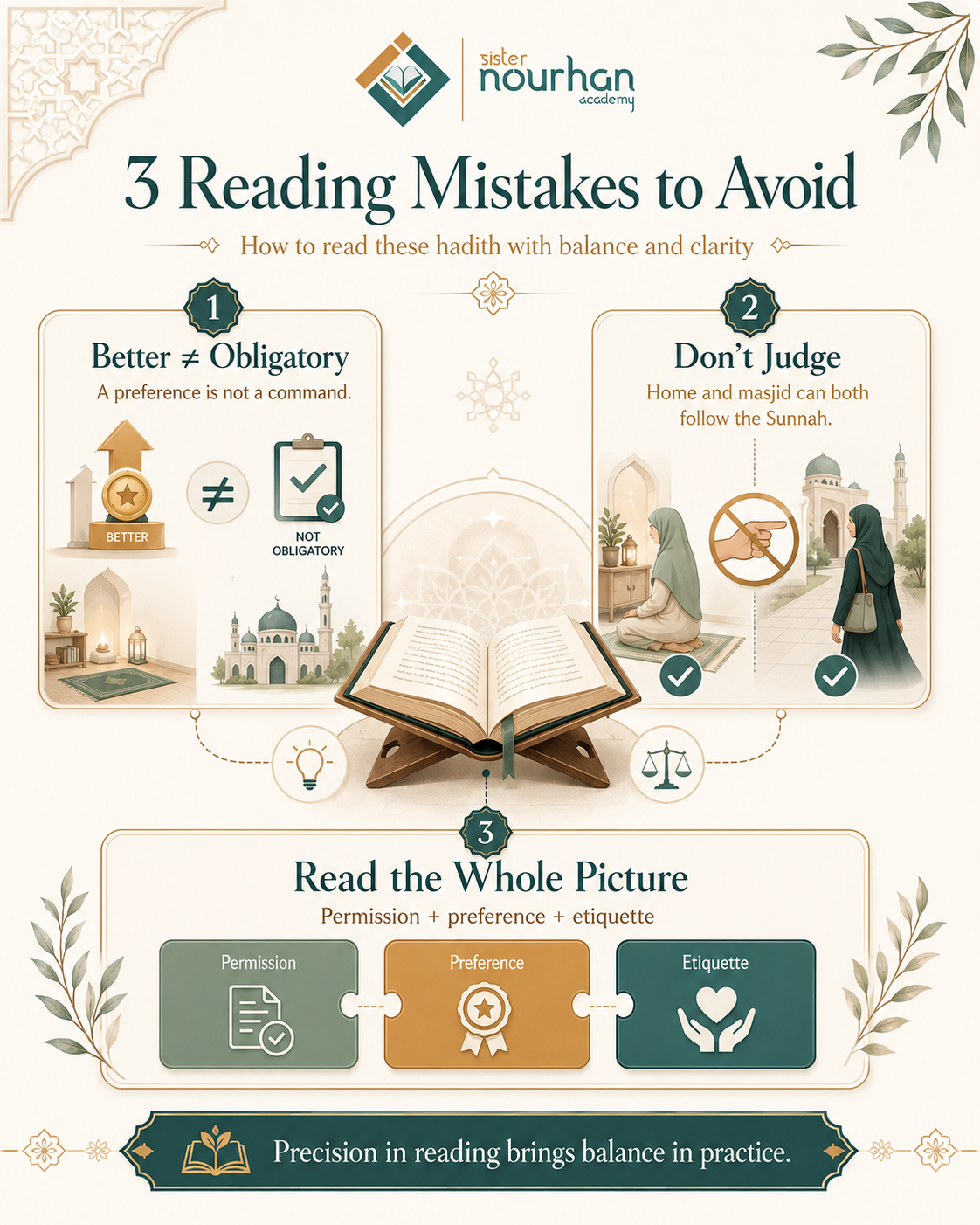
Three Mistakes Sisters Make When Reading These Hadith
Most of the distress around this topic comes from four predictable reading errors. Each one is easy to correct once you see it named.
Avoiding them will change how you engage with hadith generally, not just this file.
1. Treating "Better" As "Obligatory"
"Better for them" is a comparative, not a command. Upgrading a recommendation into an obligation invents a ruling Allah did not reveal.
The same logic applies across worship — night prayer is better than sleeping, yet sleeping is not sinful. Precision in language is precision in religion.
2. Judging Other Sisters' Choices
A sister at the masjid is exercising a permission the Prophet ﷺ personally protected. A sister at home is claiming a virtue he personally recommended.
Neither owes anyone an explanation. Both are following the Sunnah.
Read also: What are the Five Pillars of Islam for kids?
3. Reading One Narration In Isolation
A single narration rarely carries a complete ruling. The hadith about women praying at home vs the mosque only makes sense when the permission texts, the preference texts and the etiquette texts are read as one file.
This is precisely the skill classical scholarship trains.
You may also be interested in: Do You Need Wudu to Read the Quran? A Complete Guide
See our teaching methods
Experience the quality of our instruction firsthand by watching a live lesson snippet below.
Enrich Your Islamic Knowledge
Deepen your understanding of Fiqh, Aqeedah, and Hadith with dedicated female scholars at Sister Nourhan Academy.
Start Your Free Trial NowWhat You Gain By Studying These Rulings With Sister Nourhan Academy
Reading an article gives you answers; studying with a teacher gives you the ability to answer for yourself. That difference is the whole reason Sister Nourhan Academy exists.
Here is what sisters actually get when they join us.
1. Female Teachers Who Understand Your Questions
Every class for sisters is taught by a qualified female teacher, many of them Al-Azhar graduates. You can ask about menstruation, postpartum prayer or family circumstances without discomfort.
That comfort is not a small feature — it is often the reason a sister finally asks the question she has carried for years.

2. Evidence-Based Learning, Not Opinion
We teach you the narration, its grading, and the positions of the schools. You leave knowing why a ruling is what it is, not just what it is.
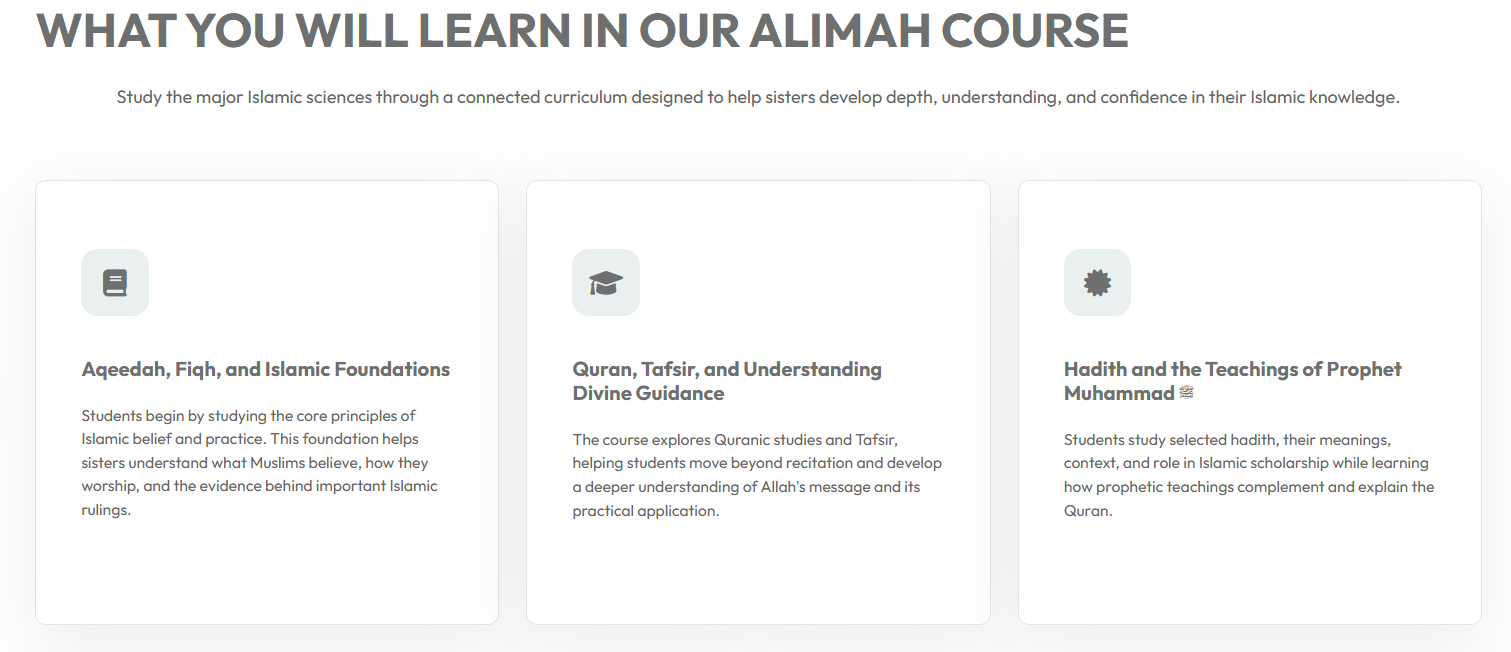
Our structured tracks build that skill gradually, from foundations to advanced study through the Alimah Course for Females.
3. A Flexible Schedule Built Around Real Life
Classes are one-to-one and online, scheduled around your work, children and time zone. Missed a session? You reschedule, you don't fall behind.
Sisters study from over thirty countries with us, at hours that suit them — early mornings, school hours or after bedtime.

4. Learning That Deepens Your Salah, Not Just Your Knowledge
Understanding these rulings changes how prayer feels. Add correct recitation and meaning, and salah stops being routine.
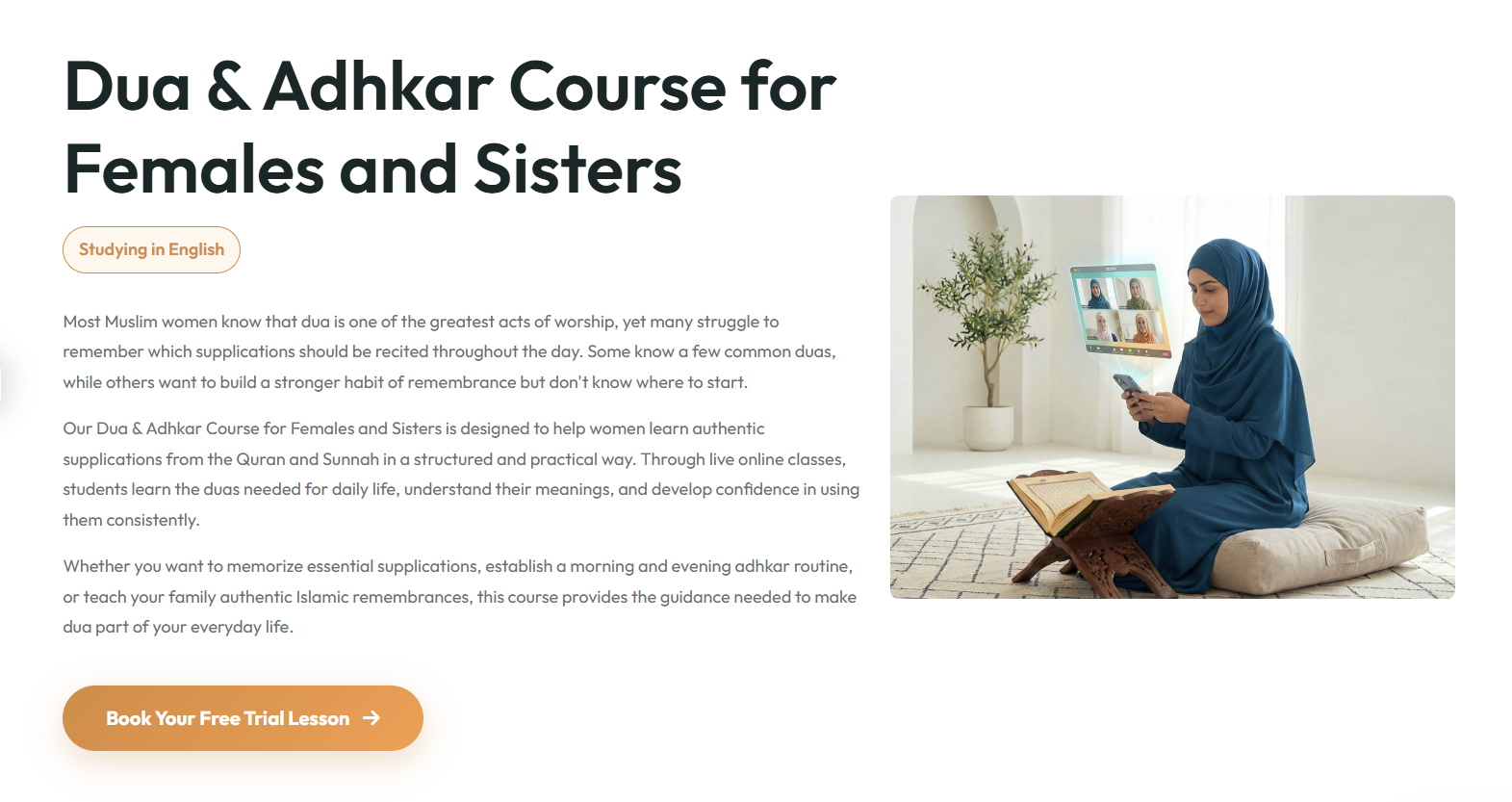
Many sisters pair their fiqh study with the Dua & Adhkar Course for Females and sisters to bring that connection into daily life.
Conclusion
The evidence is consistent once you read it in full. Women are permitted to attend the masjid and must not be prevented; the home carries additional reward; congregation is never obligatory upon her; and the majority of scholars permit a woman to lead other women in prayer.
The hadith about women praying at home vs the mosque was never a restriction dressed as advice. It is a permission and a preference offered together, so that every sister can choose what fits her circumstances without a trace of guilt.
Your ultimate takeaway: pray where your heart is most present and your circumstances allow — both doors were opened for you by the Sunnah itself.
Start Learning These Rulings Properly - Book Your Free Trial Class!
Stop piecing together rulings from arguments online. Sit with a qualified female teacher who will show you the narration, the grading, and the scholarly reasoning — and answer the follow-up question you have been too shy to ask.
Watch on our channel:
Master Tajweed with Nourhan Academy: Online Quran & Tajweed Classes
Your first class is completely free, with no card required. Book your free trial class now and choose the day and time that works for you. Thousands of sisters have already started with a single trial lesson and stayed for years.
Whether you want a clear grounding in worship rulings, a structured hadith track, or the Arabic to read classical texts yourself, there is a path here built for you.
Related courses for sisters:
Every week you wait is a week of unanswered questions. Choose your course, claim your free session, and let this be the month your understanding of worship finally becomes your own.

Frequently Asked Questions
Is It Better For A Woman To Pray At Home Or In The Mosque?
Authentic narrations state the home carries extra reward, while the masjid remains permitted and rewarded. Sister Nourhan Academy's Islamic studies teachers walk sisters through both texts so the choice feels informed, not anxious.
Can a husband stop his wife from going to the masjid?
No — the Prophet ﷺ explicitly instructed that women not be prevented when they ask permission. Our female instructors cover marital and worship rulings together, so sisters know their rights with evidence in hand.
Does a woman have to attend Jumu'ah prayer?
Jumu'ah is not obligatory upon women, though it is valid and rewarded if she attends. Sister Nourhan Academy's fiqh classes clarify exactly when Dhuhr replaces Jumu'ah and when it does not.
Can a woman lead a woman in prayer hadith — what does the evidence say?
Yes, the majority permit it based on the narration of Umm Waraqah leading her household. Our hadith track teaches sisters how to trace and grade this evidence themselves rather than rely on summaries.
Where do women stand when praying behind men?
Women pray in the rows behind the men, as the best rows for them are the last ones. Sister Nourhan Academy covers congregational etiquette practically, so first visits to the masjid feel comfortable and confident.
Do I need Arabic to study these hadith properly?
No, our classes teach fully in English with the Arabic text explained alongside. Sisters who want direct access to sources can add our women-only Arabic track at any stage.