

Picture this: a verse comes to mind while you're waiting for a flight, and you want to recite it quietly, but you haven't performed wudu. Does that carry any weight spiritually?
This is one of the most common questions among Quran learners, and understanding do you need wudu to read Quran shapes how confidently you approach daily recitation.
At Sister Nourhan Academy, our teachers guide students through the etiquette and rulings of Quran recitation as part of a complete learning journey.
Ahead, you'll find what Islamic scholarship says about reciting with and without ritual purity, and where the real boundaries lie.
What You Will Learn in This Article:
Whether you need wudu to read the Quran changes between memory-based recitation and touching the physical text.
The scholarly position on touching or holding a printed Quran without ritual purity.
How major impurity, menstruation, and postpartum bleeding are treated differently from minor impurity.
Practical exceptions granted to children memorizing the Quran and travelers carrying it in luggage.
A quick reference on when wudu for reading Quran is required versus simply recommended.
Do You Need Wudu to Read the Quran From Memory?
No, you do not need wudu to recite the Quran from memory, as long as you are free from major ritual impurity. Islamic scholars agree on this, though performing ablution beforehand remains the better practice.
The Agreement Among Islamic Scholars on Reciting From Memory
Classical scholars across all major schools of thought agree that a person with minor impurity may recite Quran verses aloud or silently from memory. This leaves no real dispute over reciting without touching the text itself.
Why Wudu Remains the Preferred Practice
Even though ablution is not obligatory for reciting from memory, scholars describe it as the more excellent and respectful choice. Approaching the words of the Quran in a state of purification reflects the honor due to the text.
Even though ablution isn't obligatory for reciting from memory, scholars describe it as the better, more respectful choice. It's also the same purification required before Salah — see How to Pray in Islam: A Step-by-Step Guide to learn the full process.
Shots from Our Classes
Take a moment to view the video below to see how our teachers provide clear, supportive corrections during a session.
Enrich Your Islamic Knowledge
Deepen your understanding of Fiqh, Aqeedah, and Hadith with dedicated female scholars at Sister Nourhan Academy.
Start Your Free Trial NowCan You Read the Quran Without Wudu When Holding the Physical Text?
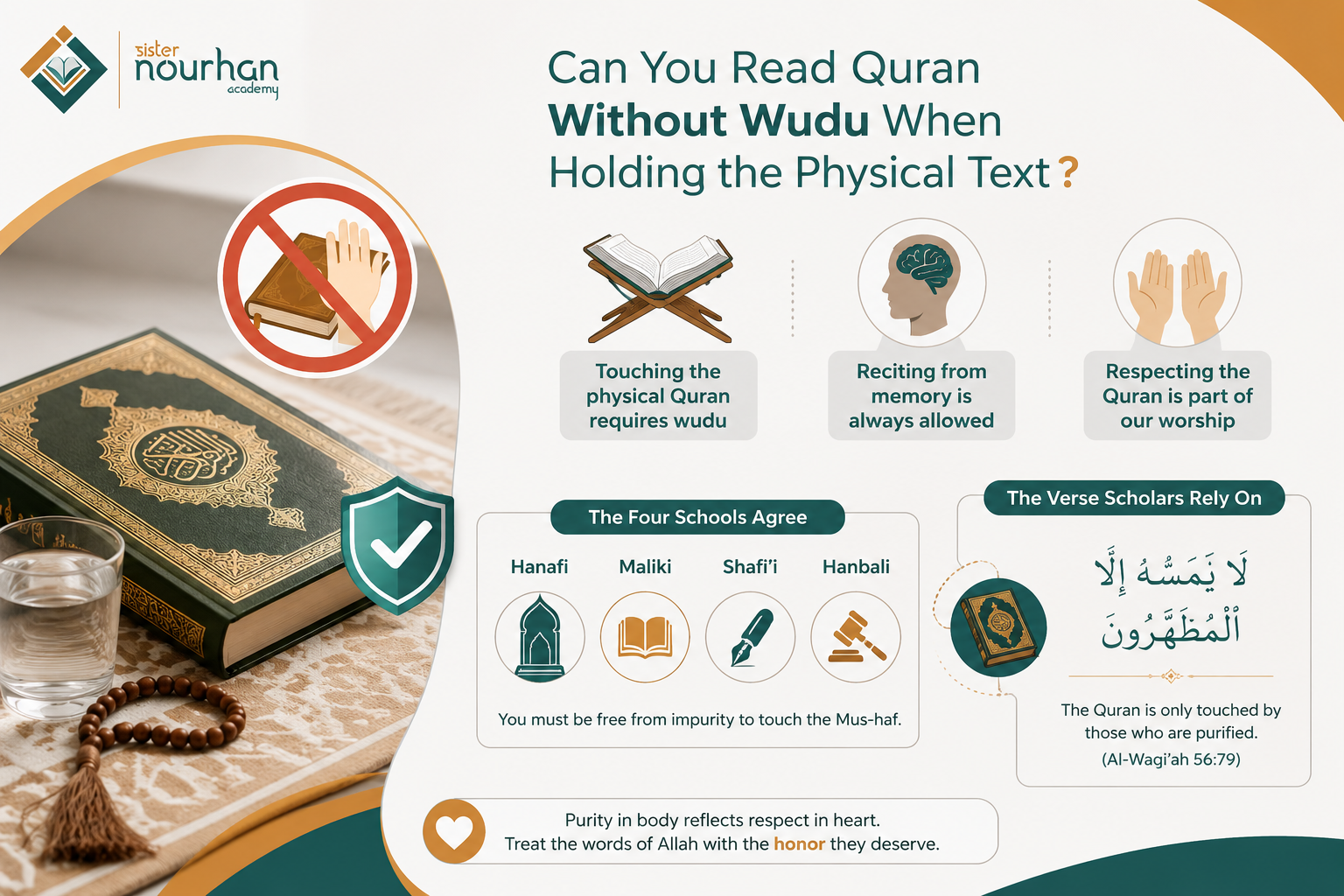
No, you cannot read the Quran without wudu while directly holding a printed copy, according to the majority of scholars. This restriction applies to physical contact with the mus-haf, not to memory-based recitation.
The Position of the Four Schools of Islamic Jurisprudence
The four major schools of Sunni jurisprudence agree that touching the physical Quran requires a person to be free from minor and major impurity. This remains the dominant and most widely followed position among scholars.
The Quranic Verse Scholars Rely On
Scholars point to the verse describing the Quran as untouched except by the purified, understood to refer to the physical copy believers hold. This interpretation underpins the touching restriction.
Do You Have to Have Wudu to Read the Quran When Touching the Mus-haf?
Yes, you have to have wudu to read the Quran by touching its pages, even briefly, according to mainstream scholarly opinion. This is exactly why you need wudu to read the Quran becomes a stricter question once a physical mus-haf is involved, whether reading, memorizing, or carrying it.
The Hadith Evidence Behind This Ruling
A well-known instruction attributed to the Prophet stated that only a person in a state of purity should touch the Quran. Scholars have relied on this guidance for centuries.
Reading Without Direct Contact With the Pages
If you want to look at the text without wudu, you may still read it visually as long as you avoid physically touching the pages. Some scholars also permit handling it through a barrier such as a cloth or glove.
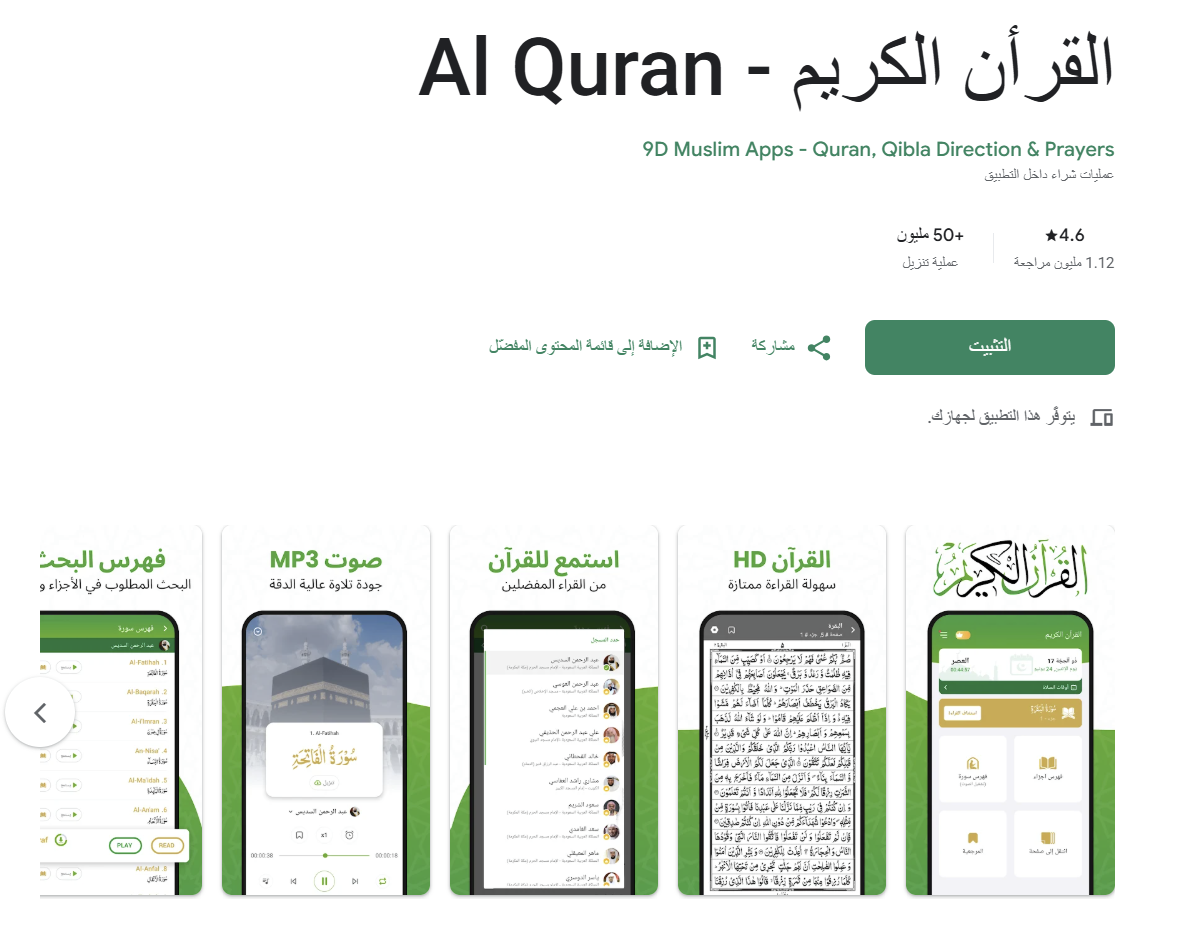
For moments when holding a physical mus-haf isn't possible, a digital Quran app such as Al Quran on Google Play offers a practical way to read the full text without direct contact with the pages.
Can I Recite Quran Without Wudu During Major Impurity?
No, you cannot recite Quran without wudu, or more precisely without a full ritual bath, during major impurity such as janabah. This restriction is stricter than the rule for minor impurity, since it applies to recitation itself, not just touching.
Why Janabah Differs From Minor Impurity
Major impurity removes a person's ability to recite Quran altogether until a complete ritual bath is performed, unlike minor impurity, which only restricts touching. Scholars overwhelmingly agree on this distinction.
The Ruling For Menstruating and Postpartum Women
Scholars differ on whether menstruating and postpartum women are treated the same as major impurity.
Many permit reciting from memory, given the extended, involuntary nature of this condition, which shows why do you need wudu to read Quran has more than one answer.
While your child learns to recite with confidence, why not help them understand the "why" behind every act of worship?
Sister Nourhan Academy's Five Pillars of Islam for Kids course brings Shahada, Salah, Zakat, Sawm, and Hajj to life through stories, songs, and hands-on practice.

Reading Quran Without Wudu For Children Learning the Quran
Yes, reading Quran without wudu is permitted for young children during their learning process, as a recognized exception to the general rule.
Parents often ask do you need wudu to read Quran when children are just starting to memorize, and the ruling here is deliberately more flexible.
The Practical Exception Granted To Young Learners
Requiring constant ablution from children learning the Quran would create an unreasonable burden on their education. The necessity of learning outweighs the restriction in this case.
Carrying the Quran Among Other Belongings
Carrying a bag or luggage that happens to contain a Quran does not require wudu, since the intention is transporting belongings, not handling the text itself.
See our teaching methods
Experience the quality of our instruction firsthand by watching a live lesson snippet below.
Enrich Your Islamic Knowledge
Deepen your understanding of Fiqh, Aqeedah, and Hadith with dedicated female scholars at Sister Nourhan Academy.
Start Your Free Trial NowCan We Read the Quran Without Wudu and Still Earn Full Reward?
Yes, can we read Quran without wudu and still receive complete reward for recitation? Scholarly rulings confirm this, since the reward tied to reciting Quran is not conditioned on the reciter's state of ablution.
The Reward Is Tied To Recitation, Not Ritual Purity
The multiplied reward promised for reciting each letter of the Quran applies regardless of whether the reciter has performed wudu. Ablution affects etiquette, not the reward's validity.
Why Scholars Still Recommend Ablution First
Despite this, scholars consistently encourage wudu before recitation as a matter of respect and spiritual readiness. It remains recommended etiquette when engaging with the Quran.
Turning every recitation session into a step closer to full memorization starts with guidance from teachers who genuinely care about your progress.
Curious how scholars trace a single ruling like this back through Quran, Hadith, and centuries of jurisprudence? That's exactly the kind of connected understanding the Alimah Course for Females builds, subject by subject.

Wudu For Reading Quran: A Quick Practical Summary
Wudu for reading Quran is required only when physically touching a printed copy, and recommended but not obligatory when reciting from memory. Major impurity requires a full ritual bath first, so do you need wudu to read Quran ultimately depends on how you engage with the text.
When Wudu Is Required
Touching or holding a physical Quran directly
Any recitation during a state of major impurity (janabah)
When Wudu Is Recommended But Not Mandatory
Reciting Quran verses from memory without touching the text
Viewing Quran text on a screen without touching a printed mus-haf
Pairing this with a Dua for Memorizing Quran: Strengthen Your Memory and Connection can deepen retention.
Conclusion
Across every school of Islamic jurisprudence, the answer to do you need wudu to read Quran depends entirely on how you're engaging with the text.
Reciting from memory only calls for recommended ablution, while touching a physical copy or reciting during major impurity carries firmer requirements. What matters most is approaching the Quran, in every state, with sincerity, consistency, and respect.
Start Learning With Guidance You Can Trust
Whether you're still wondering do you need wudu to read Quran or ready to strengthen your memorization, book your free trial session with Sister Nourhan Academy today and start learning with structured, teacher-led support.

Discover our Islamic Studies Courses:
- Islamic Studies
- Islamic Studies for Kids
- Islamic Studies for Females / Sisters
- Islamic Studies for Kindergarten
- Islamic Studies for Adults
- 5 Pillars of Islam for Kids
- Fiqh Course (Islamic Jurisprudence)
- Aqeedah Course (Islamic Creed)
- Seerah Course
- Islamic History Course
- Hadith Course
- Dua & Adhkar Course
- Salah / Prayer Course
- Wudu Course
- Alimah Course (for Females)
- Darse Nizami / Traditional Alim Course
- Essential Islam / Introduction to Islam
- Tazkiyah / Spiritual Development Course
- Intensive Islamic Course
- Islamic Summer Camp
Frequently Asked Questions
What breaks wudu?
Wudu is broken by using the bathroom, passing gas, deep sleep, or bleeding from the body, among other recognized causes. Sister Nourhan Academy's Islamic studies lessons cover these details so students can apply the rulings correctly and confidently.
Is it permissible to read the Quran in the bathroom?
No, scholars advise against reading the Quran inside a bathroom out of respect for its sanctity, even though this is etiquette rather than strict prohibition. Sister Nourhan Academy teaches these etiquettes of engaging with the Quran alongside every recitation lesson.
Can we read Durood Sharif without wudu?
Yes, sending Durood upon the Prophet does not require wudu, since it is a form of remembrance rather than reciting from a physical Quran. Sister Nourhan Academy's teachers can guide you on weaving such remembrance into daily worship.
Should I cover my awrah when reading the Quran?
Yes, covering the awrah is required during recitation, just as it is during prayer, since both are acts of worship performed before Allah. Sister Nourhan Academy reinforces these etiquettes alongside proper recitation and tajweed in every class.
Can I lie down and read the Quran on my phone?
Yes, reading the Quran while lying down is permitted, since posture does not affect the validity or reward of recitation. Sister Nourhan Academy encourages consistent engagement with the Quran in whichever position makes daily recitation easiest.