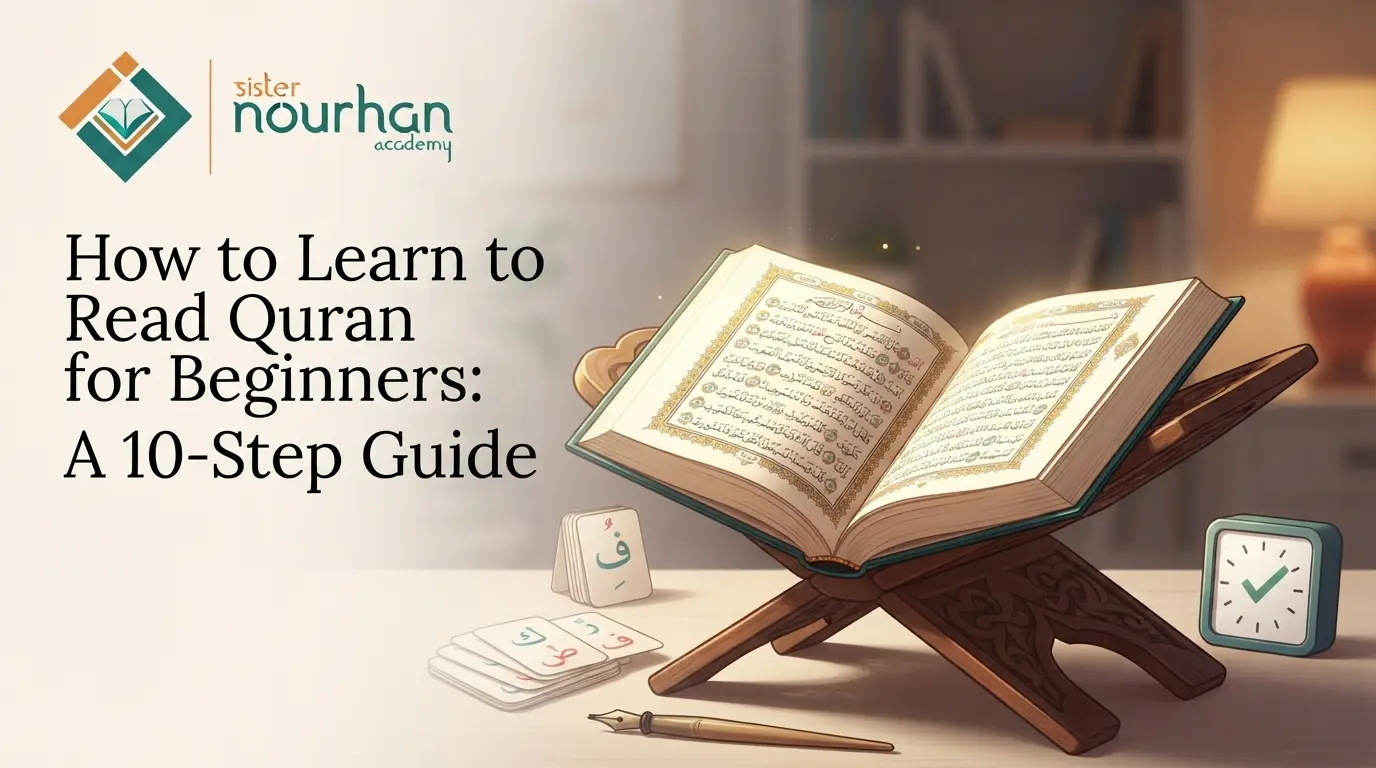
You open the Mushaf, look at the flowing Arabic script, and your mind goes blank. You cannot tell where one word ends and another begins, let alone how to pronounce the letters correctly. If this feels familiar, you are far from alone.
Learning how to learn to read Quran for beginners is the exact first step toward changing that feeling for good. Every single reciter you have ever admired started exactly where you are standing right now—unable to recognize a single letter.
The difference between them and someone who never learns is not talent. It is having the right method and right guidance from day one. Real progress shows up within weeks, not years.
At Sister Nourhan Academy, students build reading confidence through structured one-on-one lessons. In this guide, we walk through 10 clear steps so you know exactly where to begin.
Step 1: Learn the Arabic Alphabet
Arabic has twenty-eight letters, and unlike English, most of these letters change shape depending on where they sit in a word.
This single step is the true starting line for anyone wondering how to learn to read Quran for beginners, since everything that follows builds directly on it.
Why Correct Pronunciation Matters From the Start
Reading the Quran is not the same as reading any other book, because the way you pronounce each letter can change the meaning of the words you are reciting.
Islamic scholarship has long held that reciting the Quran with correct pronunciation, known as Tajweed, is a personal obligation on every Muslim who reads it, even if mastering the full technical terminology remains a broader, shared responsibility.
Learn the Shapes and Sounds of Each Letter
Start by learning each letter's isolated form, its sound, and how it looks at the beginning, middle, and end of a word. This step alone often takes new students one to two weeks of steady practice, and it is the true foundation of how to learn to read Quran for beginners.
Flashcards, letter-tracing worksheets, and repeating sounds aloud after a teacher all reinforce this stage effectively.
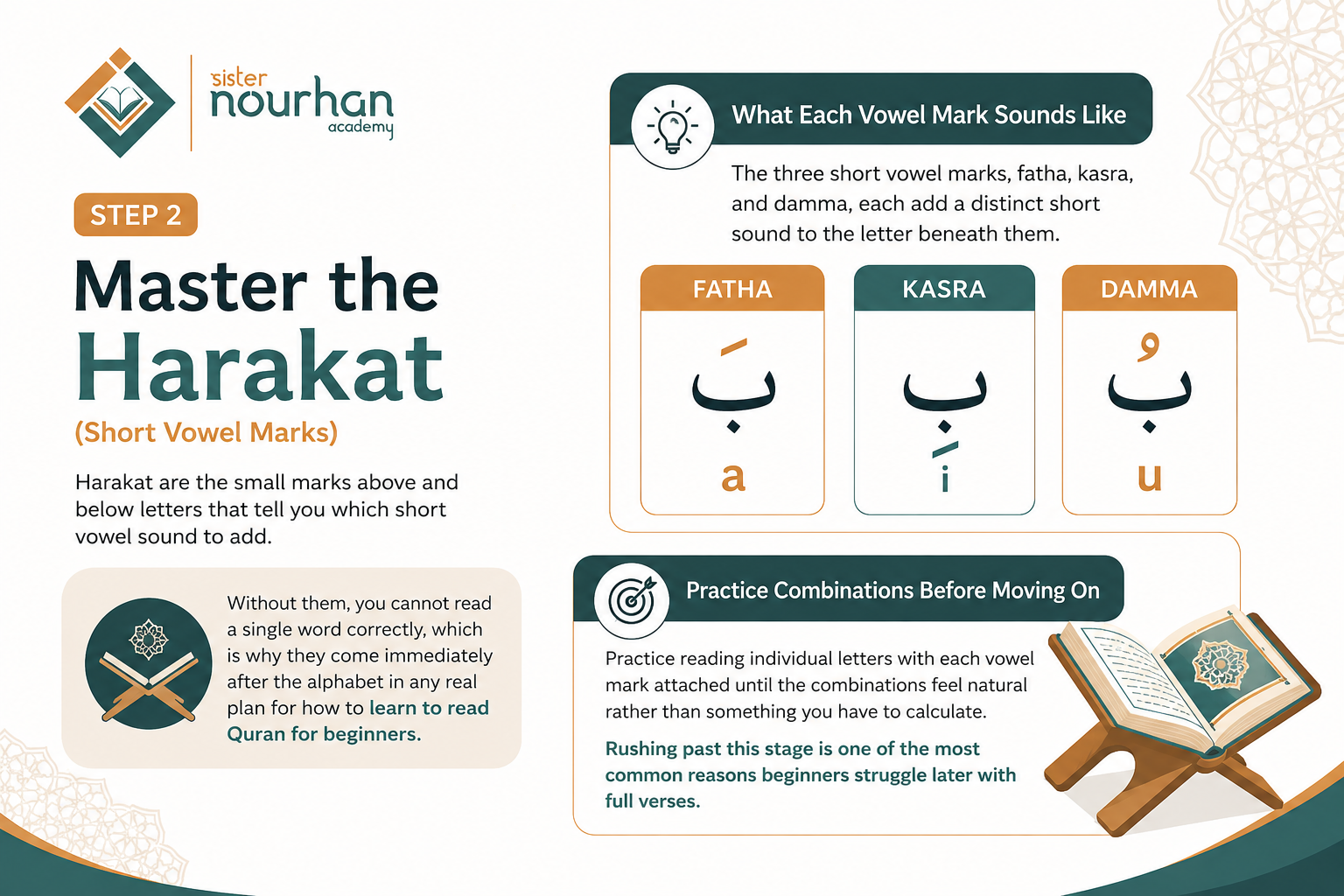
Step 2: Master the Harakat (Short Vowel Marks)
Harakat are the small marks above and below letters that tell you which short vowel sound to add.
Without them, you cannot read a single word correctly, which is why they come immediately after the alphabet in any real plan for how to learn to read Quran for beginners.
What Each Vowel Mark Sounds Like
The three short vowel marks, fatha, kasra, and damma, each add a distinct short sound to the letter beneath them. Recognizing these marks instantly, without pausing to think, is what allows you to move from single letters to real words.
Practice Combinations Before Moving On
Practice reading individual letters with each vowel mark attached until the combinations feel natural rather than something you have to calculate. Rushing past this stage is one of the most common reasons beginners struggle later with full verses.
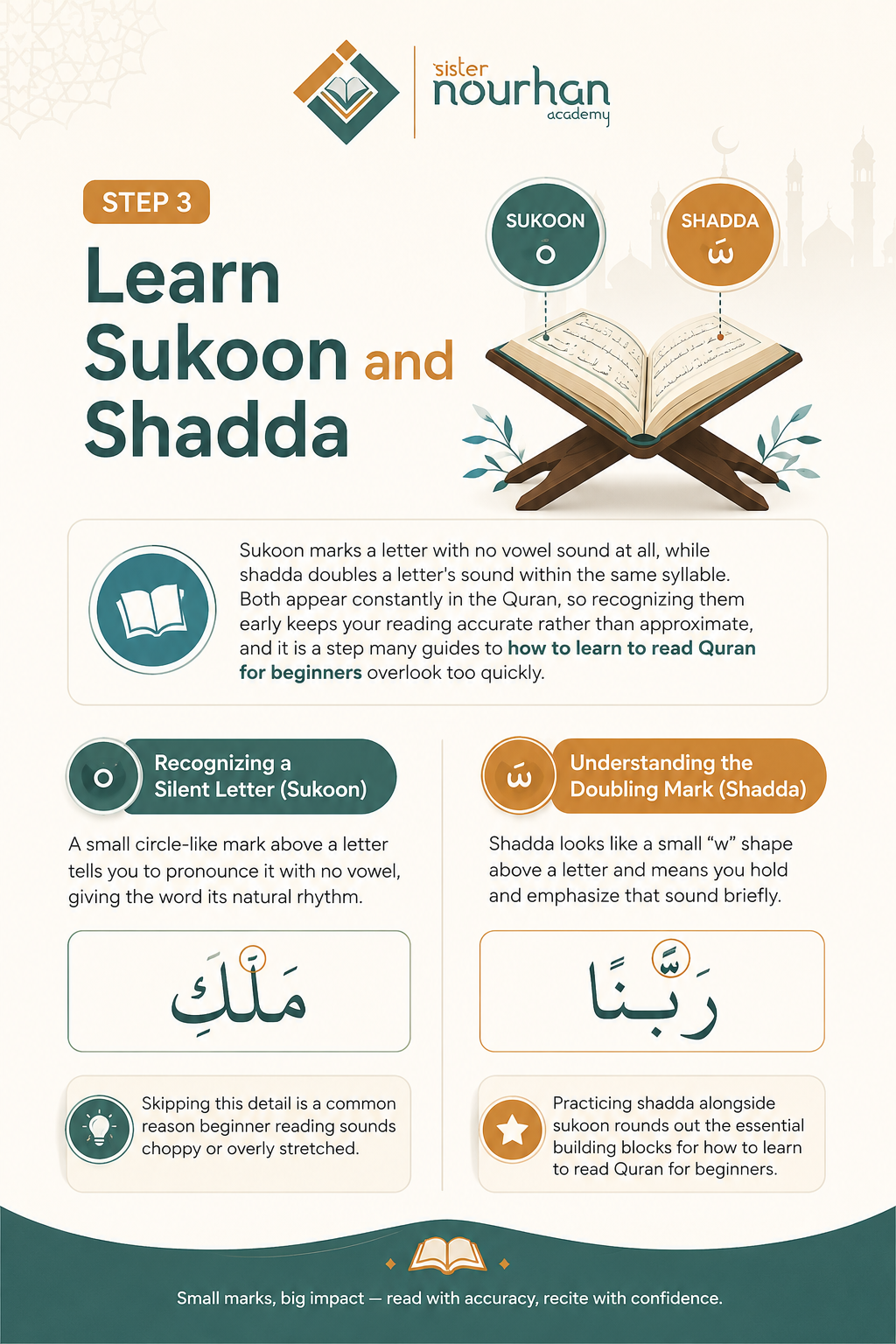
Step 3: Learn Sukoon and Shadda
Sukoon marks a letter with no vowel sound at all, while shadda doubles a letter's sound within the same syllable.
Both appear constantly in the Quran, so recognizing them early keeps your reading accurate rather than approximate, and it is a step many guides to how to learn to read Quran for beginners overlook too quickly.
Recognizing a Silent Letter (Sukoon)
A small circle-like mark above a letter tells you to pronounce it with no vowel, giving the word its natural rhythm. Skipping this detail is a common reason beginner reading sounds choppy or overly stretched.
Understanding the Doubling Mark (Shadda)
Shadda looks like a small "w" shape above a letter and means you hold and emphasize that sound briefly. Practicing shadda alongside sukoon rounds out the essential building blocks for how to learn to read Quran for beginners.
Step 4: Practice Joining Letters Into Full Words
Once single letters, vowels, sukoon, and shadda feel comfortable, the next stage is blending everything into complete words.
This is where many self-taught beginners get stuck, because reading connected script is genuinely different from reading isolated letters.
Why Connected Script Feels Harder at First
When letters join together in a word, several of them change shape compared to their isolated form. Recognizing a letter you already know, but in its "joined" shape, takes a little repetition before it becomes automatic.
Simple Word Drills That Build Fluency
Short, repetitive word drills work best here. Reading the same set of simple words daily for a week builds fluency far faster than reading many different words just once, which is a core principle in any effective approach to how to learn to read Quran for beginners.
Shots from Our Classes
Take a moment to view the video below to see how our teachers provide clear, supportive corrections during a session.
Begin Your Quranic Journey
Connect with the words of Allah through personalized sessions at Sister Nourhan Academy.
Book Your Free TrialStep 5: Learn Basic Tanween (Nunation) Endings
Tanween is a doubled vowel mark placed at the end of certain words, adding an "n" sound without an actual noon letter being written.
It appears frequently in the Quran, so beginners need to recognize it just as quickly as regular harakat, and it is another small but essential piece of how to learn to read Quran for beginners the right way.
Check this resource.
How Tanween Changes a Word's Ending Sound
The three tanween forms mirror the three harakat but double the sound, turning a simple vowel into an "an," "in," or "un" ending. Once you can spot Tanween instantly, entire word endings stop feeling unpredictable.
Practicing Tanween in Short Words
Read short, common words that end in Tanween out loud repeatedly until the ending sound feels natural rather than something you sound out letter by letter. This small addition rounds out the reading fundamentals every beginner needs.
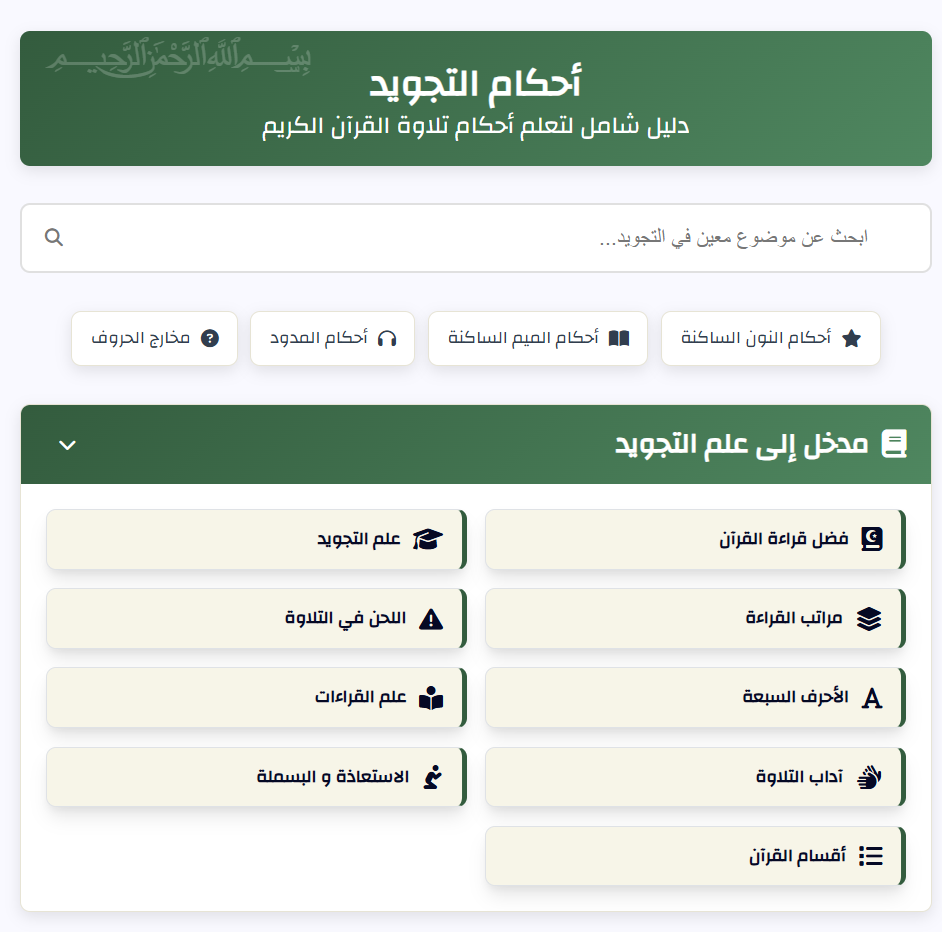
Step 6: Learn the Basics of Tajweed
Tajweed rules govern how sounds change when letters meet each other, such as when a silent letter merges into the one that follows it.
As a beginner, you only need the foundational rules that affect everyday recitation, not the full range of advanced classifications.
What Beginners Actually Need to Know First
At this stage, focus on the basic rules that appear most often in daily recitation rather than every technical classification in a Tajweed textbook.
Any honest guide to how to learn to read Quran for beginners has to include these basics early, not as an afterthought.
Why Learning This Early Prevents Bad Habits
Learning these basics early prevents mispronunciations from becoming permanent habits, which is far harder to fix later than to build correctly from the start. A mispronounced letter that goes uncorrected for months can take just as long to unlearn.
Want to start learning Tajweed? Explore the essential Tajweed rules for free and build a stronger foundation for accurate Quran recitation.
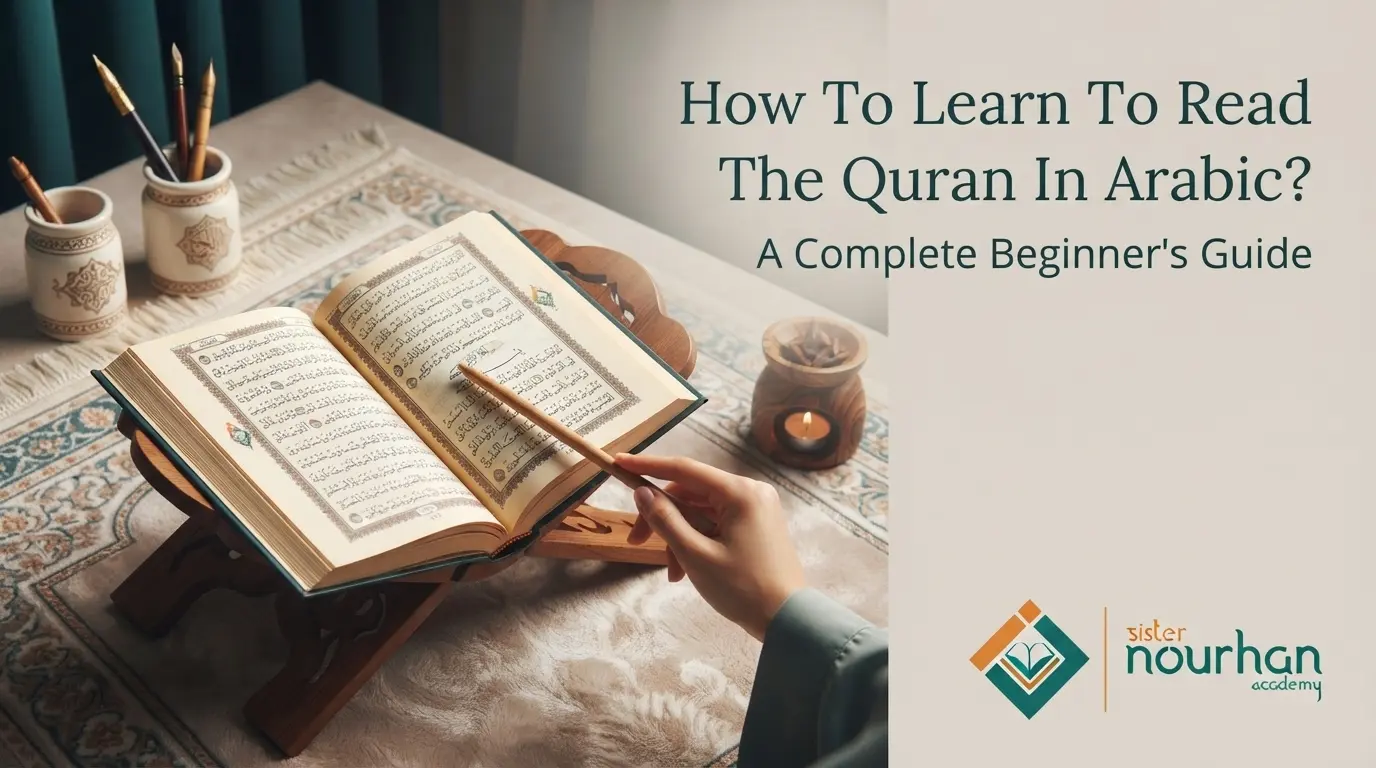
Read also: How To Learn To Read The Quran In Arabic?
Step 7: Recite in Front of a Qualified Teacher
Traditionally, Quran reading has always been transmitted directly from teacher to student, either by the teacher reciting aloud while the student repeats, or by the student reciting while the teacher listens and corrects.
Combining both methods gives the fastest, most reliable results.
Choosing a Learning Method That Fits Your Life
Some beginners try to learn by themselves through apps or videos, while others prefer guided lessons with a teacher who can correct mistakes in real time.
Self-study alone tends to lock in pronunciation errors that go unnoticed for months, which is why a structured program, like the beginner courses at Sister Nourhan Academy, pairs you with a teacher from your very first lesson.
How Teacher Correction Works in Practice
This is precisely how our teachers at Sister Nourhan Academy structure every beginner class, listening closely and correcting each mispronunciation before it turns into a habit.
It is usually the fastest, most reliable answer to how to learn to read the Quran for beginners without picking up avoidable mistakes.
Stop learning alone!
Our Learn to Read Quran for Beginner Course is the live, personalized version of the 10-step path: certified female teachers guide you through Arabic letters, vowel marks, word blending, Tajweed basics, and daily practice—with real correction at every stage so you build confidence, not mistakes.
Step 8: Start Reading Short Surahs From Juz Amma
Once the fundamentals feel steady, it is time to apply them to real verses instead of isolated drills.
Short surahs from the final part of the Quran are the ideal starting point for every beginner working through how to learn to read the Quran for beginners in a realistic order.
Why Short Surahs Build Confidence Fast
Their brevity makes early wins feel achievable, giving you a genuine sense of progress instead of an overwhelming wall of text. Reaching this stage comfortably is a strong sign that your approach is genuinely working.
Moving to Slightly Longer Passages
Once a short surah feels smooth and confident, move to a slightly longer one rather than jumping straight to lengthy chapters. This gradual increase keeps both accuracy and motivation intact.
Step 9: Learn Basic Waqf (Stopping) Signs
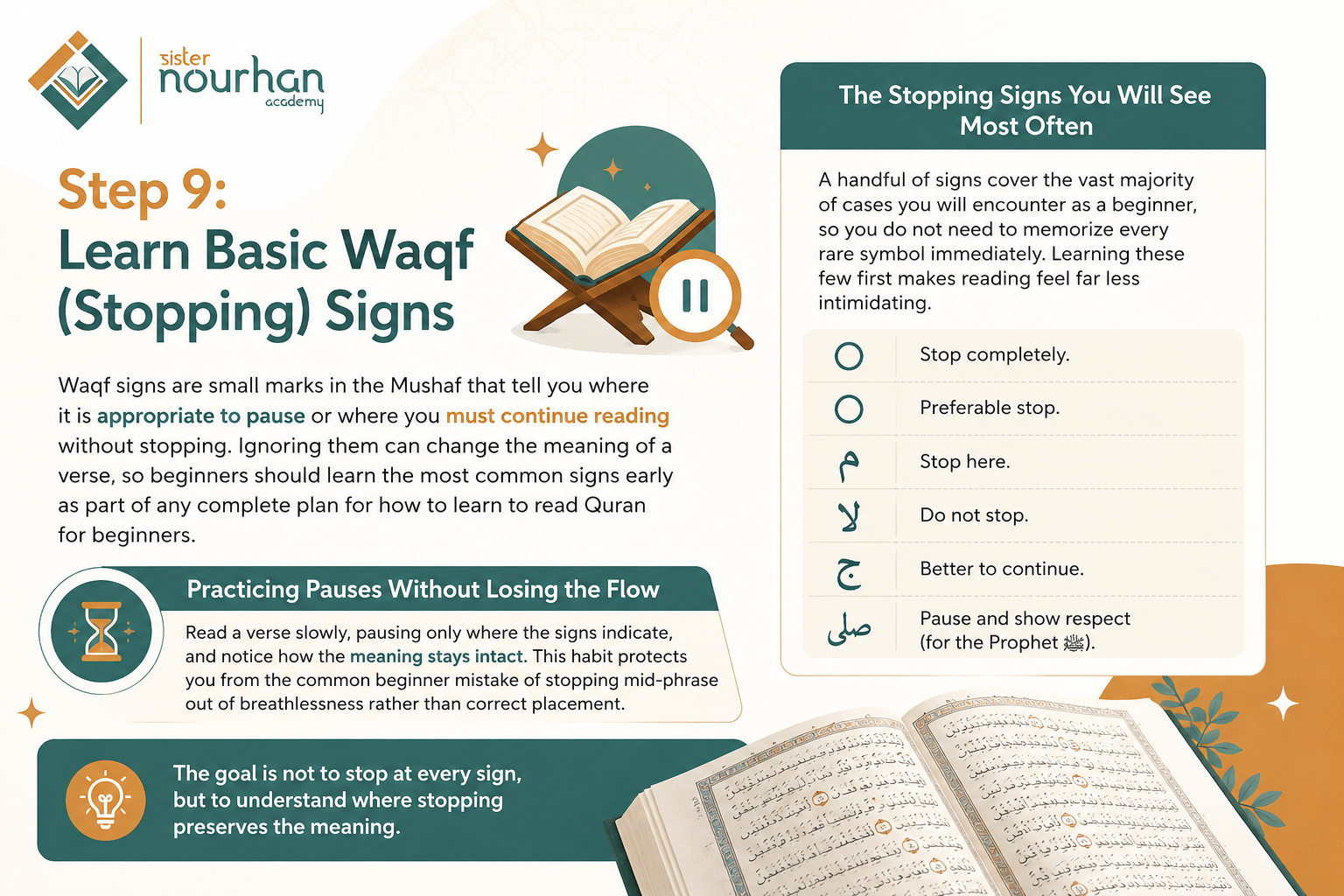
Waqf signs are small marks in the Mushaf that tell you where it is appropriate to pause or where you must continue reading without stopping.
Ignoring them can change the meaning of a verse, so beginners should learn the most common signs early as part of any complete plan for how to learn to read the Quran for beginners.
The Stopping Signs You Will See Most Often
A handful of signs cover the vast majority of cases you will encounter as a beginner, so you do not need to memorize every rare symbol immediately. Learning these few first makes reading feel far less intimidating.
Practicing Pauses Without Losing the Flow
Read a verse slowly, pausing only where the signs indicate, and notice how the meaning stays intact. This habit protects you from the common beginner mistake of stopping mid-phrase out of breathlessness rather than correct placement.
Step 10: Build a Daily Reading Habit and Track Your Progress
Consistency beats intensity every time. Reading for fifteen focused minutes daily produces better results than one long, exhausting session once a week, and it is the step that ties every previous one together.
Why Consistency Beats Long, Occasional Sessions
Daily repetition, even in short bursts, keeps the letters, vowels, and rules fresh in your memory. Skipping several days between sessions often means re-learning what you had already mastered.
Reviewing Progress With a Teacher Regularly
Revisiting older lessons with a teacher every couple of weeks catches small errors before they become permanent. This final habit is what turns everything you learned about how to learn to read Quran for beginners into lasting, confident recitation.
Common Mistakes Beginners Make When Learning to Read Quran
Most struggles with learning to read Quran come down to a handful of avoidable habits rather than lack of ability.
Recognizing them early can save you months of frustration, since most setbacks in how to learn to read Quran for beginners trace back to one of these habits.
Skipping the alphabet stage to "get to the real reading" faster.
Practicing without any feedback from a teacher or mentor.
Comparing your pace to someone who started years earlier.
Studying inconsistently instead of a little every single day.
Avoiding these pitfalls is often the real difference between someone who learns how to read Quran for beginners successfully and someone who gives up within a month.
How Long Does It Take to Learn to Read Quran for Beginners?
Most consistent beginners can read simple words within four to six weeks and read full verses with reasonable fluency within three to six months.
The exact timeline depends heavily on your practice frequency, prior familiarity with Arabic, and whether you have a teacher correcting you along the way.
Someone practicing fifteen to twenty minutes daily with guided feedback will typically progress two to three times faster than someone studying alone without correction.
The goal is not to rush this timeline but to build a foundation solid enough that you never have to "unlearn" bad habits later.
Once your reading foundation is solid, many students advance to memorization—read How long does it take to memorize the Quran? Complete 2026 Guide.
Tips That Help You Learn How To Read Quran For Beginners Faster
Speed comes from smart repetition, not from cramming. A few adjustments to how you practice can meaningfully shorten your learning curve and speed up how to learn to read quran for beginners without adding extra study hours.
Record yourself reading and compare it to your teacher's recitation.
Review yesterday's lesson for five minutes before starting a new one.
Practice at the same time each day so it becomes a fixed habit.
Ask questions immediately instead of guessing and hoping it is correct.
These small habits compound quickly, and they are exactly what we encourage every new student at Sister Nourhan Academy to adopt from their very first week.
Fluent reading opens the door to memorization—Easy Quran Surahs to Memorize for Beginners and Kids Step-by-Step shows you exactly which Surahs to start with.
Online or In-Person: Which Is Better for Beginners?
Online learning has become the more practical choice for most beginners today, mainly because it removes commuting time and lets you learn from a qualified teacher regardless of where you live.
In-person classes remain valuable, but they are not always accessible, especially for women who prefer learning from a female teacher in a comfortable, private setting.
For many students today, the real question behind how to learn to read Quran for beginners is not which method exists, but which one they can realistically stick with long enough to see results.
Live online one-on-one classes solve this exact problem, allowing a beginner anywhere in the world to receive the same direct correction and personal attention as an in-person lesson.
See our teaching methods
Experience the quality of our instruction firsthand by watching a live lesson snippet below.
Begin Your Quranic Journey
Connect with the words of Allah through personalized sessions at Sister Nourhan Academy.
Book Your Free TrialStart Your Quran Reading Journey Today!
Build the confidence to read the Quran correctly—with expert guidance from your very first lesson.
Discover our Quran Courses
Conclusion: Your Next Step Toward Reading the Quran Confidently
Learning how to learn to read Quran for beginners does not require special talent, a young age, or years of prior Arabic study.
It requires the right sequence across all 10 steps, letters, vowels, sukoon and shadda, word-blending, Tanween, basic Tajweed, teacher correction, short surahs, Waqf signs, and daily practice, followed in that order and given consistent time.
Every reciter who now reads with confidence and beauty once stared at the same unfamiliar letters you may be looking at today. The only real difference is that they started, and they had someone guiding them along the way.
Frequently Asked Questions
Can I teach myself to read the Quran?
While self-teaching is possible, pronunciation errors lock in within weeks and become nearly impossible to correct later. Sister Nourhan Academy's certified teachers catch mistakes in real-time, so you build correct habits from day one—saving you months of frustration trying to unlearn wrong pronunciations later.
What are the 5 Surahs to recite daily?
Most beginners start with Surahs from the final part of the Quran (Juz 30) like Surah Al-Nas, Al-Falaq, Al-Ikhlas, Al-Kafirun, and At-Takathur—they're short, powerful, and perfect for building early confidence. At Sister Nourhan Academy, your teacher personalizes these choices based on your pace, ensuring each surah builds on what you've already mastered in your previous lessons.
What do I say before I start reading the Quran?
The traditional practice is to say "Audhu billahi min ash-shaytan ir-rajim" (I seek refuge in Allah from Satan the accursed) before beginning. This Islamic etiquette is just one of many details beginners often miss—Sister Nourhan Academy's teachers integrate these practices naturally into every lesson so your entire approach to the Quran is authentic from the start.
How can I memorize the Quran easily?
Memorization requires absolute accuracy in reading first—rushing into Hifz without mastering Tajweed creates fragile, error-prone memory. Sister Nourhan Academy separates the journey: master reading in the 10-step process, then move into memorization with the same certified teacher who knows exactly where your foundation is strongest.
Where can I learn the Quran online as a beginner?
Online learning works only when you have live, one-on-one correction—not pre-recorded videos where mistakes go uncaught. Sister Nourhan Academy offers flexible scheduling, female teachers for comfortable learning, and the same direct feedback as in-person lessons, making it the fastest path for beginners anywhere in the world to read with confidence.