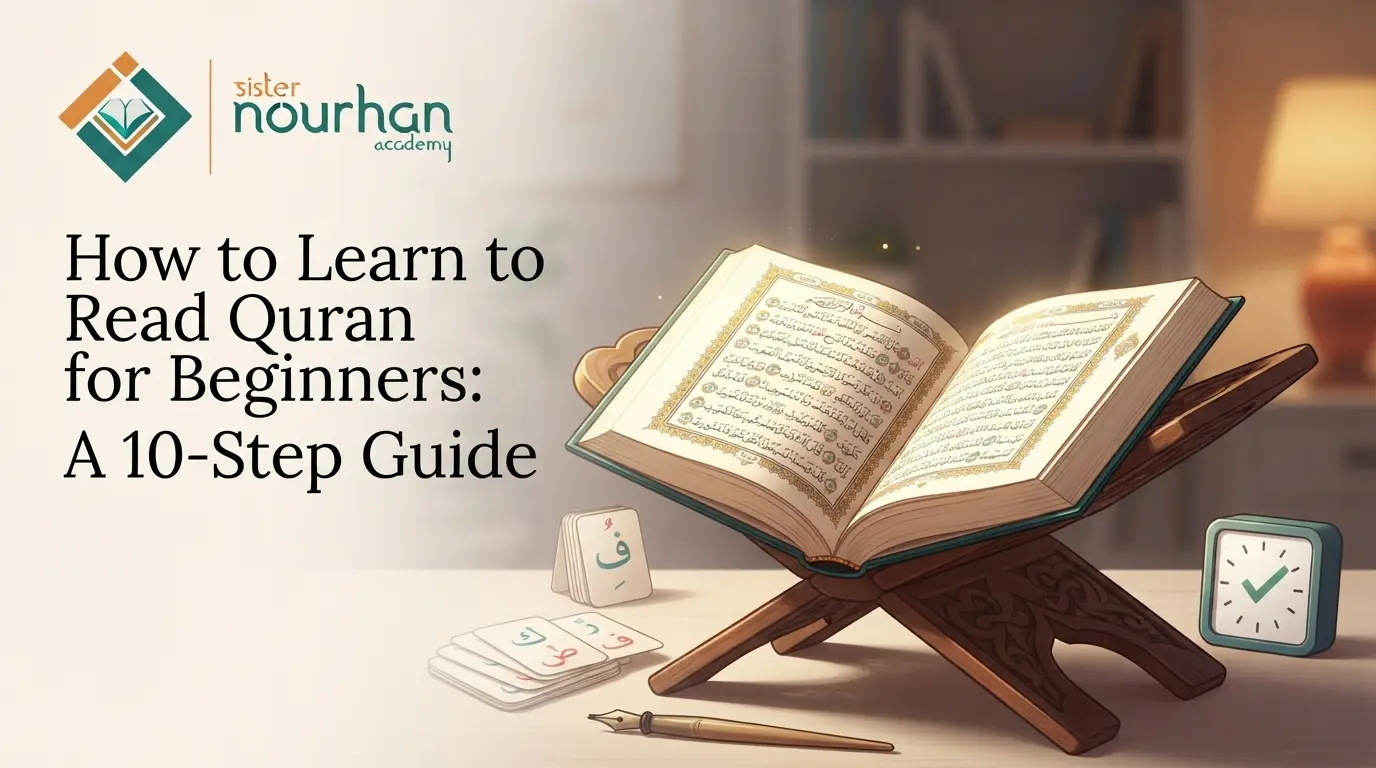
Have you ever opened a Mushaf, looked at the flowing Arabic script, and wondered where a true beginner should even start? For millions of Muslims worldwide, the question of how to learn to read Quran in Arabic feels overwhelming before it becomes rewarding.
Many people assume this skill belongs only to those raised speaking Arabic, or that starting later in life closes the door. That assumption is simply not true, and history is full of people who began this journey as adults and mastered it beautifully.
At Sister Nourhan Academy, students of every age and background learn correct Quran recitation with certified teachers who guide them patiently from their very first letter. The academy has built its entire teaching approach around making this process approachable rather than intimidating.
In this guide, you will walk through the exact steps, tools, and daily habits that turn a nervous beginner into a confident reader, along with the core tajweed rules every learner needs to know.
Step 1: Learn the Arabic Alphabet and Its Letter Shapes
Start by memorizing the 28 letters of the Arabic alphabet and how each one changes shape depending on its position in a word. Anyone asking how to learn to read Quran in Arabic must treat this stage as non-negotiable, since every later skill depends on it.
Recognize Each Letter in Its Isolated, Initial, Medial, and Final Forms
Practice writing and identifying each letter alone first, then in short words. Arabic letters connect to one another, so recognizing the same letter in different positions prevents confusion later.
Focus on Makharij Al-Huruf, the Articulation Points
Learn exactly where each sound originates in the mouth, throat, or lips. This single step separates confident readers from those who mispronounce similar-sounding letters for years without correction.
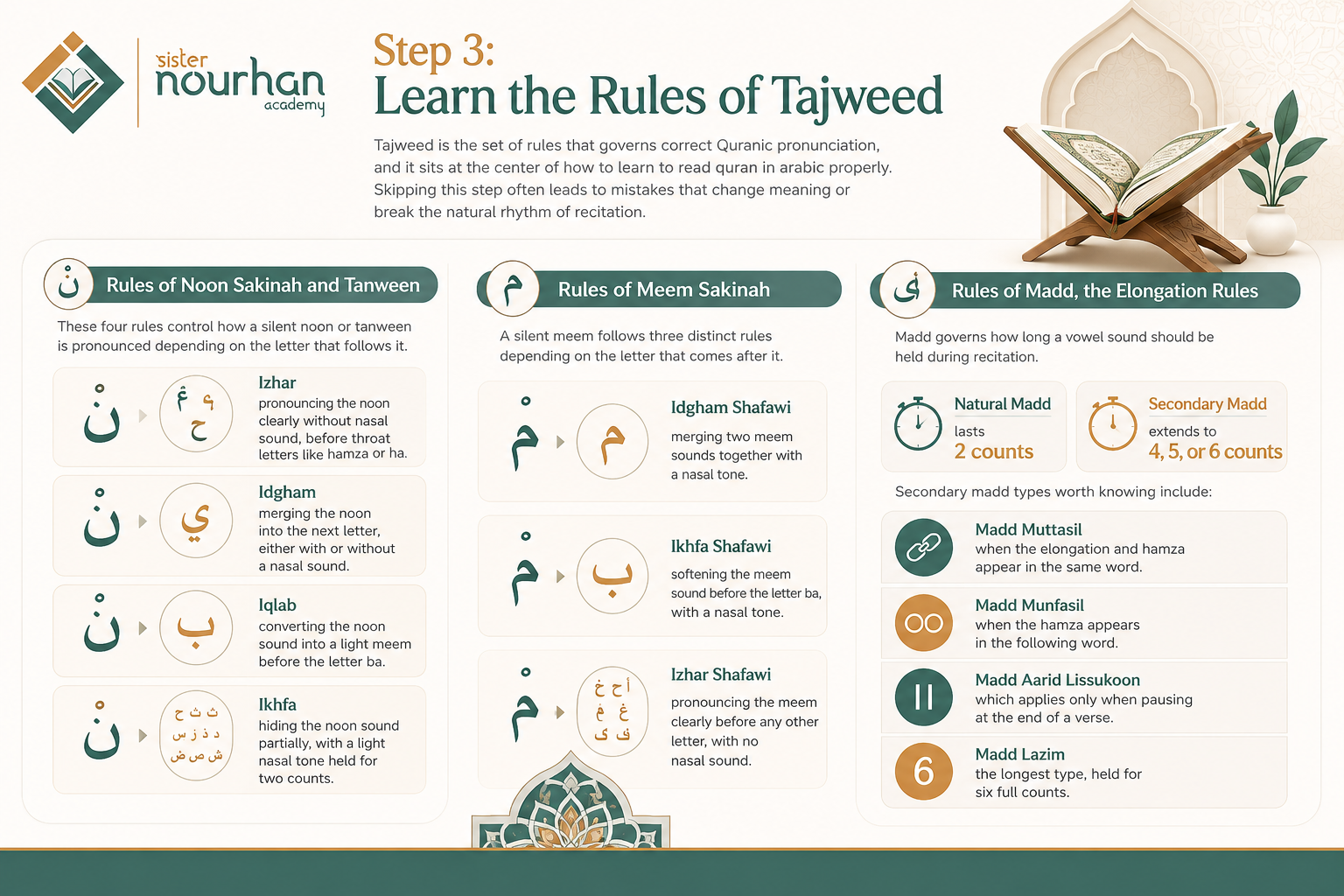
Free apps like Quran Word by Word can help here too, since they let you hear and repeat each word individually until the pronunciation feels natural.
Step 2: Learn the Vowel Marks and Basic Grammar Rules
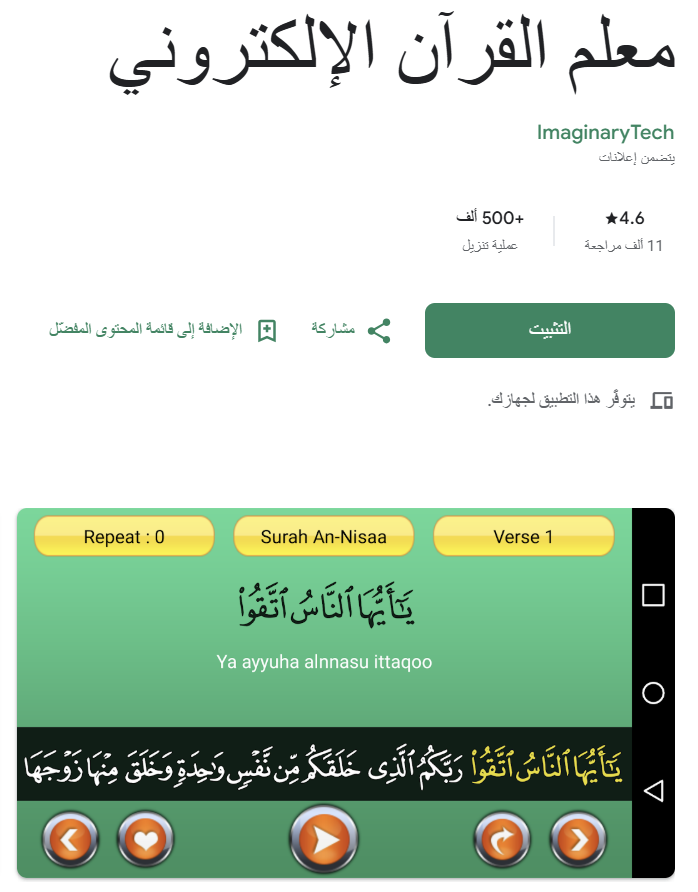
Move on to harakat, the short vowel marks that tell you how each letter is pronounced. Without this knowledge, even someone who knows all the letters cannot read a single verse correctly.
Master Fatha, Kasra, and Damma
These three marks represent short "a," "i," and "u" sounds placed above or below a letter. Practice reading simple three-letter words until identifying each mark becomes automatic.
Understand Sukoon and Tanween
Sukoon marks a letter with no vowel sound, while tanween adds an "n" sound at the end of a word. Both symbols appear constantly in the Quran, so recognizing them quickly is essential.
Step 3: Learn the Rules of Tajweed
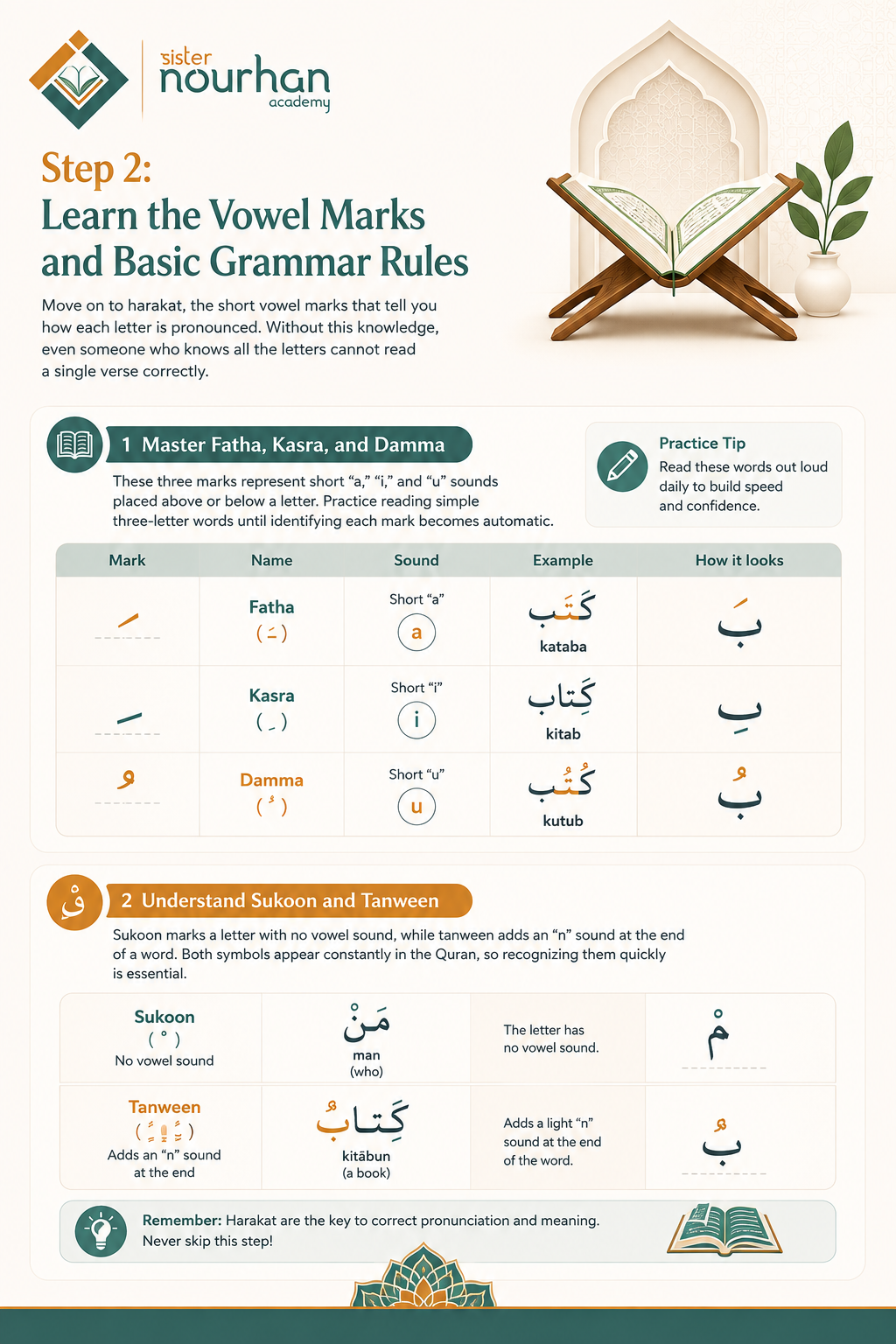
Tajweed is the set of rules that governs correct Quranic pronunciation, and it sits at the center of how to learn to read Quran in Arabic properly. Skipping this step often leads to mistakes that change meaning or break the natural rhythm of recitation.
Rules of Noon Sakinah and Tanween
These four rules control how a silent noon or tanween is pronounced depending on the letter that follows it.
Izhar: pronouncing the noon clearly without nasal sound, before throat letters like hamza or ha.
Idgham: merging the noon into the next letter, either with or without a nasal sound.
Iqlab: converting the noon sound into a light meem before the letter ba.
Ikhfa: hiding the noon sound partially, with a light nasal tone held for two counts.
Rules of Meem Sakinah
A silent meem follows three distinct rules depending on the letter that comes after it.
Idgham Shafawi: merging two meem sounds together with a nasal tone.
Ikhfa Shafawi: softening the meem sound before the letter ba, with a nasal tone.
Izhar Shafawi: pronouncing the meem clearly before any other letter, with no nasal sound.
Rules of Madd, the Elongation Rules
Madd governs how long a vowel sound should be held during recitation. The natural madd lasts two counts, while several secondary types extend to four, five, or six counts depending on what follows the elongated letter.
Secondary madd types worth knowing include:
Madd Muttasil, when the elongation and hamza appear in the same word.
Madd Munfasil, when the hamza appears in the following word.
Madd Aarid Lissukoon, which applies only when pausing at the end of a verse.
Madd Lazim, the longest type, held for six full counts.
Step 4: Practice Daily With a Color-Coded Tajweed Mushaf
Use a Mushaf where tajweed rules are printed in different colors for each rule type. This visual method is one of the fastest ways to internalize how to learn to read Quran in Arabic without memorizing every rule from a textbook first.
The colors let you spot elongation, merging, and nasal sounds instantly as you read, reinforcing the rule every single time you see it. Over weeks of daily practice, your eyes and voice begin applying the rules automatically.
Shots from Our Classes
Take a moment to view the video below to see how our teachers provide clear, supportive corrections during a session.
Begin Your Quranic Journey
Connect with the words of Allah through personalized sessions at Sister Nourhan Academy.
Book Your Free TrialStep 5: Listen to Qualified Reciters Every Day
Choose one or two reciters known for precise, unhurried tajweed and listen to them daily, even for just ten minutes. Your ear absorbs correct rhythm and pronunciation long before your tongue can reproduce it on its own.
Repeating short verses after a skilled reciter, phrase by phrase, trains your pronunciation far faster than silent reading alone. This habit alone accelerates almost every other step in how to learn to read Quran in Arabic.
Learning alone has limits, and this is exactly where the right guidance changes everything.
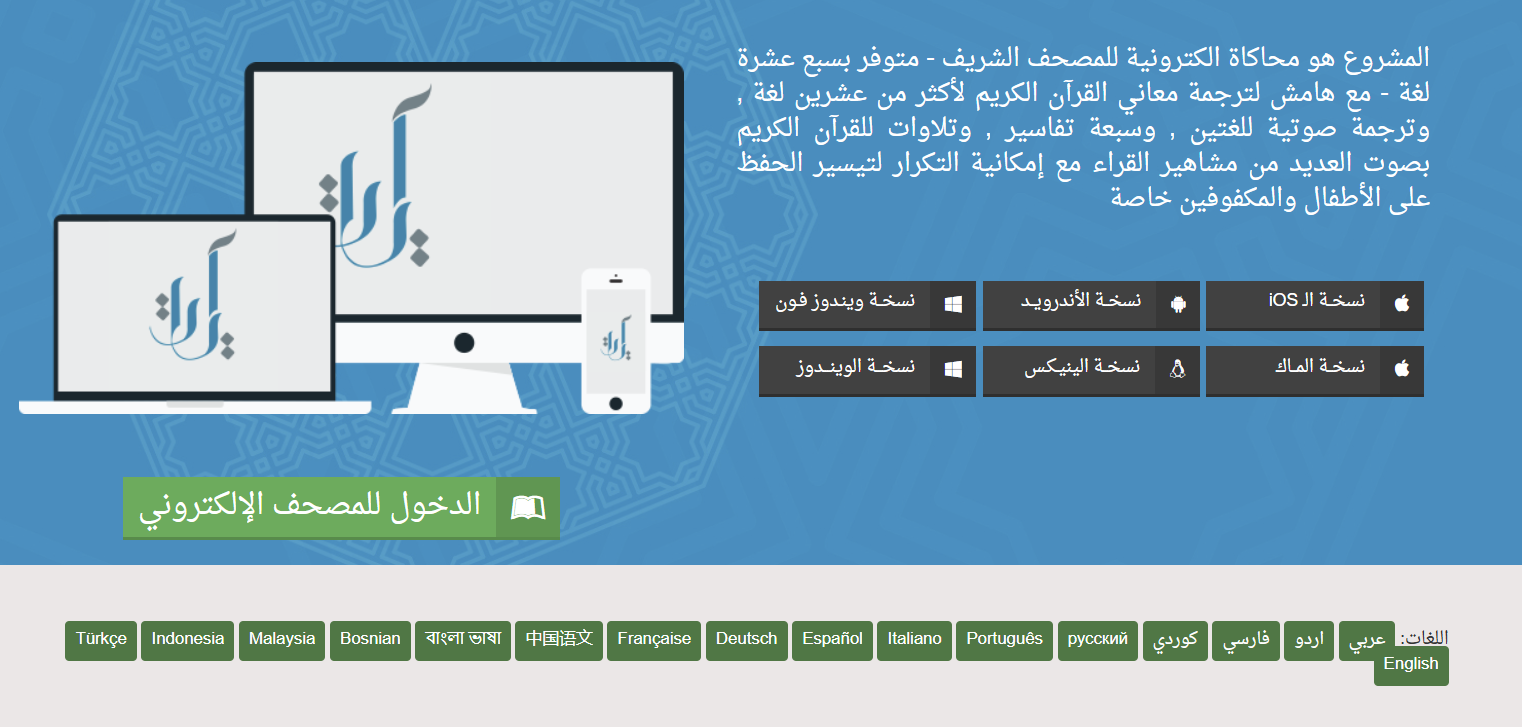
Want to read, listen, and repeat verses until they stick? The Ayat al-Quran electronic Mushaf from King Saud University offers the Madinah Mushaf, top reciters, and multilingual translations, all free.
Step 6: Join a Structured Quran Learning Program
Enroll in a program that follows a clear curriculum rather than relying on scattered videos or books. Structure keeps you accountable and ensures no essential rule of tajweed gets skipped along the way.
Benefits of Learning With a Qualified Teacher
A teacher hears mistakes you cannot hear in your own voice and corrects them immediately. This real-time feedback is often the single biggest difference between slow, frustrated progress and steady, confident improvement.
Many learners find that how to learn to read Quran in Arabic becomes dramatically easier once a dedicated teacher is guiding each session.
Can you recite a full surah smoothly, without hesitation, mispronunciation, or losing your breath halfway through? Sister Nourhan Academy's Quran Recitation Course fixes exactly that, verse by verse, live with your teacher

Step 7: Build a Daily Practice Routine and Stay Consistent
Set aside the same quiet time each day dedicated only to reading and reviewing Quran verses. Consistency matters far more than long, irregular sessions that leave gaps in your memory and rhythm.
Choose a Quiet Time and Distraction-Free Space
Pick a moment when your mind is calm and free from background noise or interruptions. A consistent, quiet setting trains your brain to associate that time with focused, accurate recitation.
Link New Verses to What You Already Know
Connect newly practiced verses to ones you have already mastered, and briefly review their meaning. This habit strengthens both memorization and understanding, which keeps motivation high over the long term.
If you want a structured technique for this step, our guide on What Is the 3×3 Method for Memorizing the Quran? breaks it down in detail."
Read also: How to Learn to Read Quran for Beginners?
A Special Note for Adult and Older Beginners
Many adults assume it is too late to start, but learning to read the Quran in Arabic later in life is entirely possible, and often comes with real advantages.
Some of the Prophet's own companions embraced Islam and learned the Quran as grown adults, proving that age was never the barrier people assume it to be.
1. Age Brings Focus, Not Limitation
Adult learners typically bring a level of patience, discipline, and mental clarity that children often lack.
This maturity makes it easier to sit through repetitive practice, absorb corrections calmly, and stay committed to a long-term plan without losing motivation halfway through.
2. Choose a Mushaf With Clear, Comfortable Print
Older beginners in particular benefit from a Mushaf with a large, clear script and a background that is easy on the eyes.
Straining to see small letters slows progress unnecessarily, so this small adjustment often makes daily practice noticeably more comfortable and sustainable.
3. Read Aloud Rather Than Silently
Reading each verse aloud, even quietly, helps adult learners catch their own pronunciation mistakes in real time.
This habit reinforces correct sounds far more effectively than silent reading, and it works especially well for anyone still building confidence with how to learn to read Quran in Arabic from scratch.
4. Set a Clear Daily Target
Rather than reading randomly, pick specific surahs or verses to review each day and stick to that plan. A defined daily target, even a short one, builds momentum faster than open-ended practice sessions that lack direction.
If you want a proven structured approach to this instead of picking verses randomly, check out our guide on What Is the 3/10 Hifz Method? (Full Guide for Online Quran Learners).
5. Link New Verses to What You Already Know, and Their Meaning
Connecting a newly practiced verse to one already mastered strengthens memory far more than treating each verse in isolation. Pausing briefly to understand the meaning behind the words also deepens focus and makes the entire practice feel more purposeful.
Whatever your age, the same core principle applies: steady, guided practice always outperforms sporadic effort.
Adult and older beginners who follow a clear plan for how to learn to read Quran in Arabic, supported by the right tools and a patient teacher, often progress just as quickly as younger students, sometimes faster.
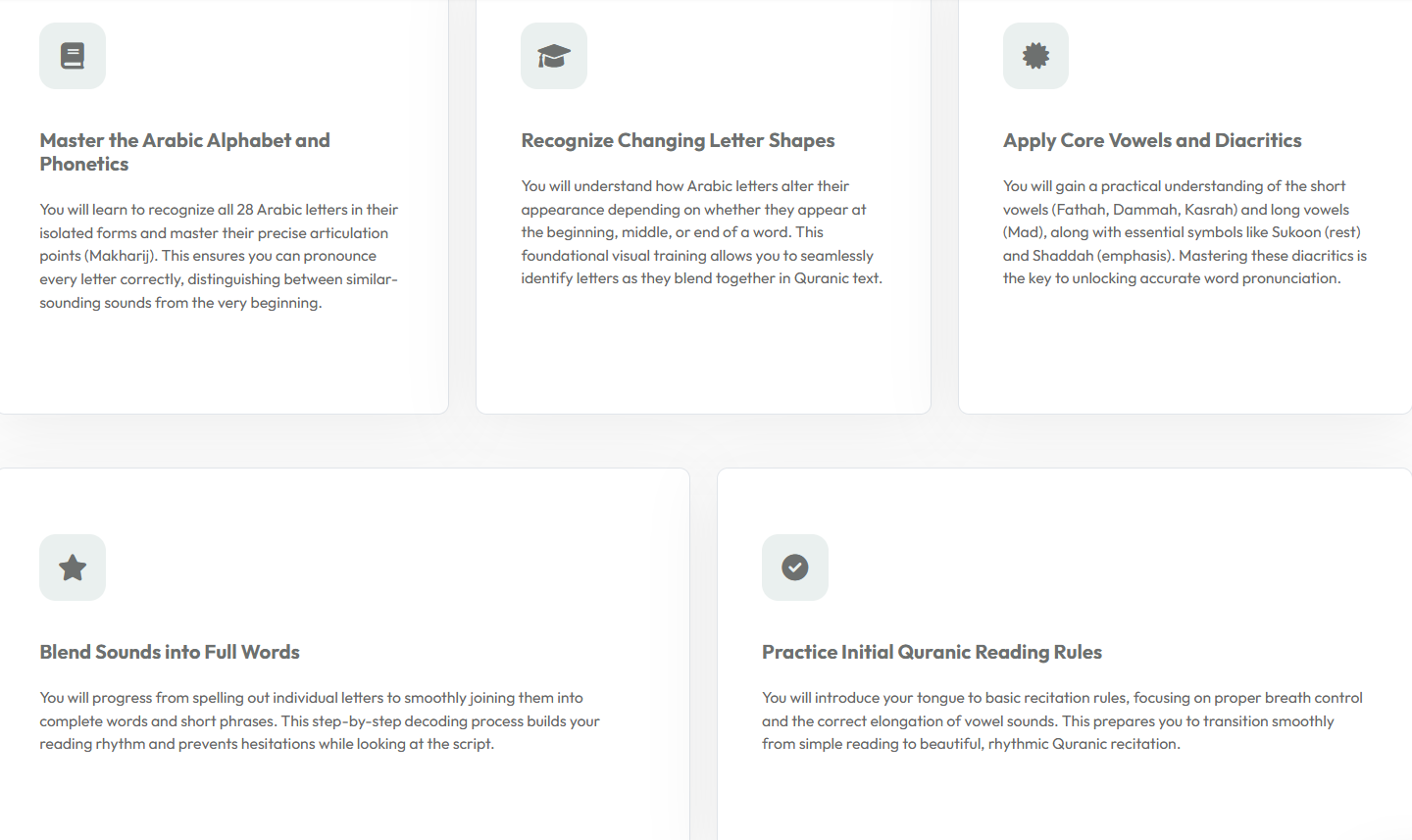
Knowing the letters and vowels is one thing, reading them smoothly and correctly under real guidance is another. Sister Nourhan Academy's Learn to Read Quran for Beginner Course turns everything you've just learned into confident, guided recitation.
Final Thoughts
Reading the Quran correctly starts with the alphabet, moves through vowel marks and grammar, and is completed by mastering tajweed rules like noon sakinah, meem sakinah, and madd. Daily practice with a colored Mushaf, regular listening, and a structured routine turn these steps into lasting habits.
Ultimately, how to learn to read Quran in Arabic is less about talent and more about consistent, guided practice over time. The one true takeaway is simple: start small, stay consistent, and let correct guidance shape every step of the way.
See our teaching methods
Experience the quality of our instruction firsthand by watching a live lesson snippet below.
Begin Your Quranic Journey
Connect with the words of Allah through personalized sessions at Sister Nourhan Academy.
Book Your Free TrialStart Your Quran Reading Journey Today!
Do not let another day pass wondering where to begin. Book your first session with Sister Nourhan Academy now and start reading the Quran with confidence, correct tajweed, and a certified teacher by your side.
Discover our Quran Courses
Frequently Asked Questions
How to learn to read Quran in Arabic as a complete beginner?
Start with the Arabic alphabet, then vowel marks, then tajweed rules, practicing a little every day. Sister Nourhan Academy structures this exact path into simple, guided lessons for absolute beginners.
Is it too late to learn Quran reading as an adult?
No, adults often progress faster than children because of stronger focus and discipline. Sister Nourhan Academy has dedicated adult learning tracks designed specifically around this advantage.
Do I need to speak Arabic fluently before starting?
No, you only need to learn the letters, sounds, and basic reading rules, not full conversational Arabic. Sister Nourhan Academy teaches these reading fundamentals separately from spoken language skills.
How long does it take to read the Quran fluently?
Most consistent beginners reach comfortable fluency within six months to a year of regular practice. Sister Nourhan Academy's structured courses often shorten this timeline through personalized, one-on-one correction.
What is the fastest way to learn tajweed rules?
Learning tajweed alongside a certified teacher who corrects mistakes immediately is the fastest proven method. Sister Nourhan Academy pairs every student with such a teacher from the very first lesson.
Can I learn Quran reading online instead of in person?
Yes, live online sessions with a qualified teacher work as effectively as in-person classes for most learners. Sister Nourhan Academy offers flexible, around-the-clock online sessions for exactly this purpose.