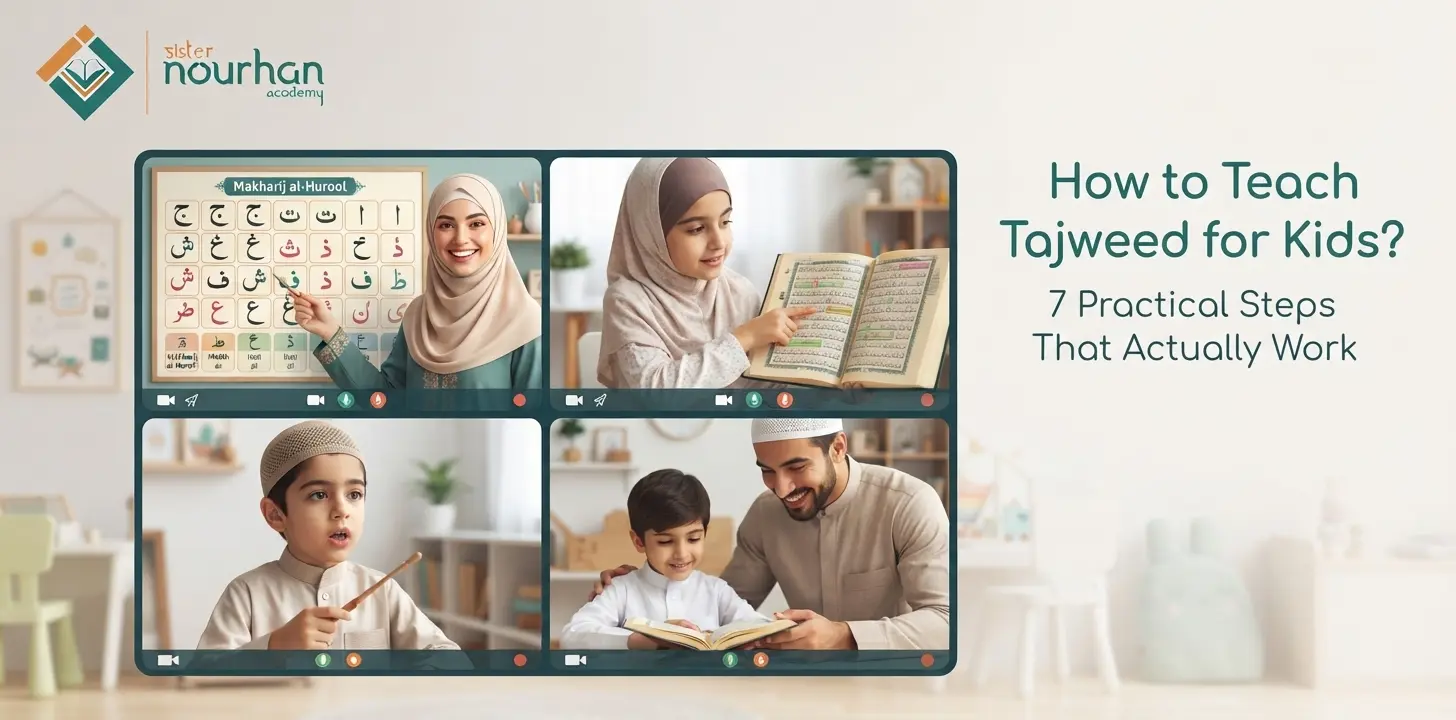
Have you ever wondered why some children recite the Quran with striking clarity while others stumble over the same verses for years? The difference almost always comes down to knowing how to teach tajweed for kids the right way, at the right age, in the right order.
At Sister Nourhan Academy, we've watched early, structured guidance transform a child's entire relationship with the Quran. Parents who understand how to teach tajweed for kids early tend to see far fewer struggles later on.
This guide walks you through practical, tested methods for teaching tajweed for kids, starting from the very first letter sounds and moving all the way to full verse recitation.
You'll walk away with a clear roadmap you can start using with your child today, whether you are a parent guiding lessons at home or a teacher planning a classroom curriculum. By the end, you'll understand exactly what it takes to learn tajweed for kids in practice.
Step 1: Understand Why Tajweed Matters Before You Begin
Recognize first that tajweed is not decoration on top of recitation — it is giving every letter its correct articulation point and characteristics exactly as revealed.
Before exploring how to teach tajweed for kids in practical terms, parents and teachers should understand why this discipline matters so the effort feels purposeful rather than just another task on a checklist.
1. Language and Recitation Benefits
Children who learn tajweed develop sharper Arabic pronunciation skills that carry directly into everyday speech.
They learn to distinguish between similar-sounding letters and articulate each one with precision, which strengthens both Quranic recitation and general spoken Arabic ability over time.
2. Building Confidence and Spirituality
A child who masters even a single rule feels genuine pride and self-assurance in that achievement.
This sense of accomplishment, paired with a stronger emotional connection to the Quran's meaning, nurtures both character and faith well beyond the recitation itself.
3. Sharpening Focus and Discipline
Learning tajweed requires sustained attention to sound, letter shape, and sequence all at once.
This mental discipline transfers to other areas of a child's learning, building the kind of focus that benefits schoolwork and daily routines alike, which is one more reason parents value learning how to teach tajweed for kids properly from the start.
4. Setting Expectations Early
Explain to your child, in simple words, that learning tajweed is a gradual journey rather than a race. Setting this expectation early removes unnecessary pressure and makes every later step in how to teach tajweed for kids feel far more natural and welcome.
Shots from Our Classes
Take a moment to view the video below to see how our teachers provide clear, supportive corrections during a session.
Begin Your Quranic Journey
Connect with the words of Allah through personalized sessions at Sister Nourhan Academy.
Book Your Free TrialStep 2: Start With Correct Letter Pronunciation (Makhraj)
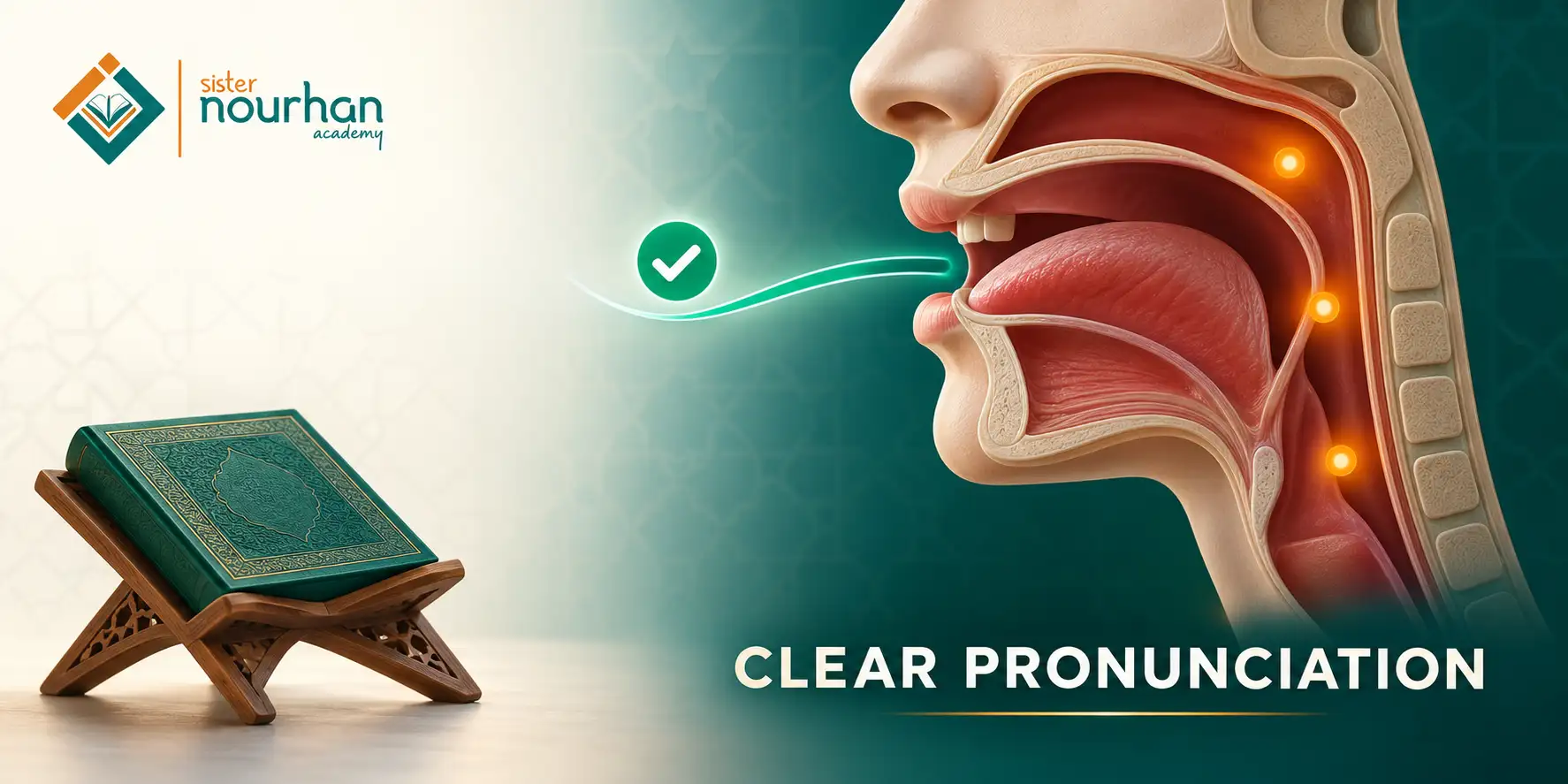
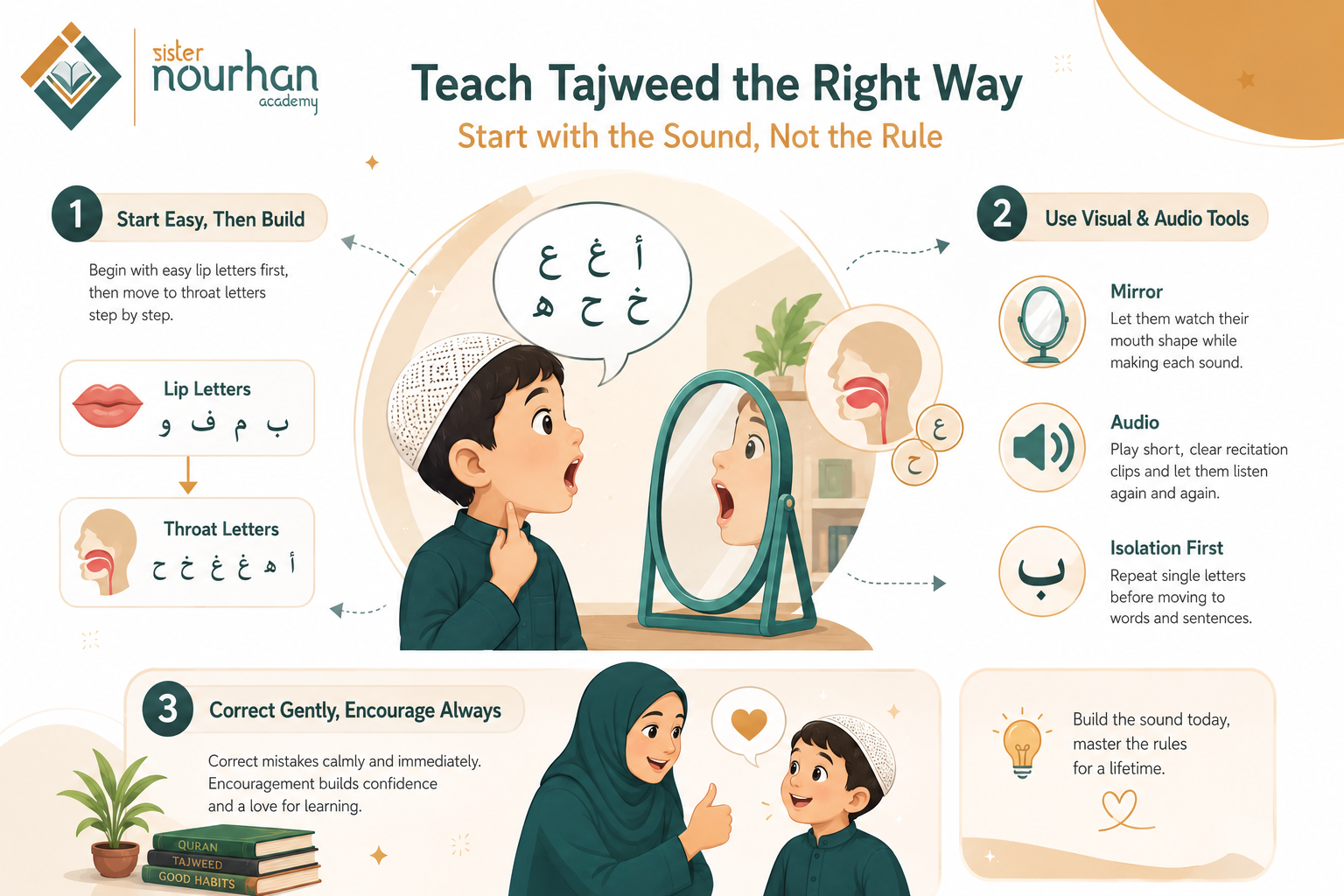
Begin every tajweed journey with the articulation points of the Arabic letters, never with rule names or terminology.
A child must first hear and reproduce each sound accurately before any rule will make logical sense, which is why this step anchors how to teach tajweed for kids successfully.
Teaching Throat and Lip Letters First
Start with the easiest articulation points, such as the lip letters, before moving toward the throat letters like ح، خ، ع، غ، ه، أ.
This sequence matches how children naturally build motor control over their mouth and throat muscles, making early lessons feel achievable rather than frustrating.
Using Visual and Audio Tools
Combine what the child sees with what they hear so correct pronunciation sticks faster and feels natural.
Use a small mirror so children can watch their own mouth shape while producing each sound
Play short audio clips of clear, unhurried recitation for repeated listening
Repeat single letters in isolation before combining them into full words
Correcting Gently Without Discouraging
Correct pronunciation errors calmly and immediately, without making the child feel embarrassed in front of others.
A relaxed correction style keeps children willing to keep trying rather than becoming afraid of making mistakes, and it is a detail many parents overlook when learning how to teach tajweed for kids at home.
Step 3: Introduce Basic Tajweed Rules Gradually
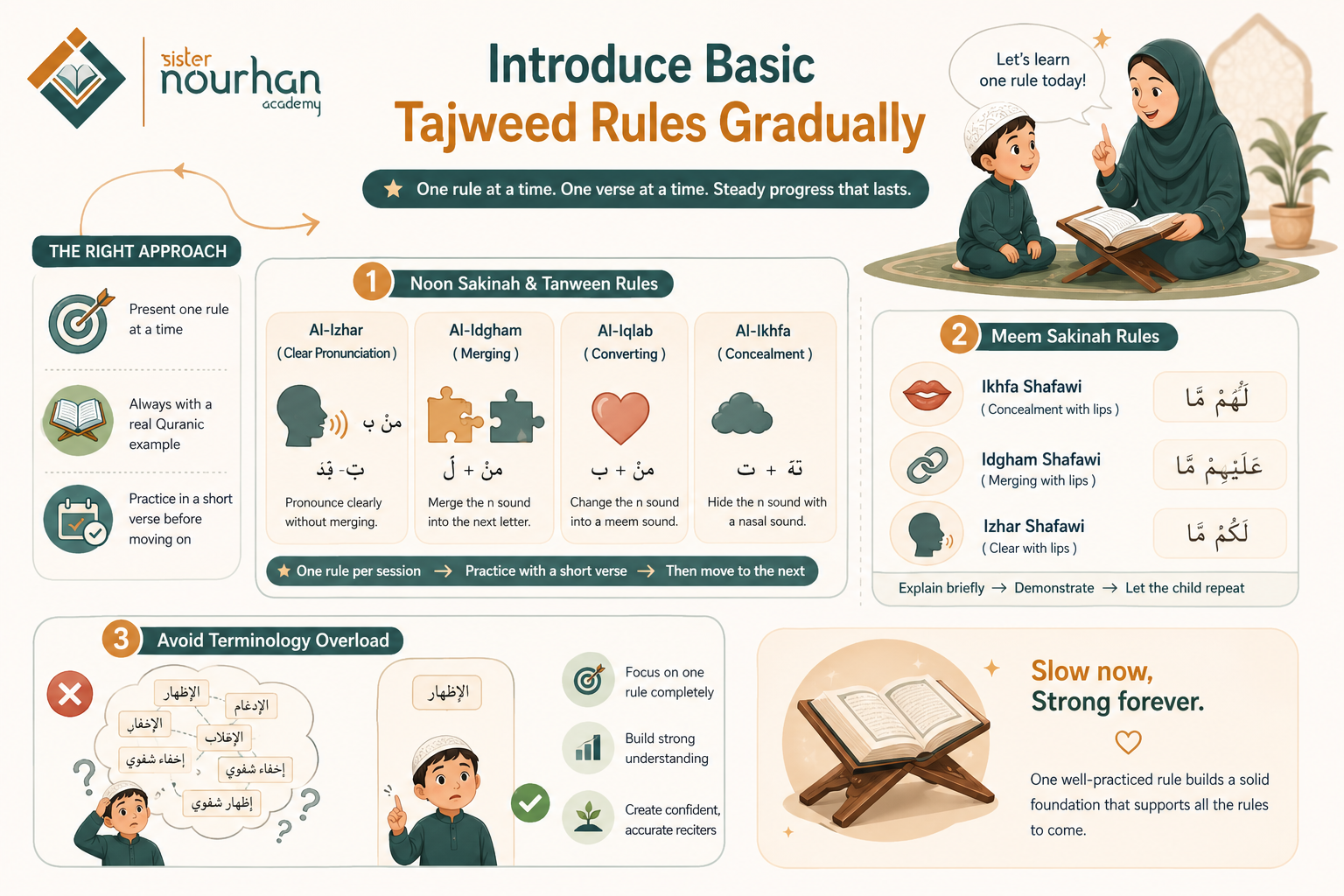
Present one rule at a time, always paired with a real Quranic example rather than an abstract definition. This gradual pacing is the true core of how to teach tajweed for kids without causing confusion, boredom, or frustration along the way.
Noon Sakinah and Tanween Rules
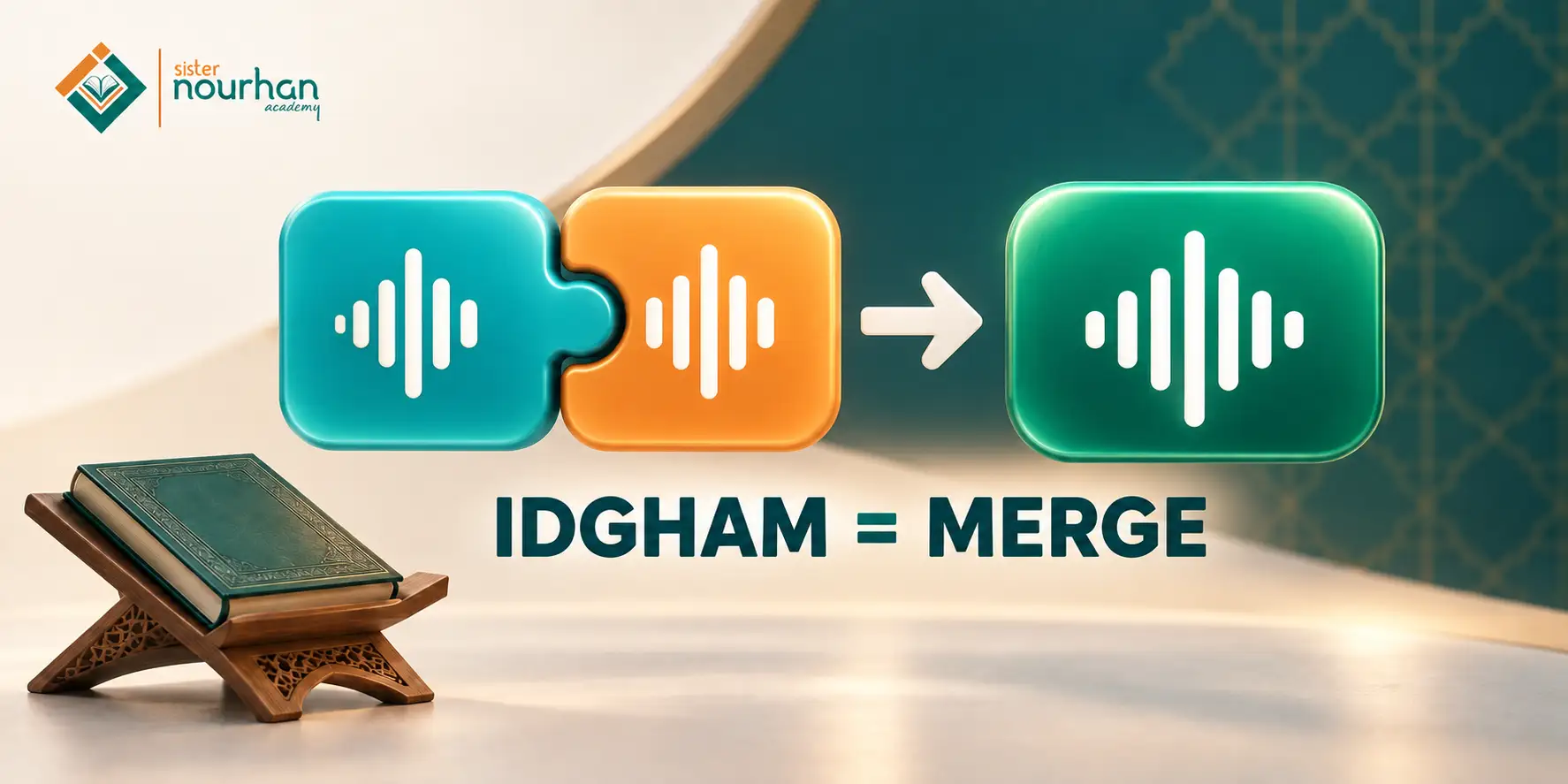
Explain Al-Izhar (clear pronunciation), Al-Idgham (merging two letters), Al-Iqlab (converting the sound into a meem), and Al-Ikhfa (concealment with a light nasal sound), one rule per session.
Each rule should be practiced with a short verse before moving on to the next one.
Meem Sakinah Rules
Once the noon sakinah rules feel steady, introduce the three meem sakinah rules: Ikhfa Shafawi, Idgham Shafawi, and Izhar Shafawi. Keep every explanation short, and always demonstrate the sound out loud before asking the child to repeat it.
Avoiding Terminology Overload
Resist the urge to introduce several rule names in a single sitting, even if the child seems to be picking things up quickly.
One well-practiced rule beats five half-understood ones every time when teaching tajweed for kids at this stage, and pacing correctly here shapes how well the remaining steps land.
Many families who ask how to teach tajweed for kids effectively find that slowing down at this exact stage produces the fastest long-term progress.
Step 4: Use Interactive and Age-Appropriate Activities
Turn every rule into a hands-on activity instead of a spoken lecture. Children retain tajweed concepts far more effectively when they are actively engaged, which is a central principle behind how to teach tajweed for kids without losing their attention.
Color-Coded Cards and Visual Games
Assign a distinct color to each rule — green for Al-Izhar, blue for Al-Ikhfa — and have your child highlight matching words within a short surah. This visual method keeps the process of teaching tajweed for kids playful, memorable, and easy to revisit later.
Want the same color-coding in a real Mus'haf? Download the free Color-Coded Tajweed Quran and let your child spot each rule by color while reading actual verses.
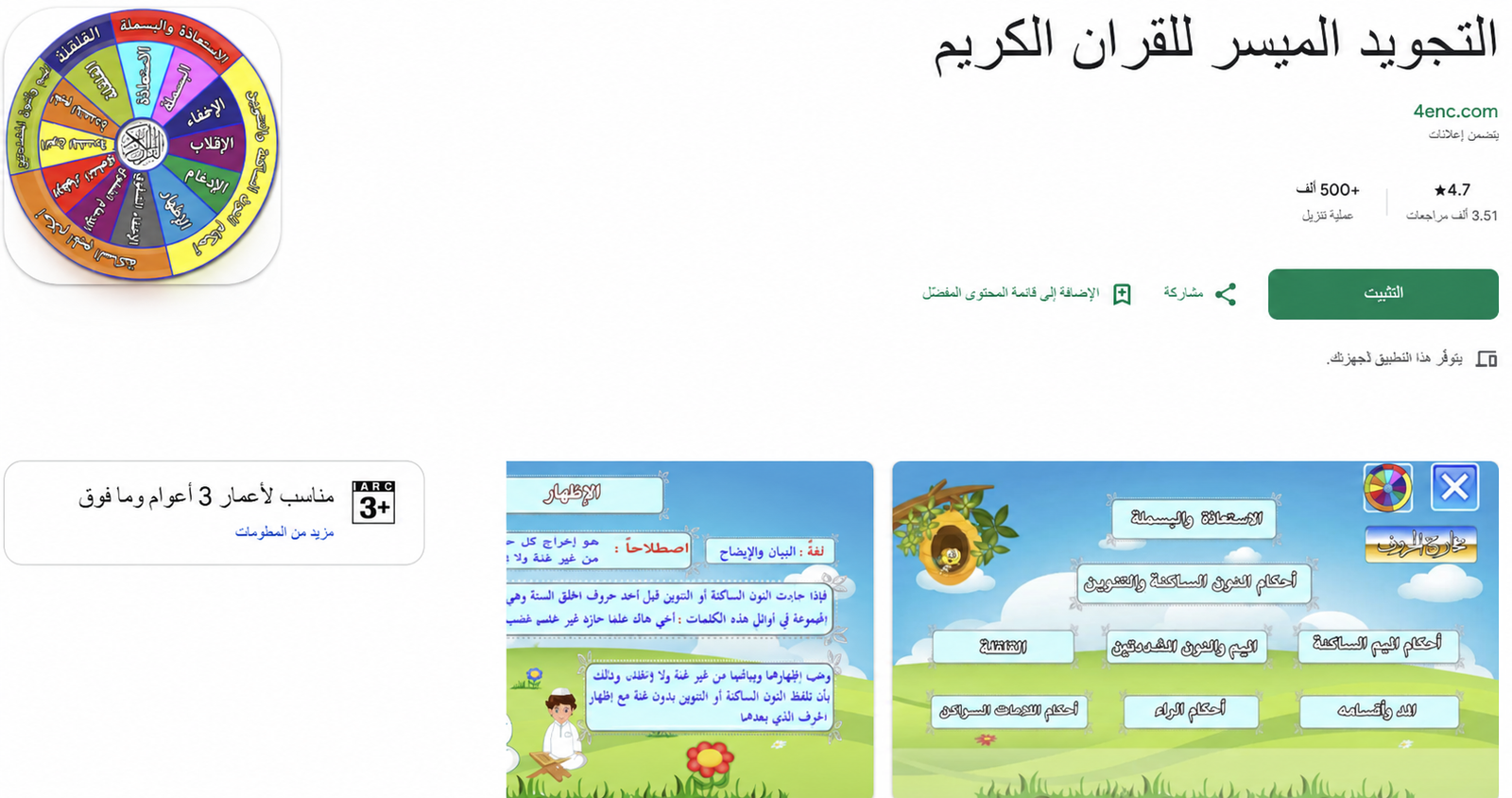
Apps and Guided Games
Bring a bit of screen time into learning so practice feels like play rather than a lesson.
Interactive apps that isolate individual rules through short, simple quizzes.
Matching games that pair rule names with their corresponding example words.
Short story-based lessons that connect a rule to its meaning within a verse.
Want extra practice between lessons? Download the free Tajweed Learning App on Google Play and let your child revisit rules, quizzes, and matching games anytime, at no cost.
Group Learning and Friendly Competition
Pair siblings or classmates in short recitation challenges where they take turns identifying a rule correctly.
Friendly, low-pressure competition keeps children engaged and reinforces material without feeling like a formal test, offering another practical answer to how to teach tajweed for kids in a group setting.
Storytelling Through Quranic Context
Explain the simple meaning behind a verse before drilling its tajweed rule, so the child recites with understanding rather than mechanical repetition.
Adding this layer of context is a small addition that makes teaching tajweed for kids far more meaningful and memorable.
For a broader look at proven learning methods beyond this kids-focused guide, check out our article on Best Ways to Learn Tajweed.
Step 5: Practice With Short Surahs and Direct Correction
Apply every rule immediately within short, familiar surahs rather than isolated drills detached from real recitation.
Real, repeated application is what transforms bare knowledge into a lasting skill, and it is often the missing link parents search for when researching how to teach tajweed for kids at home.
Building a Daily Practice Routine
Set aside just ten focused minutes daily for recitation and correction rather than long, irregular sessions. Consistency matters far more than session length, and short daily practice keeps a child's attention sharp and receptive.
Read also: What are the Tajweed rules of the Quran?
Listening to Skilled Reciters
Encourage your child to listen regularly to clear, well-paced reciters and imitate their pronunciation style. This passive exposure reinforces correct sounds naturally, without adding extra pressure to the active learning process.
Recording Progress for Comparison
Record short recitation clips every few weeks so your child can hear their own improvement over time.
Hearing measurable progress firsthand is often more motivating than verbal praise alone, and it gives parents concrete proof that their approach to how to teach tajweed for kids is working.
To understand the deeper reasons behind this discipline, you can also read Why Learn Quran with Tajweed.
Step 6: Motivate and Encourage Consistent Progress
Recognize every small win along the way to keep momentum strong. Motivation, far more than memorization pressure, is what keeps a child engaged in learning tajweed for kids over the long term.
Rewards and Recognition
Small, meaningful rewards go a long way in keeping a child excited to return to their next tajweed session.
Award a simple certificate or sticker after mastering a rule
Let your child recite proudly in front of family members
Celebrate consistent daily practice, not only perfect results
Leading by Example
Children imitate what they see far more than what they are told.
When parents or teachers recite with visible care for tajweed, children naturally absorb the same standard and respectful attitude toward the Quran, which quietly reinforces how to teach tajweed for kids at every stage.
Setting Realistic Milestones
Break the overall goal into small, achievable milestones rather than one distant target. A child who reaches frequent small milestones stays far more motivated than one working toward a single, far-off finish line.
Involving the Whole Family
Invite siblings, parents, and even grandparents to listen during recitation time so the child feels supported rather than tested.
A family that shows genuine interest makes the entire process of how to teach tajweed for kids feel like a shared, joyful habit rather than a solitary chore.
Read also: What are the signs of waqf in Tajweed?
Step 7: Enroll in Structured Tajweed Classes for Kids
Support home practice with guided instruction from a qualified, experienced teacher. Structured classes are often the missing piece for parents who have researched how to teach tajweed for kids on their own but want more reliable, lasting results.
Benefits of Qualified Teacher Guidance
A trained instructor catches subtle pronunciation errors that are easy to miss during casual home practice and adjusts the pace to match your child's individual ability.
This professional oversight accelerates progress and prevents small errors from becoming permanent habits, reinforcing everything covered in the earlier steps on how to teach tajweed for kids.
Combining Home Practice With Class Instruction
Use home sessions for repetition and reinforcement, and reserve structured classes for introducing new rules and correcting deeper errors.
This combination gives children the best of consistent daily exposure and expert-level correction, and it is the exact model Sister Nourhan Academy uses when guiding families through how to teach tajweed for kids.
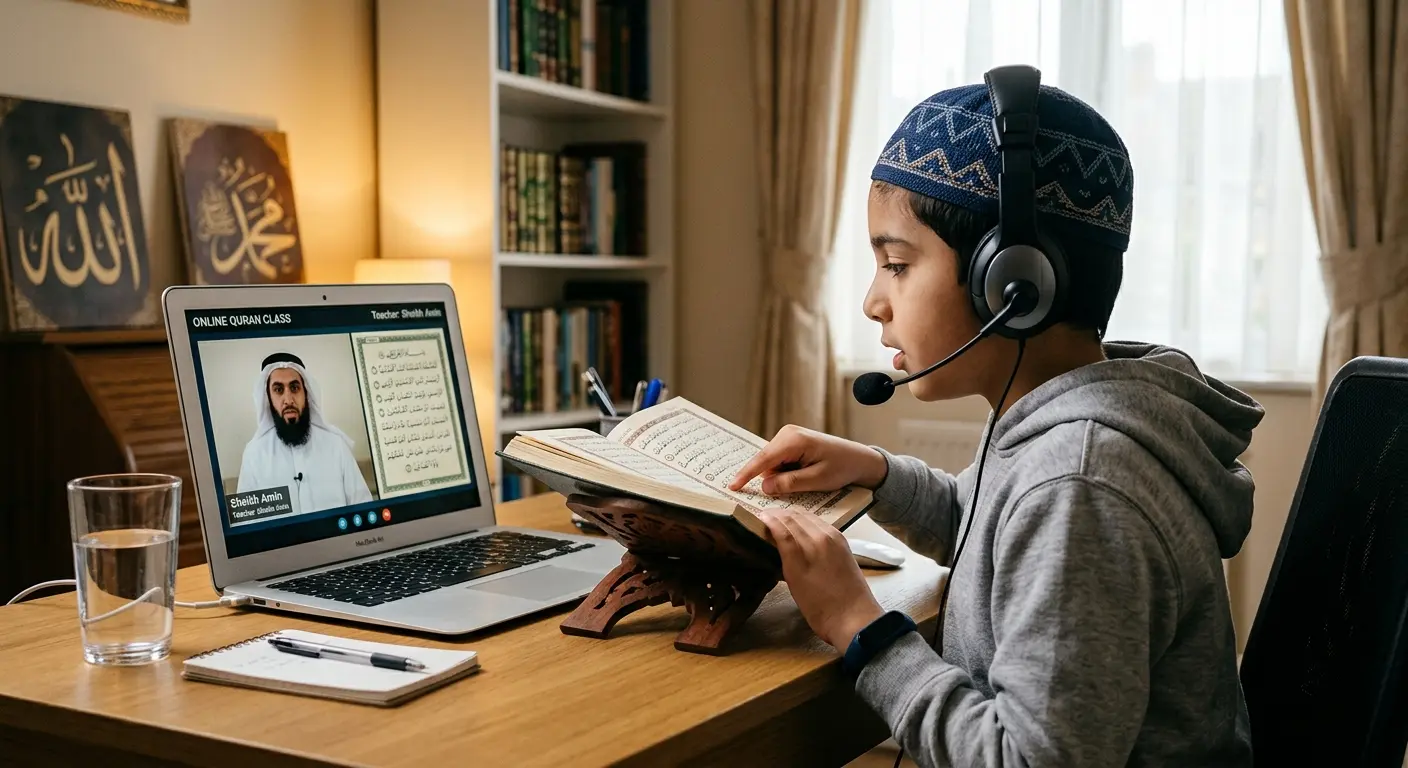
Give your child's recitation the polish it deserves — join our Tajweed Course for Kids, live, one-on-one lessons built just for young learners. Watch confusing rules turn into confident recitation, one guided session at a time with Tajweed for Kids.
Final Words
Teaching tajweed to children works best as a gradual journey: train the ear, master the letters, introduce rules one at a time, apply them through real recitation, and reinforce everything through daily, encouraging practice.
Interactive tools, patient correction, realistic milestones, and consistent routines turn what could feel like a chore into something a child genuinely looks forward to.
Ultimately, learning how to teach tajweed for kids successfully comes down to patience, structure, and celebrating every small step of progress along the way.
Master Tajweed with Nourhan Academy: Online Quran & Tajweed Classes
See our teaching methods
Experience the quality of our instruction firsthand by watching a live lesson snippet below.
Begin Your Quranic Journey
Connect with the words of Allah through personalized sessions at Sister Nourhan Academy.
Book Your Free TrialTake the Next Step With Sister Nourhan Academy!
Give your child the structured, expert guidance they deserve. Book a free trial lesson with Sister Nourhan Academy today and enroll them in a personalized tajweed program built around their exact age and pace.
Discover our Tajweed Courses

Frequently Asked Questions
What is the best age to start teaching tajweed for kids?
Most children are ready to begin around ages four to six with listening exercises, moving into formal rules by age seven or eight. Sister Nourhan Academy tailors its program to each child's exact developmental stage for the best possible results.
How long does it take for a child to learn tajweed for kids?
It varies by child, but most grasp foundational rules within six months to a year of consistent practice. Sister Nourhan Academy's structured curriculum helps children progress steadily without unnecessary delays or gaps.
Can I teach tajweed for kids at home without a teacher?
You can introduce the basics at home, but a qualified teacher catches errors that parents often miss. Sister Nourhan Academy pairs home practice with expert-led sessions for balanced, accurate, and lasting learning.
What is the simplest summary of how to teach tajweed for kids?
Train the ear first, teach letter pronunciation, introduce one rule at a time, then reinforce everything through daily recitation. Sister Nourhan Academy builds this exact sequence into every lesson plan for young students.
What tools help most when teaching tajweed for kids?
Color-coded cards, mirrors, audio recordings, and short daily practice sessions all work particularly well together. Sister Nourhan Academy incorporates these exact interactive methods directly into its live online classes.
Why does my child lose interest in tajweed lessons?
This usually happens when rules are introduced too quickly or without enough real application. Sister Nourhan Academy keeps every session engaging and properly paced so children stay motivated and confident.