Ghunnah rules in Tajweed explain how the natural nasal sound of Noon (ن) and Meem (م) changes in strength depending on their position and the Tajweed rule being applied.
Ghunnah is not simply a sound added whenever a reciter sees Noon or Meem. It is an inherent quality of these two letters, but its audible strength and duration vary between Mushaddad letters, Idgham, Ikhfa, Iqlab, Izhar, and ordinary voweled pronunciation.
Understanding those differences prevents two opposite mistakes: removing the nasal resonance where it belongs or exaggerating it until every Noon and Meem sounds the same.
This guide explains the letters of Ghunnah, its five levels, its connection with major Tajweed rules, correct pronunciation, and practical ways to recognize errors.
What Are the Ghunnah Rules in Tajweed?
The Ghunnah rules in Tajweed govern the nasal resonance inherent in Noon (ن) and Meem (م), determining how strongly it is heard according to the condition of those letters.
The first principle to understand is that Ghunnah does not belong only to Ikhfa or Idgham. Some degree of nasal quality remains inherent in every Noon and Meem, although not every position requires an extended Ghunnah.
What Is Ghunnah?
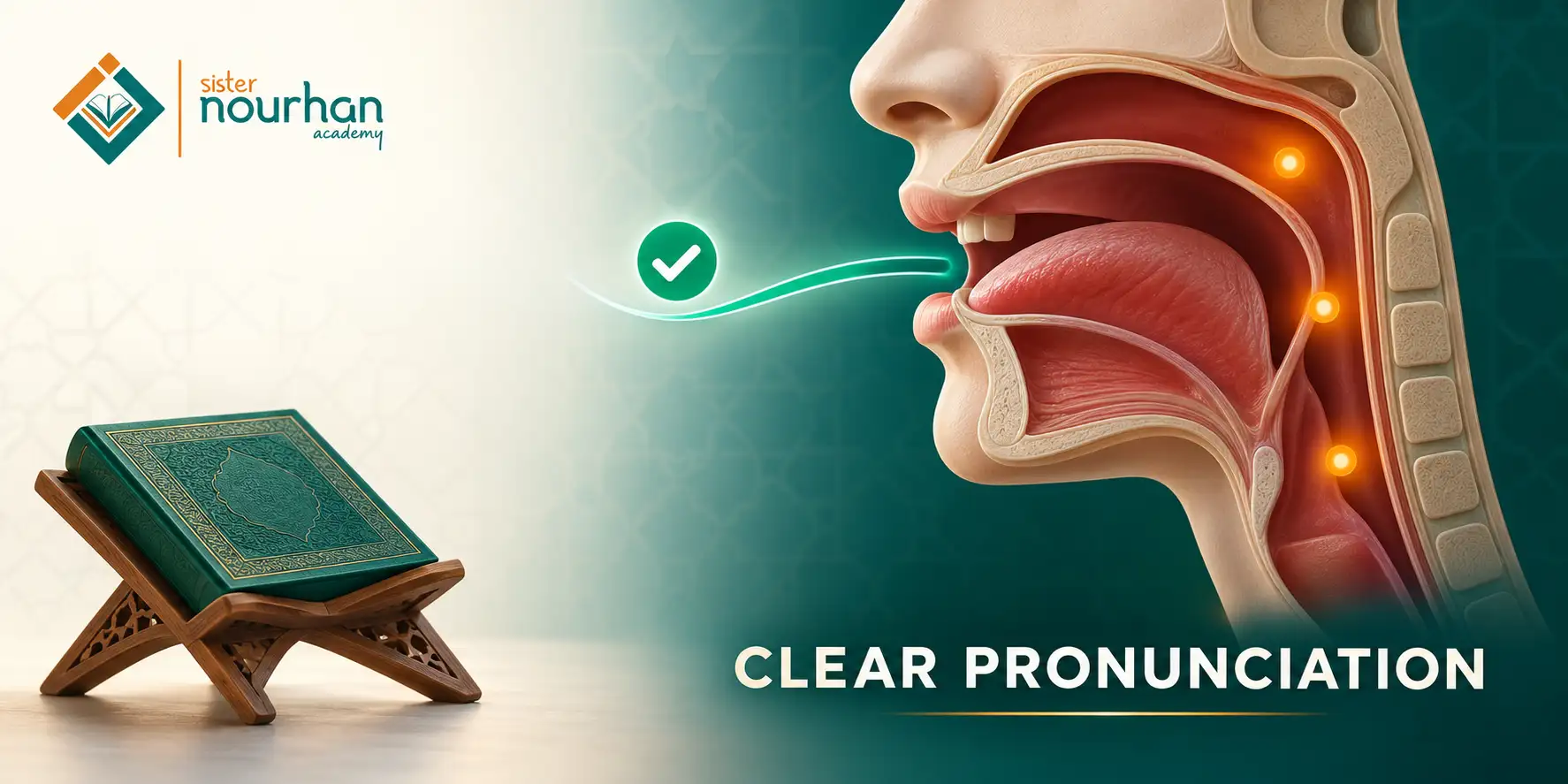
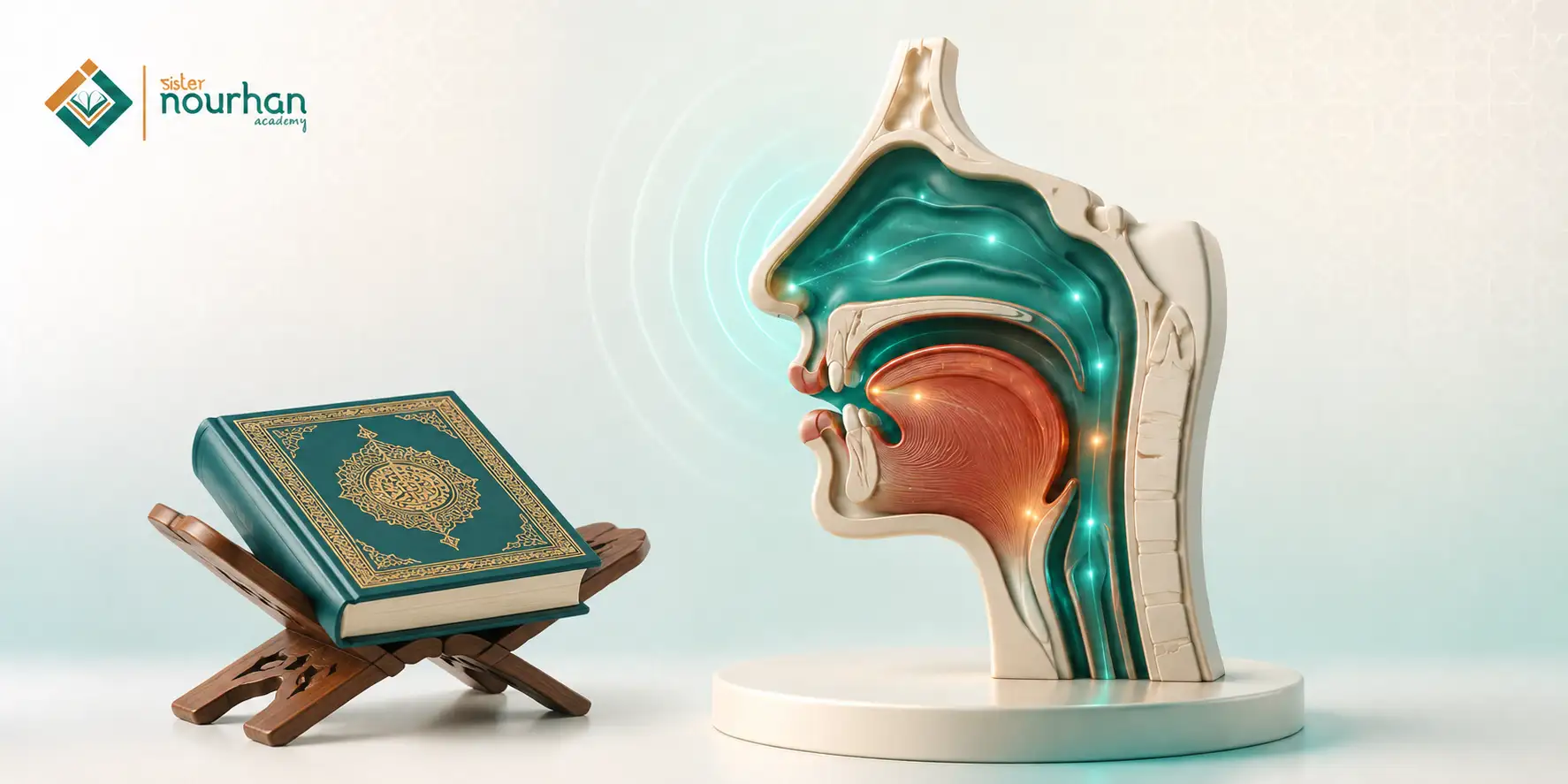
Ghunnah (غُنَّة) is a nasal resonance produced from the Khayshum, or inner nasal passage, and is an inherent characteristic of Noon and Meem.
The Arabic word describes a nasal, ringing quality. The sound itself comes from the Khayshum (الخيشوم) rather than being generated by the tongue.
A simple physical test demonstrates this. Pronounce a sustained Noon or Meem and gently close your nose. The nasal resonance becomes obstructed because its outlet is the nasal passage.
The distinction matters because a student can articulate the oral component of Noon with the tongue or Meem with the lips while still producing the Ghunnah incorrectly.
What Is the Makhraj of Ghunnah?
The Makhraj of Ghunnah is the Khayshum (الخيشوم), the inner nasal cavity.
This does not mean that the complete letters Noon and Meem have no oral articulation. Noon itself involves the tongue, while Meem involves the two lips.
The Ghunnah component, however, resonates through the nasal passage. That is why squeezing the tongue or overworking the lips does not create a better Ghunnah.
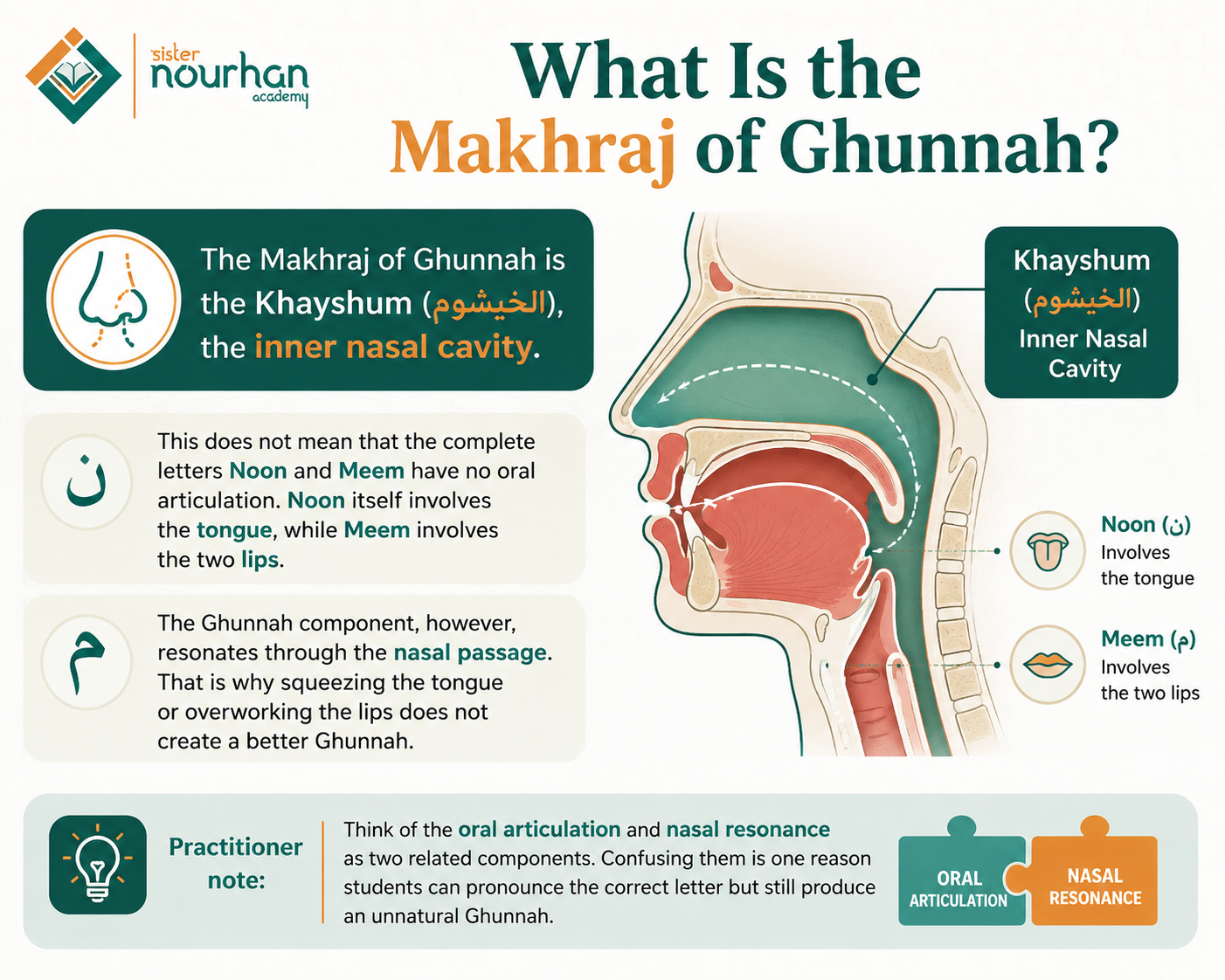
Practitioner note: think of the oral articulation and nasal resonance as two related components. Confusing them is one reason students can pronounce the correct letter but still produce an unnatural Ghunnah.
What Are the Letters of Ghunnah?
There are two letters of Ghunnah:
ن — Noon
م — Meem
Ghunnah is an inseparable characteristic of both letters. Tanween also follows the relevant Noon Sakinah rules because its pronunciation ends with the sound of a Noon Sakinah.
The important question during recitation is therefore not simply, “Is there Ghunnah?” Instead ask:
How strong should the Ghunnah be in this position?
That question leads directly to the levels of Ghunnah.
What Are the Five Levels of Ghunnah?
The five levels of Ghunnah rank its audible strength according to the condition of Noon or Meem, from Mushaddad forms at the strongest level to ordinary voweled forms at the lightest.
This framework is more precise than treating every nasal sound as an identical two-count rule.
The practical insight is simple: Ghunnah is continuous as a characteristic but variable in strength.
1. Ghunnah Is Strongest in Noon and Meem Mushaddad
When Noon or Meem carries a Shaddah, its Ghunnah is fully established.
Examples include:
إِنَّ — Inna
عَمَّ — ‘Amma
Do not rush directly from the doubled consonant into the following vowel. The nasal resonance needs to be established clearly before continuing.
At the same time, do not turn the Ghunnah into an uncontrolled humming sound.
2. Ghunnah Appears Strongly in Idgham
The second level includes positions where assimilation preserves Ghunnah, particularly relevant forms of Idgham with Ghunnah.
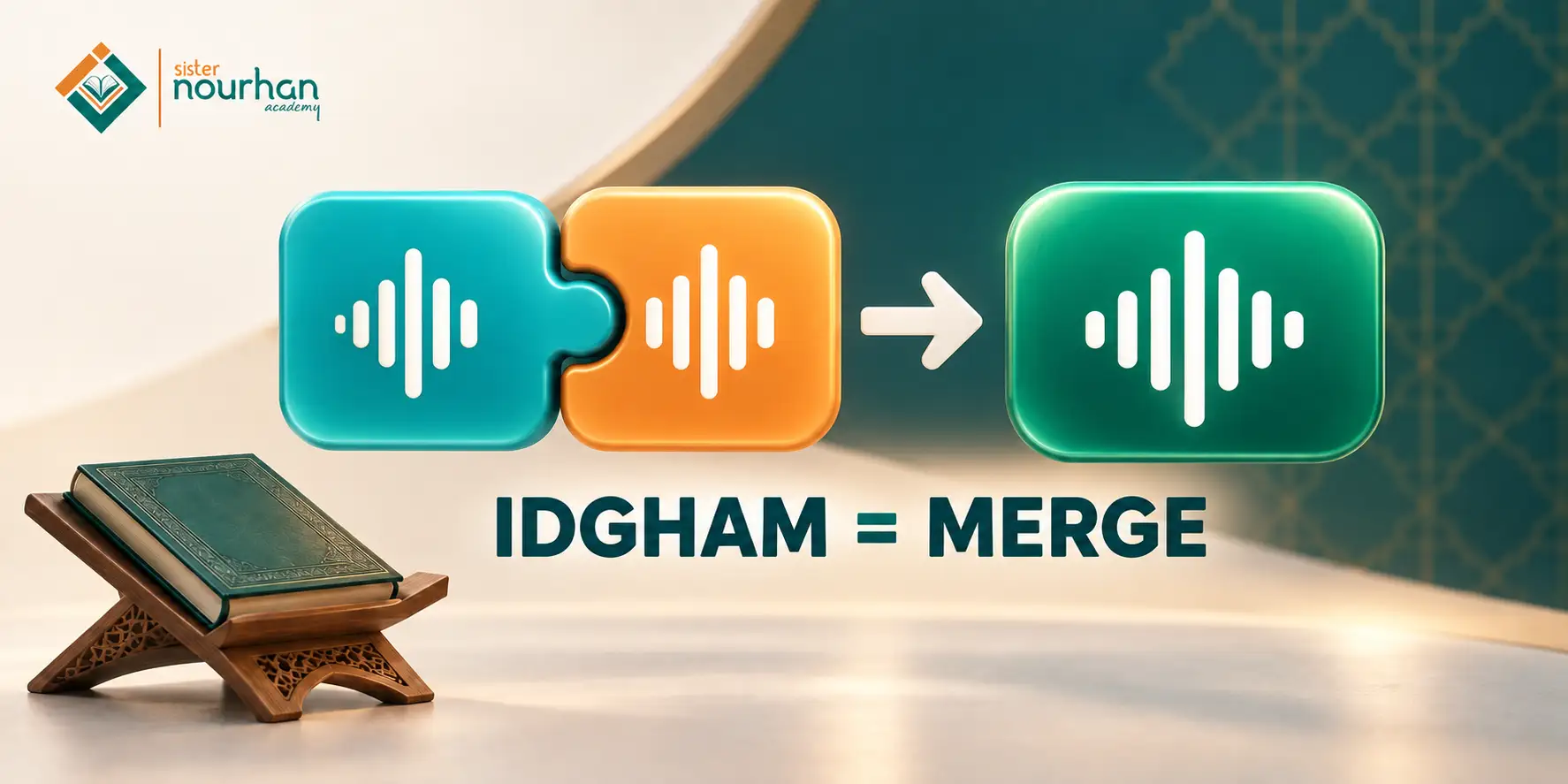
Here the original Noon Sakinah or Tanween no longer remains independently articulated. Its sound merges while the nasal resonance is preserved.
This distinction is essential: Idgham changes what happens to the consonant, while Ghunnah describes the nasal quality retained during that process.
3. Ghunnah Is Maintained in Concealment
The third level includes concealed positions such as Ikhfa Haqiqi, Iqlab, and Ikhfa Shafawi.
The consonant treatment differs between these rules, but each preserves an audible nasal resonance.
This is where students should avoid memorizing Ghunnah as an isolated rule. The same nasal characteristic participates in several different phonetic processes.
4. Noon and Meem Sakinah Can Carry Only Their Natural Ghunnah
When Noon or Meem Sakinah is pronounced clearly rather than concealed or merged, the natural nasal characteristic remains, but it should not be deliberately stretched as though Ikhfa were occurring.
This distinction is especially important in Izhar positions.
5. Voweled Noon and Meem Have the Lightest Ghunnah
An ordinary voweled Noon or Meem still carries its inherent nasal characteristic.
Students sometimes remove it completely because they have learned to associate the word “Ghunnah” only with Ikhfa and Idgham.
The better approach is neither to suppress nor exaggerate it. Allow the natural quality of the letter to remain.
If controlling these differences becomes difficult during continuous Quran recitation, guided Tajweed practice with Sister Nourhan Academy can help you hear the difference between natural nasality and a deliberately maintained Ghunnah.
With personalized instruction and focused recitation practice, you can strengthen these skills further through the Advanced Tajweed Course and apply Ghunnah rules more accurately and naturally.

Shots from Our Classes
Take a moment to view the video below to see how our teachers provide clear, supportive corrections during a session.
Begin Your Quranic Journey
Connect with the words of Allah through personalized sessions at Sister Nourhan Academy.
Book Your Free TrialHow Does Ghunnah Work in the Main Tajweed Rules?
Ghunnah interacts with several Tajweed rules rather than existing as a separate event. Identifying the underlying rule first tells you what should happen to Noon or Meem and how the nasal resonance should be treated.
1- How Does Idgham With Ghunnah Work?
Idgham with Ghunnah occurs when Noon Sakinah or Tanween is followed across two words by one of four letters: ي، ن، م، و.
The four letters can be remembered through:
يَنْمُو — Yanmu
The Noon Sakinah or Tanween merges into the following letter while Ghunnah is retained.
The four Idgham with Ghunnah letters are:
ي — Ya
ن — Noon
م — Meem
و — Waw
A useful distinction is that the degree of assimilation is not identical in every case, but the student should first master the central listening cue: the separate Noon disappears while nasal resonance remains.
Do not confuse this with Idgham without Ghunnah, which occurs with Lam (ل) and Ra (ر).
2- How Does Ghunnah Work in Ikhfa Haqiqi?
Ikhfa Haqiqi conceals Noon Sakinah or Tanween when followed by one of the 15 Ikhfa letters while maintaining Ghunnah.
The 15 letters are:
ت ث ج د ذ ز س ش ص ض ط ظ ف ق ك
For example:
مِنْ قَبْلِ
The Noon is not pronounced with the complete clarity of Izhar and is not fully merged into Qaf as in Idgham. It is concealed while the Ghunnah remains before the Qaf.
A more advanced detail is that the quality of the Ghunnah is influenced by the following letter. With heavier letters, the resonance can acquire a heavier quality; with lighter letters, it remains lighter.
That is a pronunciation detail best learned through listening and correction rather than visual rules alone.
3- How Does Ghunnah Work in Iqlab?
Iqlab occurs when Noon Sakinah or Tanween is followed by Baa (ب), changing the Noon into a concealed Meem sound while preserving Ghunnah.
Example:
مِنْ بَعْدِ
The student should not pronounce a complete Noon followed by Baa. The Noon changes into the concealed Meem quality required before Baa.
Iqlab therefore combines three actions:
Noon disappears → concealed Meem replaces it → Ghunnah is maintained.
A small Meem symbol in many Mushaf editions helps identify this transformation.
How Does Ghunnah Work in Ikhfa Shafawi?
Ikhfa Shafawi occurs when Meem Sakinah (مْ) is followed by Baa (ب), causing the Meem to be concealed while its Ghunnah is maintained.
The key pattern is:
مْ + ب
Do not confuse this with Iqlab. Both involve Baa and Ghunnah, but Iqlab begins with Noon Sakinah or Tanween, whereas Ikhfa Shafawi begins with Meem Sakinah.
4- How Does Ghunnah Work When Meem Sakinah Meets Meem?
When Meem Sakinah is followed by another Meem, the first Meem merges into the second and Ghunnah is maintained.
Pattern:
مْ + م → مّ
The result should sound like one strengthened Meem rather than two separately articulated Meems.
Does Izhar Have Ghunnah?
Izhar does not require an extended Ghunnah, although Noon and Meem retain the natural nasal quality inherent in the letters themselves.
This distinction solves a common source of confusion.
Saying “there is absolutely no Ghunnah in Noon or Meem during Izhar” can obscure the fact that Ghunnah is an inherent characteristic of these letters. What Izhar removes is the added or prolonged Ghunnah associated with rules such as Ikhfa.
For Meem Sakinah in Izhar Shafawi, for example, the Meem should be clearly formed with its natural quality rather than artificially nasalized.
How Long Should Ghunnah Be Held?
Complete Ghunnah in its stronger positions is held for two counts, while clearly pronounced or ordinarily voweled Noon and Meem carry only their inherent Ghunnah without deliberate two-count extension.
A useful working framework is:
The source material distinguishes the first three Ghunnah levels as complete two-count positions and the final two as carrying the inherent Ghunnah without measured elongation.
A count is relative to the pace of recitation, not a fixed number of seconds. A reciter reading slowly will naturally have a longer physical duration than someone reading quickly, while maintaining proportional Tajweed timing.
Practitioner note: consistency matters more than counting mechanically. Your Ghunnah should remain proportionate to your overall recitation speed.
If maintaining a consistent two-count Ghunnah becomes difficult at different recitation speeds, expert guidance can make the distinction much clearer.
At Sister Nourhan Academy, our highly attentive Tajweed teachers listen closely to the smallest details of your pronunciation and timing, helping you correct Ghunnah duration and develop consistent, accurate recitation.

How Can You Pronounce Ghunnah Correctly?
Correct Ghunnah requires controlling resonance, duration, and the transition into the next letter. A student should hear the nasal quality without turning every Ghunnah into an exaggerated hum.
Identify the Noon or Meem. Determine whether it is Mushaddad, Sakin, voweled, concealed, or involved in assimilation.
Identify the governing Tajweed rule. Check the following letter for Idgham, Ikhfa, Iqlab, Izhar, or a Meem Sakinah rule.
Allow resonance through the Khayshum. Do not try to manufacture the nasal sound by pressing the tongue.
Apply the correct duration. Use the complete Ghunnah where required, but do not extend the natural Ghunnah of ordinary Noon and Meem.
Move cleanly into the following letter. The Ghunnah should not distort the Makhraj or characteristics of what comes next.
A useful self-check is recording short Quran passages and listening specifically for Noon and Meem positions rather than judging the whole recitation at once.
Read also : Makharij Al-Huruf - The Complete Guide
What Are the Most Common Ghunnah Mistakes?
Most Ghunnah mistakes come from treating nasalization as an on/off rule instead of an inherent characteristic with different levels.
1. Making Every Ghunnah the Same Length
Not every Noon and Meem requires an extended Ghunnah.
Applying a full measured nasal extension to ordinary voweled letters or clear Izhar positions makes the recitation heavy and unnatural.
2. Shortening Ghunnah Where It Must Be Complete
The opposite problem occurs when students rush through Mushaddad Noon or Meem, Ikhfa, Iqlab, or Idgham positions.
The rule may be identified correctly, but its audible application disappears.
3. Exaggerating the Nasal Sound
More nasal resonance does not mean better Tajweed.
Ghunnah should be controlled and proportionate rather than forced into a loud humming sound.
4. Producing Ghunnah With the Tongue
The nasal component comes from the Khayshum.
Trying to manufacture it through excessive tongue pressure can distort Noon and make transitions into subsequent letters awkward.
5. Turning Ghunnah Into Madd
Ghunnah and Madd are separate sound mechanisms.
A particularly common error occurs around Mushaddad Noon or Meem near a Madd position: the student allows the nasal resonance to flow directly into the elongation and effectively combines their timings.
Complete the Ghunnah correctly, then apply the Madd according to its own rule.
7. Ignoring the Following Letter
Ghunnah cannot be mastered by listening only to the nasal sound.
The following letter affects which Tajweed rule applies and, in some cases, influences the phonetic quality of the transition. Train yourself to look one letter ahead before reciting.
For students who can recognize these rules on paper but struggle to hear their own timing or nasal quality, live correction through Sister Nourhan Academy can identify whether the problem comes from the Khayshum, timing, articulation, or transition between letters.
See our teaching methods
Experience the quality of our instruction firsthand by watching a live lesson snippet below.
Begin Your Quranic Journey
Connect with the words of Allah through personalized sessions at Sister Nourhan Academy.
Book Your Free TrialStart Applying Ghunnah Correctly With Sister Nourhan Academy
Knowing the Ghunnah rules in Tajweed is only the first stage. Accurate recitation requires hearing whether your nasal resonance, duration, and transitions actually match the rule while you recite.
Study with Sister Nourhan Academy and receive guided Tajweed practice with direct pronunciation correction, helping you move from recognizing Ghunnah rules to applying them naturally in Quran recitation.
Discover our Tajweed Courses

Conclusion
Ghunnah is the inherent nasal resonance associated with Noon (ن) and Meem (م), produced through the Khayshum. Its presence is constant in these letters, but its strength and treatment change according to their condition.
The most important distinction is between complete Ghunnah in positions such as Mushaddad letters, Idgham, Ikhfa, and Iqlab, and the natural inherent Ghunnah found in clear or ordinarily voweled Noon and Meem.
Once you stop treating every Ghunnah as identical, Tajweed becomes easier to apply: identify the letter, look at what follows it, determine the rule, and give the nasal resonance exactly what that position requires.
Frequently Asked Questions About Ghunnah Rules in Tajweed
What is Ghunnah in Tajweed?
Ghunnah in Tajweed is the nasal resonance produced through the Khayshum and inherent in the letters Noon (ن) and Meem (م). Its audible strength varies according to whether the letter is Mushaddad, merged, concealed, clearly pronounced, or normally voweled.
What is the Ghunnah meaning in English?
Ghunnah means a nasal or resonant sound produced through the nasal passage. In Tajweed terminology, it specifically refers to the inherent nasal characteristic associated with Noon and Meem.
What are the letters of Ghunnah?
The letters of Ghunnah are Noon (ن) and Meem (م). Tanween follows Noon Sakinah in the relevant Tajweed rules because it produces a Noon sound in pronunciation.
What are the letters of Idgham with Ghunnah?
The Idgham with Ghunnah letters are ي، ن، م، و — Ya, Noon, Meem, and Waw. They are commonly memorized through the Arabic word يَنْمُو (Yanmu).
How many counts is Ghunnah?
Complete Ghunnah is generally held for two counts in positions such as Mushaddad Noon/Meem, Idgham with Ghunnah, Ikhfa, and Iqlab. Clear or ordinarily voweled Noon and Meem retain their inherent Ghunnah without a deliberate two-count extension.
Where does the Ghunnah sound come from?
The Ghunnah sound comes from the Khayshum (الخيشوم), or inner nasal passage. The nasal resonance is not produced by the tongue, even though the complete articulation of Noon itself also involves the tongue.